How Rubber Coated Rollers Prevent Material Damage During Processing
In high-speed industrial manufacturing, the margin for error is razor-thin. Whether you are handling delicate films, heavy steel coils, or high-speed printing paper, the interface between your machinery and your product determines your quality. This is where rubber-coated rollers play a critical role.
For many industrial facilities, material damage—such as scratching, slipping, or crushing—is a leading cause of downtime and wasted revenue. By choosing the right industrial rubber rollers, companies can significantly reduce these risks. At Siva Rollers, known as the Best Rubber Coated Roller Manufacturer & Supplier in India, we specialise in engineering solutions that protect your materials while maximising throughput.
The Science of Surface Protection: Why Rubber?
Metal rollers are durable, but their hard surfaces are unforgiving. When a metal surface contacts a sensitive substrate at high pressure, even a microscopic burr can cause a catastrophic failure.
Rubber coated rollers act as a protective cushion. Because rubber is elastomeric, it deforms slightly under load. This distribution of pressure ensures that the force is spread evenly across the contact area, rather than being concentrated on a single point. This “soft touch” is essential for preventing surface marring and internal structural damage to the materials being processed.
5 Ways Rubber Coated Rollers Prevent Material Damage
1. Vibration Dampening and Shock Absorption
In heavy-duty manufacturing, machinery generates significant vibration. If these vibrations are transferred directly to the material, they can cause “chatter marks” or microscopic fractures. Heavy-duty rubber rollers absorb these mechanical shocks, providing a stable environment for the material to move through the assembly line without agitation.
2. Eliminating Material Slippage
Tension control is vital in web processing. If a roller loses its grip, the material slips, leading to scratches, wrinkles, or tearing. Custom rubber coated rollers are engineered with specific friction coefficients (COF). By providing a consistent grip, these rollers ensure the material moves at the exact speed of the machine, eliminating the friction-related heat and abrasion caused by slipping.
3. Precise Pressure Distribution (Nip Control)
Tension control is vital in web processing. If a roller loses its grip, the material slips, leading to scratches, wrinkles, or tearing. Custom rubber coated rollers are engineered with specific friction coefficients (COF). By providing a consistent grip, these rollers ensure the material moves at the exact speed of the machine, eliminating the friction-related heat and abrasion caused by slipping.
4. Chemical and Thermal Resistance
Material damage isn’t always physical; it can be chemical. Standard rollers might react with industrial solvents or heat, transferring contaminants or melting the substrate. By using specialised polymers, a leading rubber roller manufacturer in India, such as Siva Rollers, can provide rollers that withstand extreme temperatures and corrosive environments, maintaining the product’s integrity.
5. Static Electricity Mitigation
Static buildup is a silent killer in the rubber rollers for printing industry applications and plastic film processing. Static can cause materials to stick to the rollers, leading to wraps or “zapping” that ruins electronic components. Anti-static rubber compounds help bleed off this charge, ensuring smooth material release.
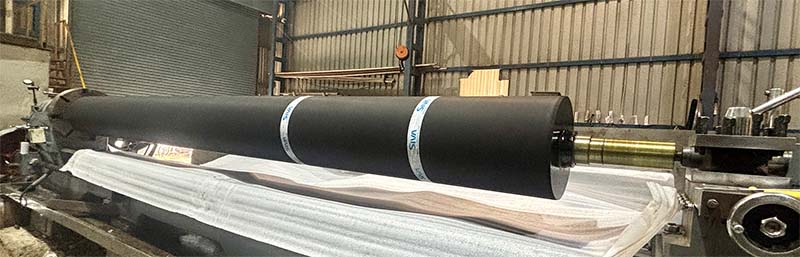
Applications Across Key Industries
The versatility of industrial rubber rollers makes them indispensable across various sectors:
- Printing & Packaging: In this sector, rubber rollers for the printing industry needs must handle inks and solvents without swelling. They prevent “ghosting” and ensure crisp image transfer without damaging the paper or foil.
- Steel and Metal Processing: Heavy-duty rubber rollers are used to move metal sheets without scratching the polished surfaces, which is critical for the automotive and appliance industries.
- Textile Industry: Rubber rollers help in the even application of dyes and finishes while ensuring the fabric fibres are not crushed or distorted.
- Paper Mills: Large-scale Rubber Roller India solutions are used to squeeze water out of paper pulp gently, maintaining the thickness and texture of the final product.
Why Customization is the Key to Longevity
No two production lines are identical. A “one-size-fits-all” approach often leads to premature roller failure or material degradation. Custom rubber-coated rollers allow you to choose:
- Durometer (Hardness): From sponge-soft to bone-hard, the Shore A scale determines how much the roller will “give” under pressure.
- Surface Finish: Options include mirror-smooth, matte, or grooved patterns (like diamond or spiral) for better fluid or air expulsion.
- Core Material: Ensuring the steel or aluminium core can handle the torque and load requirements of your specific machinery.
Partnering with the Best: Siva Rollers
Choosing the right partner for your roller needs is as important as the rollers themselves. Siva Rollers stands out as the Best Rubber Coated Roller Manufacturer & Supplier in India. We don’t just sell parts; we provide engineering expertise.
When you source your industrial rubber rollers from us, you benefit from:
- Precision Engineering: State-of-the-art grinding and balancing.
- Material Diversity: Access to Nitrile, Neoprene, EPDM, Silicone, and Viton coatings.
- Durability: Rollers designed to last longer under the most demanding Indian industrial conditions.
Investing in Quality Rubber Coated Roller to Save on Costs
While it may be tempting to opt for lower-cost alternatives, the hidden costs of material damage, frequent replacements, and machine downtime far outweigh the initial investment in premium rollers. High-performance rubber coated rollers are not just components; they are a safeguard for your product’s quality and your brand’s reputation.
If you are facing challenges with material scratching, slipping, or inconsistent processing, it might be time to audit your rollers. Transitioning to high-quality industrial rubber rollers can transform your production efficiency.
Ready to optimize your production line? Contact Siva Rollers, the leading rubber roller manufacturer in India, for a consultation. Let us help you design custom rubber coated rollers that protect your materials and boost your bottom line. Whether you need heavy-duty rubber rollers for steel or precision rubber rollers for the printing industry, we are your trusted partner in Rubber Roller India solutions.
Contact Us
Emial : info@sivarollers.com
Phone Number :
FAQs
Rubber coated rollers prevent scratching because rubber is elastomeric and distributes pressure evenly across the contact area. Unlike metal rollers that concentrate force at microscopic points, rubber deforms slightly under load, creating a cushioning effect that protects delicate surfaces like films, paper, foil, steel sheets, and textiles from marring and abrasion.
Metal rollers are rigid and unforgiving, which can cause dents, scratches, and pressure marks. Rubber rollers provide controlled grip, shock absorption, and pressure distribution, making them ideal for handling sensitive materials in printing, packaging, steel processing, textiles, and paper mills without causing damage.
Rubber coated rollers are engineered with specific coefficients of friction (COF) that match the material and machine speed. This ensures a consistent grip, preventing slipping, wrinkling, tearing, and heat buildup caused by friction mismatch in high-speed web processing lines.
Nip control refers to the uniform pressure applied where two rollers meet. Precision-ground rubber rollers maintain even pressure across the entire width, preventing materials from being crushed, stretched, or unevenly coated during laminating, coating, and printing processes.
Yes. Heavy-duty rubber rollers absorb machine vibration and mechanical shocks. This dampening effect prevents chatter marks, micro-fractures, and instability that often occur when vibrations transfer directly from machinery to the material.
Specialized rubber compounds like Nitrile, EPDM, Neoprene, Silicone, and Viton are selected based on temperature, chemical exposure, and solvent contact. These materials prevent swelling, degradation, and contamination, protecting both the roller and the processed material.
Yes. Anti-static rubber compounds dissipate static charge that builds up during high-speed processing of films, paper, and plastic. This prevents material sticking, roller wrapping, and damage to sensitive electronic or printed components.
Durometer (measured on the Shore A scale) determines how much the roller compresses under pressure. Softer rollers provide more cushioning for delicate materials, while harder rollers are used for heavy loads. Selecting the correct hardness is critical to preventing crushing or deformation.
Every production line has different speed, load, temperature, and material requirements. Custom rubber-coated rollers allow you to select the right hardness, surface finish, groove pattern, and core strength to match your exact process, preventing premature failure and material damage.
Siva Rollers is recognized as the Best Rubber Coated Roller Manufacturer & Supplier in India, offering precision-engineered, custom rubber rollers made from high-performance polymers. Their expertise in durometer selection, surface finishing, and industrial application design helps manufacturers eliminate material damage and improve production efficiency.