What is a Rubber Roller? Types, Uses & Complete Industries Guide
In the world of manufacturing, efficiency often comes down to the smallest moving parts. While massive machines get the credit for production, it is often the industrial rubber roller that ensures the process runs smoothly. Whether you are printing newspapers, laminating packaging, or processing steel, the quality of your rollers dictates the quality of your final product.
If you are facing issues with slippage, uneven coating, or rapid wear and tear, understanding the mechanics of these components is the first step to solving the problem. This guide covers everything you need to know about rubber rollers, from materials and types to choosing the right partner for your needs.
What is a Rubber Roller?
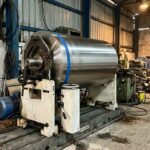
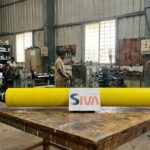
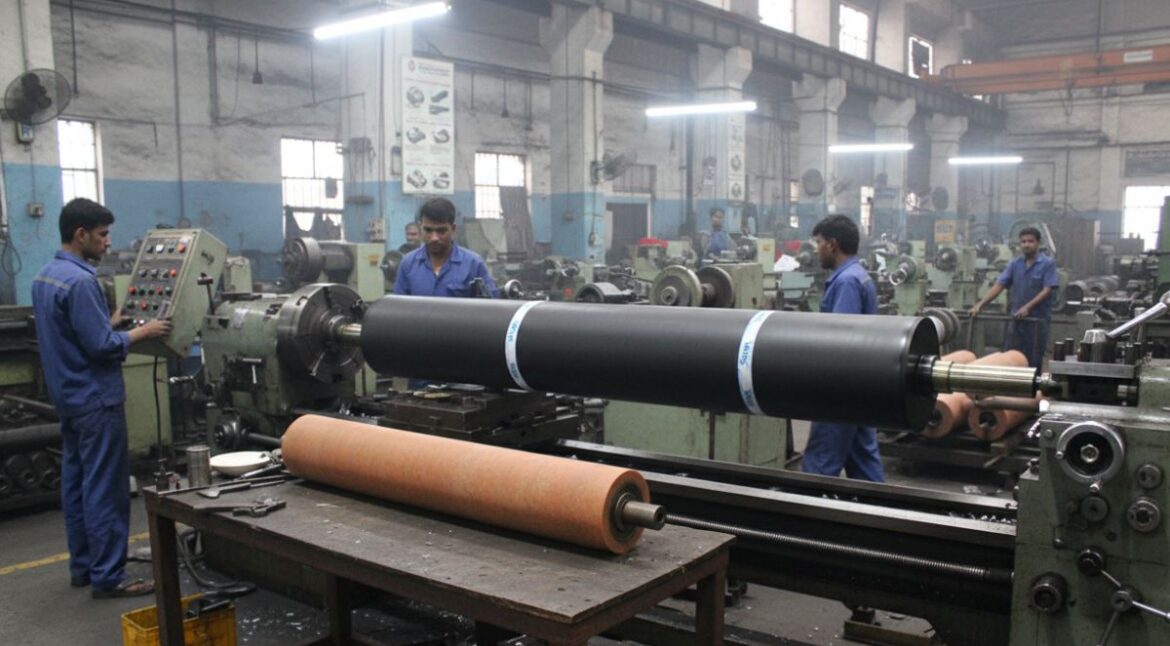
At its core, a rubber roller is a machine component consisting of an inner shaft (usually made of steel, aluminum, or carbon fiber) covered with an elastic rubber compound.
They serve as the primary interface between the machine and the product. Unlike rigid metal rollers, the rubber covering provides:
- Grip and Traction: Moving materials like paper, film, or foil without damage.
- Uniform Pressure: Essential for laminating and embossing.
- Chemical Resistance: Protecting the core from inks, solvents, and acids.
- Shock Absorption: Reducing vibration and noise in high-speed machinery.
Note for Industrial Buyers: The performance of the roller depends almost entirely on selecting the right rubber compound for your specific operating environment.
Need Custom Industrial Rollers?
✓ Custom Diameter & Length
✓ Temperature Control Design
✓ Fast Manufacturing
✓ Technical Support
The Anatomy of a High Quality Rubber Roller
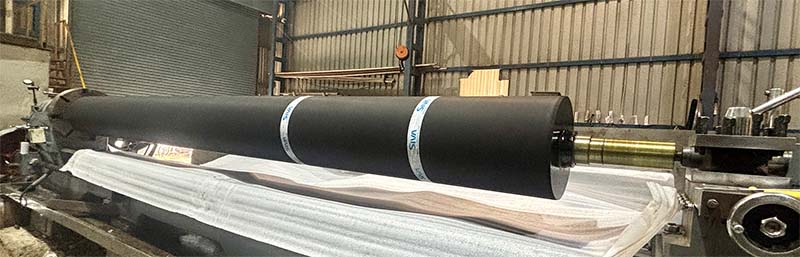
To understand why some rollers last months while others fail in weeks, you need to look at the construction. A high quality rubber roller typically has three main layers:
- The Core (Spindle): The metal shaft that connects to the machine drive. It must be perfectly balanced to prevent vibration.
- The Bonding Layer: A crucial chemical adhesive that ensures the rubber doesn’t peel off the metal core under high heat or pressure.
- The Rubber Cover: The functional outer layer, ground to precise dimensions and surface finishes.
Types of Rubber Rollers by Material
Not all rubber is created equal. As a leading rubber roller manufacturer, we often see industries using the wrong material for their application, leading to frequent downtime. Here is a breakdown of common materials:
1. Polyurethane (PU) Rollers
Known for extreme durability and high load-bearing capacity.
- Best for: High-pressure applications, steel processing, and drive wheels.
- Pros: Excellent cut and abrasion resistance.
2. Silicone Rubber Rollers
The go-to choice for high-temperature environments.
- Best for: Plastic manufacturing, hot stamping, and laminating.
- Pros: Heat resistance up to 250°C (480°F) and excellent release properties (non-stick).
3. Nitrile (NBR) Rollers
The standard for oil and grease resistance.
- Best for: Printing industry (offset), textile machinery, and packaging.
- Pros: Resists swelling when in contact with oil-based inks and solvents.
4. EPDM Rollers
- Best for: UV coating lines and applications involving ketones or ozone exposure.
- Pros: Excellent weather and chemical resistance.
5. Neoprene Rollers
A balanced, all-purpose rubber.
- Best for: General conveying and industrial use.
- Pros: Good mechanical strength and moderate oil resistance.
Common Industrial Applications
Industrial rubber rollers are the backbone of continuous production lines. Here is how they are used across different sectors:
Printing and Packaging Industry
In offset and flexographic printing, rollers are critical for ink transfer. They must maintain precise hardness (Shore A) to ensure the ink spreads evenly without distorting the image.
- Key Rollers: Inking rollers, dampening rollers, and impression rollers.
Textile Industry
Textile manufacturing requires rollers that can handle wet environments (dyeing) and high tension (winding).
- Key Rollers: Squeeze rollers, padding mangles, and guide rollers.
Steel and Metal Processing
These lines are harsh. Rollers here need to withstand cuts from sharp metal edges and acidic pickling baths.
- Key Rollers: Bridle rollers, steering rollers, and wringer rollers.
Plastic and Converting
Converting film into bags or pouches requires heat and pressure. Custom rubber roller solutions are often needed here to prevent the plastic from sticking or stretching.
- Key Rollers: Nip rollers, laminator rollers, and corona treatment rollers.
Why Customization Matters
Off-the-shelf components rarely solve specific industrial problems. This is where a custom rubber roller becomes a necessity rather than a luxury.
Every production line has unique variables:
- Speed: Higher speeds generate more heat build-up.
- Chemicals: The cleaning solvents you use might attack standard rubber.
- Load: Heavy products require a harder rubber compound to prevent deformation.
A specialized manufacturer can tailor the Hardness (Durometer), Surface Finish (smooth, grooved, or diamond pattern), and Compound Formulation to match your exact needs.
Common Problems & Troubleshooting
If you are experiencing these issues, it is time to inspect your rollers:
- Swelling: Caused by chemical incompatibility (e.g., using NBR rollers with Acetone).
- Cracking: Usually a sign of ozone attack or the rubber aging (hardening) over time.
- Bond Failure: The rubber peeling away from the metal core implies poor manufacturing processes.
- Uneven Wear: Often indicates machine misalignment or inconsistent rubber hardness across the roller face.
Choosing the Right Partner: Siva Rollers
Finding a reliable partner is critical to minimizing downtime. If you are looking for a rubber roller manufacturer in India that prioritizes precision and longevity, Siva Rollers is the name to trust.
As the Best Rubber Roller Manufacturer & Supplier in India, Siva Rollers specializes in engineering solutions that solve tough production challenges.
Why Industries Choose Siva Rollers:
- Advanced Compounding: We formulate rubber to resist your specific chemicals and heat ranges.
- Precision Grinding: ensuring high concentricity (run-out) for vibration-free operation at high speeds.
- Regrinding & Recoating Services: We breathe new life into your old cores, saving you the cost of buying new metal shafts.
- Fast Turnaround: We understand that every hour of machine downtime costs you money.
Whether you need a heavy-duty PU roller for a steel mill or a delicate silicone roller for a laminator, Siva Rollers delivers high quality rubber rollers tailored to your specs.
Maintenance Tips for Longer Roller Life
To get the best ROI from your investment, follow these simple maintenance steps:
- Store Correctly: Always store rollers on their journals (ends), never resting on the rubber face. This prevents flat spots.
- Clean Regularly: Remove ink and debris immediately. Dried contaminants can cause localized abrasion.
- Keep Cool: Store spare rollers in a cool, dark place away from direct sunlight and ozone sources (like electric motors).
- Check Pressure: Do not over-pressure nip rollers. It causes excessive heat and internal bond failure.
Final Thoughts
The humble rubber roller is often the deciding factor between a perfect product and a reject. By understanding the types of materials available and selecting the right specifications, you can significantly improve your machine’s efficiency.
Don’t settle for generic components that fail prematurely. Connect with experts who understand the science behind the rubber.
Ready to upgrade your production line? Contact Siva Rollers, the leading rubber roller manufacturer, for a consultation on your specific industrial needs. Let us help you choose the perfect roller to keep your business moving forward.
Contact Us
Emial : info@sivarollers.com
Phone Number :
FAQs
A rubber roller is used to grip, press, guide, coat, laminate, or transfer material smoothly through a machine without damaging the surface. It provides traction, uniform pressure, chemical protection, and shock absorption in processes like printing, packaging, textiles, steel processing, and plastic converting.
You must select the rubber compound based on heat, chemicals, load, and speed in your process.
- PU rollers for heavy load and abrasion
- Silicone rollers for high temperature and non-stick needs
- NBR rollers for oil and solvent exposure (printing)
- EPDM rollers for chemicals, UV, and ozone
- Neoprene rollers for general industrial use
Using the wrong material is the main reason for early roller failure.
Swelling happens due to chemical incompatibility. Solvents, inks, or cleaning agents are reacting with the rubber compound. For example, NBR rollers exposed to strong ketones like acetone will swell. The solution is switching to a chemically compatible compound such as EPDM or silicone.
Cracking is usually caused by ozone exposure, UV light, aging, or excessive heat buildup. Hardening happens when rubber loses elasticity due to temperature and environmental exposure. Proper storage and selecting ozone-resistant materials like EPDM can prevent this.
This is called bond failure. It occurs due to poor bonding processes during manufacturing or excessive heat and pressure during operation. A high-quality rubber roller has a strong chemical bonding layer that prevents separation even under heavy loads.
Rubber roller hardness depends on the application:
- Soft rollers (20–40 Shore A) for delicate pressure and coating
- Medium hardness (50–70 Shore A) for printing and laminating
- Hard rollers (70–95 Shore A) for steel, heavy load, and drive applications
Incorrect hardness leads to uneven pressure, slippage, and wear.
Common signs include uneven coating, vibration, slippage, wrinkles in material, excessive heat, and uneven wear across the roller surface. These indicate issues with rubber hardness, concentricity, bonding, or compound mismatch.
Yes. Through regrinding and recoating, the old metal core can be reused with a fresh rubber layer. This is cost-effective and restores the roller to near-new performance when done by an experienced rubber roller manufacturer.
Store rollers on their ends (journals), not on the rubber surface. Keep them in a cool, dark place away from sunlight, ozone sources, and heat. Incorrect storage causes flat spots, cracking, and premature aging.
Siva Rollers is a leading rubber roller manufacturer and supplier in India known for custom compounding, precision grinding, recoating services, and fast turnaround. They design rubber rollers based on your exact machine conditions, ensuring longer life and reduced downtime.