
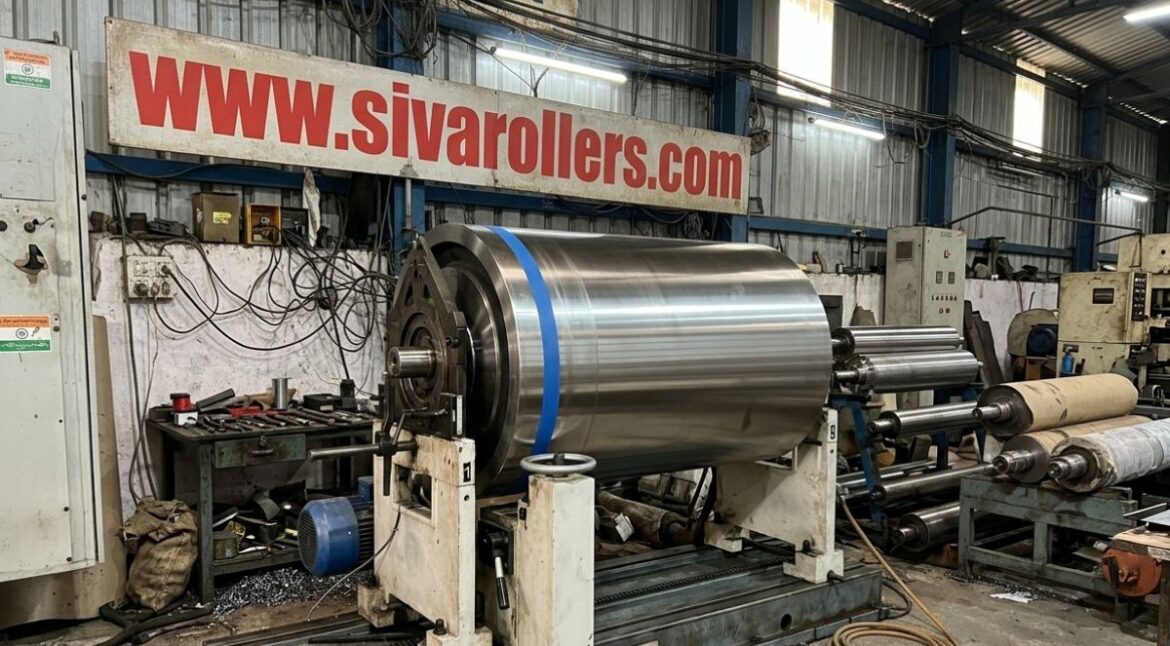
Why Oil Heating Rollers Are More Stable Than Electric Heated Rollers for Industrial Use
In the high-stakes world of industrial manufacturing—whether you are in plastic extrusion, textile processing, or high-speed packaging—precision isn’t just a goal; it’s a requirement. Among the most critical components in these production lines is the industrial heating roller.
For decades, plant managers and maintenance engineers have debated the merits of the electric heated roller versus the oil-heated roller. While electric options offer perceived simplicity, the industry is increasingly shifting toward thermal oil systems for one primary reason: Unbeatable Temperature Stability.
At Siva Rollers, India’s leading heating roller manufacturer with a global export footprint, we have seen firsthand how switching to oil heating systems transforms production ROI. In this guide, we break down why oil-heated rollers outperform electric alternatives in stability, longevity, and overall performance.
The Core Difference: How They Transfer Heat
To understand why one is more stable than the other, we must look at the fundamental physics of heat transfer.
1. Electric Heated Rollers: The “Hot Spot” Challenge
An electric heated roller typically uses internal resistance cartridges or induction coils. While they heat up quickly, they rely on radiant heat or conduction through a static air gap or solid metal. Because the heat source is stationary, it creates “zones.” If one cartridge fails or fluctuates, you get immediate “cold spots” on the roller surface.
2. Oil Heated Rollers: The Fluid Dynamics Advantage
A thermal oil heated roller utilises a continuous flow of high-temperature synthetic oil. This fluid is pumped through precisely engineered internal channels (such as multi-zone or peripheral bores). Because the oil is constantly moving and being reheated in a central unit, the heat is distributed with mathematical precision across the entire face of the roller.
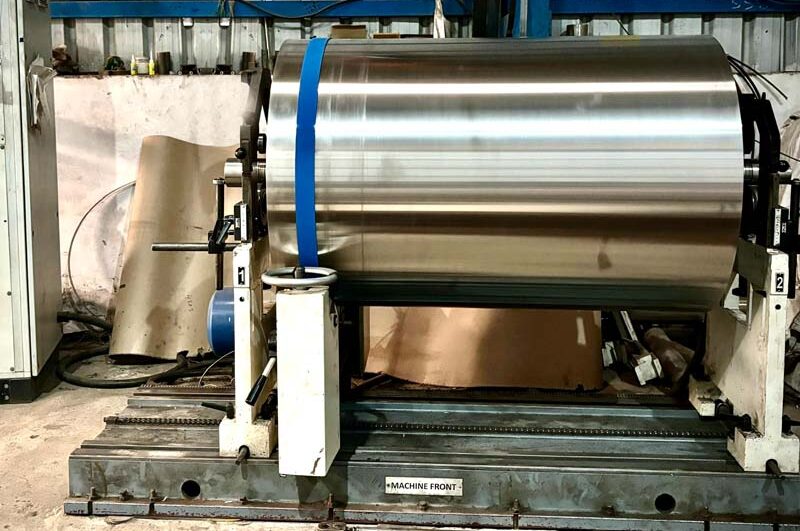
5 Reasons Why Oil Heating Rollers Offer Superior Stability
1. Zero Thermal Gradients (Uniformity)
In industries like plastic film extrusion or textile laminating, a temperature deviation of even 2°C can lead to product warping, uneven thickness, or poor adhesion.
- Electric rollers often suffer from a “checkerboard” temperature profile due to the spacing of heating elements.
- Oil heated rollers maintain a consistent temperature from the drive side to the operator side. The fluid nature of the medium ensures that every square millimeter of the roller surface receives the same thermal energy.
2. Rapid Recovery and Buffer Capacity
Industrial processes aren’t static. When a cold web of material (like steel or fabric) hits a hot roller, it “robs” heat from the surface.
- Electric elements take time to cycle “On” and “Off” to compensate, leading to a “sawtooth” temperature graph.
- Thermal oil acts as a massive heat reservoir (thermal mass). The system can sense the drop and circulate more hot oil instantly, maintaining a flat, stable temperature line even at high line speeds.
3. Precision Temperature Control
Modern temperature control rollers using oil can be regulated within ±1°C. Because the oil’s flow rate and temperature are controlled externally at the Thermal Oil Unit (TCU), the response is more granular. Electric systems often rely on “all-or-nothing” switching (PID control), which can lead to overshooting the target temperature.
4. Longevity and Maintenance ROI
From a maintenance engineer’s perspective, the oil-heated roller is a long-term winner.
- Electric Heated Roller: Elements eventually burn out. Replacing them often requires dismantling parts of the machine, leading to expensive downtime.
- Oil Heated Roller: There are no internal electrical components to fail. The only moving parts are external (pumps/valves), which are easy to service without removing the roller from the line.
5. Multi-Zone Capability
For wide-web applications, you may need different temperatures at the edges versus the center. Oil systems excel here. By using a Roller Heating System with multi-passage rotary unions, Siva Rollers can design systems where specific zones are controlled independently—something nearly impossible to achieve reliably with electric cartridges.
Impact on Specific Industries
Plastic & Packaging
In extrusion and BOPP lines, temperature stability determines the clarity and tensile strength of the film. Chill rollers and heating rollers must work in tandem. Using oil ensures the film doesn’t “snap” or “haze” due to thermal shock.
Textile Processing
Consistent dyeing and heat-setting require deep thermal penetration. The stable heat of an oil-based system ensures that the fabric is treated equally across its entire width, preventing “centre-to-selvedge” colour variations.
Steel & Converting
In coating lines, the viscosity of the coating material depends on the roller temperature. If the roller temperature fluctuates, the coating thickness varies, leading to wasted raw materials and rejected batches.
Why Choose Siva Rollers? (The Indian Advantage, Global Standards)
Based in India, Siva Rollers has established itself as a premier industrial roller manufacturer serving clients across Europe, the Middle East, and Southeast Asia. We don’t just manufacture rollers; we engineer thermal solutions.
- Custom Engineering: Every heat transfer roller we build is designed for your specific line speed, material type, and temperature requirements.
- Precision Balancing: Our rollers undergo dynamic balancing to ensure vibration-free operation at high RPMs.
- High-Grade Materials: We use specialized alloy steels and precision-ground finishes (Chrome plating, Tungsten Carbide) to ensure maximum heat transfer efficiency.
- Export Excellence: With robust logistics, we provide seamless delivery and technical support to international manufacturing hubs.
Making the Switch for Performance
While the initial setup of an oil heated roller system might involve more peripheral equipment (like pumps and heaters), the Return on Investment (ROI) is realized through:
- Lower rejection rates.
- Higher production speeds.
- Reduced energy consumption (oil retains heat better than air/metal).
- Minimal downtime.
For any plant manager focused on quality and scale, the transition from electric vs oil heated rollers is a clear choice. Stability isn’t just a technical spec—it’s the foundation of your product’s quality.
Ready to Upgrade Your Production Line?
Don’t let unstable temperatures bottleneck your growth. Consult with the experts at Siva Rollers to find the perfect heating solution for your facility.
Contact Siva Rollers Today:
- Request a Quote: Get a customized proposal for your project.
- WhatsApp Inquiry: Chat with our technical team for immediate assistance.
- Call Us: Speak to a specialist about your heating roller requirements.
Siva Rollers – Engineering Precision, Delivering Stability. Manufacturing Excellence in India. Exporting Performance Globally.
- Phone: +91 75070 10009
- Email: info@sivarollers.com
FAQs
Oil-heated rollers provide superior stability because they use a continuous flow of thermal fluid. Unlike electric rollers, which rely on stationary heating elements that can create "hot spots," the circulating oil ensures a uniform temperature across the entire roller surface by constantly redistributing thermal energy.
The primary drawbacks include thermal gradients (uneven heat distribution), the risk of "cold spots" if a single heating cartridge fails, and a "sawtooth" temperature profile. Because electric elements cycle on and off to maintain heat, they often overshoot or undershoot the target temperature.
In plastic film and BOPP lines, even a $2^\circ\text{C}$ fluctuation can cause warping. Oil-heated rollers eliminate the "checkerboard" temperature profile common in electric systems. The fluid medium ensures every square millimeter of the roller face maintains the exact same temperature, preventing haze or snapping.
In plastic film and BOPP lines, even a $2^\circ\text{C}$ fluctuation can cause warping. Oil-heated rollers eliminate the "checkerboard" temperature profile common in electric systems. The fluid medium ensures every square millimeter of the roller face maintains the exact same temperature, preventing haze or snapping.
Yes. Thermal oil acts as a thermal reservoir (high thermal mass). When a cold material web hits the roller at high speeds, the oil system senses the temperature drop and instantly circulates more heated fluid. This allows for rapid recovery and a flat temperature line, whereas electric elements take longer to "catch up."
- Electric Rollers: Require frequent downtime to replace burnt-out internal elements, often necessitating the removal of the roller from the machine.
- Oil-Heated Rollers: Have no internal electrical parts to fail. Maintenance is localized to external pumps and valves, which can be serviced without dismantling the production line.
Multi-zone capability allows different sections of a single roller (e.g., edges vs. center) to be kept at different temperatures. Siva Rollers achieves this using multi-passage rotary unions. This level of granular control is nearly impossible to maintain reliably with traditional electric cartridges.
Consistent dyeing requires deep, even thermal penetration. Because oil systems prevent "center-to-selvedge" temperature drops, the fabric is treated equally across its entire width. This ensures uniform color setting and prevents rejects due to shading differences.
While the initial setup is more complex, thermal oil retains heat significantly longer than air or metal gaps found in electric rollers. This thermal retention means the heating unit works less over time, leading to lower energy consumption and a higher ROI during long-run manufacturing.
Modern systems using a Thermal Control Unit (TCU) can regulate surface temperatures within $\pm 1^\circ\text{C}$. This precision is achieved by controlling the flow rate and temperature of the oil externally, providing a much smoother response than the "all-or-nothing" switching of electric PID controls.
Siva Rollers combines custom engineering with global export standards. Every roller is dynamically balanced for high RPMs and finished with specialized coatings like Chrome plating or Tungsten Carbide. Their ability to design systems for specific line speeds and materials makes them a preferred partner for Europe, the Middle East, and Southeast Asia.
How to choose the right chill & heat transfer roller manufacturer?
WhatsApp us