Choosing the Right Roller for Plastic Extrusion Industry – Expert Guide
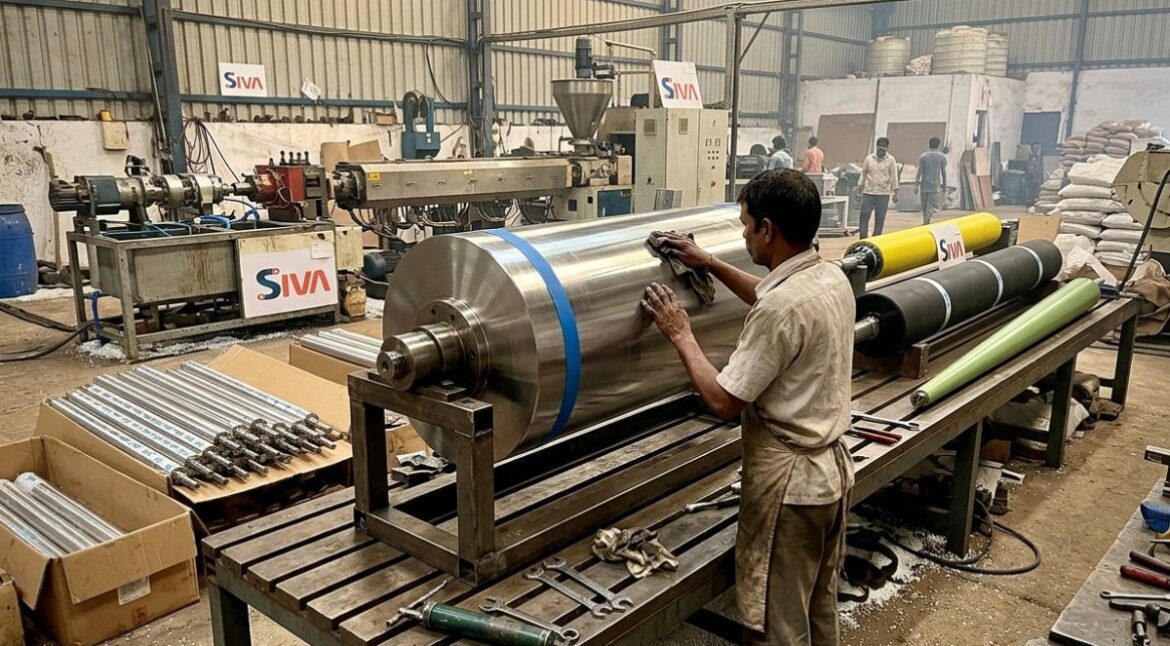
In the high-stakes world of plastic manufacturing, the efficiency of your production line is often determined by components that many take for granted. If you are operating a high-speed line, you know that the Roller for Plastic Extrusion Industry is not just a cylindrical piece of metal; it is the heart of your product’s surface quality, thickness consistency, and cooling rate.
At Siva Rollers, we understand that a single minute of downtime or a batch of warped plastic sheets can cost thousands. This expert guide is designed to help industrial professionals navigate the complexities of selecting Plastic Extrusion Rollers that maximize ROI and solve common processing bottlenecks.
The Critical Role of Rollers in Plastic Processing
The extrusion process involves transforming raw resin into a continuous profile, sheet, or film. During this transition, the plastic is molten and highly sensitive. Industrial Rollers for Plastic Processing must perform three primary functions:
- Conveyance: Moving the material through the line without slipping or scratching.
- Thermal Management: Removing heat at a controlled rate to prevent internal stress.
- Surface Finish: Providing the exact texture—whether high-gloss or matte—required by the end consumer.
Choosing the wrong roller leads to “orange peel” effects, gauge variations, and frequent maintenance shutdowns. To avoid this, let’s look at the specific types of rollers required for a high-performing line.
Key Types of Plastic Extrusion Line Rollers
Every stage of the extrusion process requires a different engineering approach. Here is a breakdown of the essential Plastic Extrusion Line Rollers used in modern facilities.
1. Cooling and Chill Rollers
Temperature control is the most significant factor in plastic extrusion. Cooling rollers for extrusion (often called Chill rollers for plastic sheet extrusion) are designed with internal spiral baffles. These baffles ensure that water flows at a high velocity, providing uniform heat transfer across the entire face of the roller.
Without high-quality chill rollers, you risk “bowing” or “warping” because one side of the plastic sheet cools faster than the other. At Siva Rollers, we focus on precision-ground surfaces to ensure the plastic maintains 100% contact with the cooling surface.
2. Calender Rollers
For manufacturers producing sheets or heavy-gauge films, Calender rollers are the workhorses. These rollers are subjected to immense pressure to “squeeze” the plastic to a specific thickness. They must be manufactured from high-grade forged steel to prevent “roll deflection”—where the roller bends slightly under pressure, causing the centre of the plastic sheet to be thicker than the edges.
3. Anti-Deflection Rollers
To combat the physical limits of physics in wide-web extrusion, anti-deflection rollers are essential. These are engineered with a “crown” or a specific internal structure that compensates for the pressure of the melt. This ensures a perfectly flat profile across the entire width of the production run, reducing material waste and scrap rates.
Matching the Roller to the Polymer
The “skin” of your roller determines how it interacts with different polymers like PE, PP, PVC, or PET. Choosing the right coating is a balance between release properties, heat resistance, and durability.
Rubber Coated Rollers for Extrusion
Rubber coated rollers for extrusion are preferred for their “grip” and elasticity. They are ideal for nip points where you need to pull the material without crushing it. Different rubber compounds (like EPDM or Nitrile) offer varying levels of chemical resistance.
PU Coated Rollers
PU coated rollers (Polyurethane) offer superior abrasion resistance compared to standard rubber. If your process involves sharp edges or high-friction materials, PU is the industrial standard for longevity. It provides excellent “rebound” properties, maintaining its shape even after millions of rotations.
Teflon Coated Rollers
When dealing with “sticky” polymers or high-temperature melts, Teflon coated rollers are the ultimate solution. The non-stick surface ensures that the plastic doesn’t “wrap” around the roller, which is a leading cause of line stoppages. These are particularly useful as Guide rollers for extrusion lines in the early stages of the cooling process.
Plastic Film Extrusion Rollers
For thin-gauge applications, Plastic film extrusion rollers require an ultra-fine finish. Any microscopic imperfection on the roller surface will be magnified on the film. These rollers are often hard-chrome plated and mirror-polished to a Ra value of less than 0.05.
Solving Common Industrial Problems with Better Rollers
As an industrial operator, you aren’t just looking for a part; you are looking for a solution to a problem. Here is how upgrading your roller technology solves common issues:
- Problem: Surface Scratches.
- Solution: Ensure your Guide rollers for extrusion lines are perfectly balanced and have the correct coating (like soft-touch PU) to prevent friction-related marking.
- Problem: Uneven Sheet Thickness.
- Solution: Switch to Anti deflection rollers or high-precision Calender rollers with reinforced internal cores.
- Problem: Slow Production Speeds.
- Solution: Improve your cooling capacity. High-efficiency Chill rollers for plastic sheet extrusion with optimized internal flow can allow you to increase line speed by up to 20% without sacrificing quality.
Maintenance and Longevity: The Siva Rollers Advantage
Investing in a Roller for Plastic Extrusion Industry is a long-term capital expenditure. To maximize the life of your rollers, consider the following:
- Bearing Maintenance: The best roller in the world will fail if the bearings are neglected. Ensure high-temperature grease is used for rollers near the die-head.
- Surface Cleaning: Avoid using metal scrapers on Teflon coated rollers or PU coated rollers. Use specialized cleaning agents that don’t degrade the coating.
- Periodic Regrinding: Even the hardest surfaces wear down. Periodic regrinding and re-coating by a professional like Siva Rollers can restore a used roller to “like-new” condition at a fraction of the cost of a replacement.
Why Choose Siva Rollers?
When you search for Industrial Rollers for Plastic Processing, you are looking for a partner who understands the nuances of the extrusion line. At Siva Rollers, we don’t just manufacture; we engineer.
We specialize in high-performance Plastic Extrusion Line Rollers tailored to your specific line speed, polymer type, and budget. Whether you need a replacement Cooling roller or a custom-designed Calender roller, our team ensures that every product leaving our facility meets the highest global standards for concentricity and surface finish.
Making the Right Choice
The difference between a profitable extrusion line and a problematic one often comes down to the quality of your rollers. By selecting the right Plastic Extrusion Rollers—considering the cooling requirements, the need for anti-deflection technology, and the specific coating (PU, Teflon, or Rubber)—you secure the future of your production.
Ready to optimize your extrusion line? Solve your production headaches today with precision-engineered solutions.
Contact Siva Rollers for a technical consultation on your next Roller for Plastic Extrusion Industry project.
Contact US : +91 75070 10009 , info@sivarollers.com
FAQs
In plastic processing, industrial rollers perform three critical roles: conveyance (moving material without damage), thermal management (controlled cooling to prevent internal stress), and surface finishing (applying the required texture, such as high-gloss or matte, to the final product).
Chill rollers (or cooling rollers) are vital because they use internal spiral baffles to ensure uniform heat transfer. This prevents common defects like warping or bowing, which occur when one side of a plastic sheet cools faster than the other. High-quality chill rollers allow for faster line speeds while maintaining structural integrity.
Calender rollers are engineered from high-grade forged steel to withstand immense pressure. Their robust construction prevents "roll deflection"—a phenomenon where the roller bends under load, causing the center of the plastic sheet to be thicker than the edges.
Anti-deflection rollers feature a specific internal structure or "crown" designed to compensate for the physical pressure of the molten plastic. This ensures a perfectly flat profile across the entire width of the production run, significantly reducing material waste and scrap rates.
Rubber coated rollers are ideal for "nip points" where high grip and elasticity are required to pull material through the line without crushing it. Depending on the polymer used, compounds like EPDM or Nitrile can be selected for specific chemical and heat resistance.
PU coated rollers offer superior abrasion resistance and "rebound" properties compared to standard rubber. They are the industrial standard for processes involving high friction or sharp edges, as they maintain their shape and surface integrity over millions of rotations.
Teflon coated rollers provide a non-stick surface that prevents molten or "sticky" polymers from wrapping around the roller. This is a critical solution for reducing line stoppages and is often used for guide rollers in the early stages of the cooling process.
For thin-gauge films, rollers require an ultra-fine finish to prevent microscopic imperfections from being magnified. These rollers are typically hard-chrome plated and mirror-polished to a surface roughness (Ra value) of less than 0.05.
By upgrading to high-efficiency chill rollers with optimized internal flow, manufacturers can remove heat from the plastic more effectively. This improved cooling capacity can allow for a production line speed increase of up to 20% without sacrificing product quality.
To maximize ROI, follow these three maintenance steps:
- Bearing Maintenance: Use high-temperature grease for rollers near the die-head.
- Proper Cleaning: Avoid metal scrapers on PU or Teflon coatings; use specialized cleaning agents instead.
- Periodic Regrinding: Utilize professional regrinding and re-coating services to restore rollers to "like-new" condition at a lower cost than replacement.