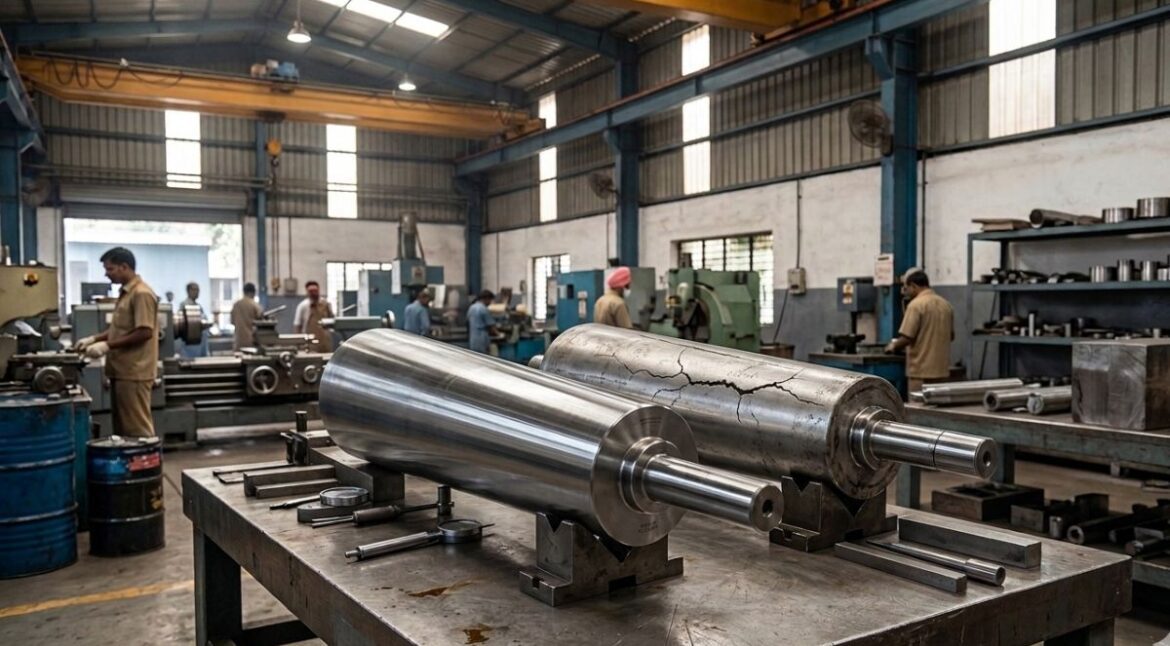
What are the Reasons for the cracking of industrial chrome-coated rollers?
In high-precision manufacturing environments—from high-speed printing presses to heavy-duty textile calenders—chrome-coated rollers are the workhorses of the production line. Known for their extreme hardness, corrosion resistance, and low coefficient of friction, these rollers are essential for maintaining product quality.
However, a common and costly issue faced by plant engineers and maintenance managers is the appearance of surface cracks. When a hard chrome-plated roller begins to crack, it doesn’t just threaten the roller itself; it risks damaging the substrate, increasing scrap rates, and causing unscheduled downtime.
At Siva Rollers, we understand that identifying the “why” behind roller failure is the first step toward optimising your machinery’s lifespan. In this guide, we break down the technical reasons for cracking in industrial chrome-coated rollers and how to prevent them.
Understanding the Nature of Hard Chrome Plating
Before diving into the causes of failure, it is important to understand what makes industrial chrome-coated rollers unique. Hard chrome is not a solid block of metal; it is an electroplated layer typically applied to a steel or copper base.
While the coating is incredibly hard (often reaching 65-70 HRC), it is also inherently brittle. Unlike the base metal, chrome has very little “give.” When the roller is subjected to stresses beyond its physical limits, the coating will crack rather than deform.
Top 6 Reasons for Cracking in Chrome-Coated Rollers
1. Thermal Shock and Rapid Temperature Fluctuations
Thermal shock is perhaps the most frequent cause of “crazing” or fine-line cracking on the surface of a hard chrome-plated roller.
In industries like plastic extrusion or textile finishing, rollers often operate at high temperatures. If a heated roller is suddenly exposed to cold cleaning fluids or if the cooling system inside the roller engages too aggressively, the base metal and the chrome coating contract at different rates. Because the chrome cannot stretch or shrink as quickly as the underlying steel, “stress cracks” form across the surface.
Troubleshooting Tip: Always implement a gradual warm-up and cool-down cycle for your machinery to allow for even thermal expansion.
2. Excessive Nip Pressure and Mechanical Overload
In converting and packaging industries, rollers are often used in “nip” applications where two rollers press against each other. If the nip pressure exceeds the design specifications of the chrome coating rollers, the base metal may undergo slight elastic deformation.
While the steel core can bounce back, the brittle chrome layer cannot. This results in longitudinal cracks or “spalling,” where chunks of the chrome may eventually flake off because the bond between the plating and the substrate has been compromised.
3. Hydrogen Embrittlement During the Plating Process
Sometimes, the reason for cracking starts before the roller even reaches your factory floor. During the electroplating process, hydrogen atoms can become trapped in the crystalline structure of the chromium.
If a chrome-coated roller manufacturer does not perform proper “de-embrittlement” baking after plating, these trapped gas molecules create internal pressure. Over time, this pressure finds its way out by cracking the surface of the roller. At Siva Rollers, we prioritise rigorous post-plating heat treatments to ensure hydrogen is fully evacuated, guaranteeing a stable surface.
4. Improper Substrate Preparation (The “Ice on Mud” Effect)
The durability of a chrome surface is only as good as the metal beneath it. If the base steel is too soft or has not been hardened correctly, it provides insufficient support for the hard chrome layer.
Think of it as a thin layer of ice over soft mud. When weight is applied to the ice, the mud shifts, and the ice shatters. In the world of industrial chrome-coated rollers, if the substrate deflects under load, the chrome surface will develop “alligator cracking” or spider-web patterns.
5. Corrosion Underneath the Coating (Pitting)
Hard chrome is naturally micro-porous. While it protects against surface wear, microscopic channels can allow corrosive chemicals or moisture to reach the base metal.
Once the base metal begins to rust or oxidise underneath the chrome, the resulting corrosion occupies more space than the original metal. This expansion pushes upward against the plating, causing it to crack and eventually “pit.” This is common in the printing and paper industries, where acidic inks or humid environments are prevalent.
6. Grinding and Finishing Errors
After a roller is plated, it must be ground to a precise micron-level tolerance. If the grinding wheel is too “hard” or if the coolant flow is insufficient, the grinding process generates intense localised heat.
This leads to “grinding checks”—tiny, parallel cracks that might not be visible to the naked eye initially but expand rapidly once the roller is put under operational stress.
How to Identify Different Types of Roller Surface Defects
Understanding the visual pattern of the crack can help maintenance teams diagnose the root cause:
- Crazing (Spiderweb Cracks): Usually indicates thermal shock or aged plating.
- Longitudinal Cracks: Often a sign of excessive mechanical pressure or substrate deflection.
- Pitting and Flaking: Typically suggests sub-surface corrosion or poor bonding during the manufacturing phase.
- Circular/Radial Cracks: Often caused by localised impact damage (e.g., a tool dropping on the roller).
Preventing Chrome Coated Roller Damage: Best Practices
To maximise the ROI of your industrial rollers, the procurement and maintenance teams should follow these guidelines:
- Specify the Correct Base Hardness: When ordering from a chrome-coated roller manufacturer, ensure the base metal hardness is compatible with your nip pressures.
- Monitor Cooling Systems: Ensure that internal water-cooling or oil-heating systems are functioning smoothly without sudden surges.
- Routine Surface Inspections: Use dye-penetrant testing during scheduled maintenance to catch micro-cracks before they become “catastrophic” failures.
- Avoid Harsh Chemicals: Use only manufacturer-recommended cleaning agents that won’t penetrate the micro-pores of the chrome.
- Choose a High-Quality Partner: Ensure your rollers are manufactured using modern plating baths and proper de-embrittlement cycles.
How to Extend the Life of Your Industrial Chrome Coated Rollers
Preventing damage is significantly cheaper than a full hard chrome roller repair. Here are the best practices for plant engineers:
- Controlled Warm-up: If your process involves heat, ramp up the temperature gradually to allow the steel and chrome to expand in tandem.
- Regular Cleaning: Use non-abrasive, pH-neutral cleaners to prevent chemical buildup in the micro-cracks.
- Correct Nip Pressure: Always stay within the manufacturer’s recommended PSI/PLI limits.
- Routine Grinding: If you notice very fine wear, a professional regrind can remove surface fatigue before it turns into a deep crack.
- Partner with a Quality Manufacturer: Ensure your rollers are manufactured using high-grade alloy steel and precision plating techniques.
When to Repair vs. Replace Your Cracked Chrome Roller
A common question for industrial procurement teams is whether a cracked chrome roller can be saved.
- Hard Chrome Roller Repair: If the cracks are limited to the surface and haven’t deeply scarred the substrate, the roller can often be stripped, reground, and recoated. This is a cost-effective way to restore OEM-level performance.
- Replacement: If the cracks are a result of “core fatigue” or if the base metal has been significantly deformed, a full replacement is usually the safer, more economical long-term choice.
Why Industry Leaders Choose Siva Rollers
At Siva Rollers, we don’t just manufacture rollers; we engineer solutions for the most demanding industrial environments. Whether you are in the printing, packaging, textile, or converting industry, we understand that a single cracked roller can halt your entire production line.
Our hard chrome plating process is optimised for:
- Maximum Bond Strength: Preventing flaking and peeling under high-load conditions.
- Zero Hydrogen Embrittlement: Specialised heat treatment cycles for every roller.
- Precision Finishing: State-of-the-art grinding to eliminate the risk of grinding checks.
- Customization: We work with your engineers to select the right substrate and coating thickness for your specific application.
Looking for Hard Chrome Roller Repair or Manufacturing?
Don’t let surface defects compromise your product quality. If you are noticing signs of wear, cracking, or pitting on your industrial chrome-coated rollers, our technical team is here to help.
Contact Siva Rollers today for a technical consultation on:
- New Chrome Coated Roller Manufacturing
- Precision Regrinding and Mirror Finishing
- Hard Chrome Recoating and Stripping
- Roller Core Repair and Refurbishment
Optimise your machinery. Reduce your downtime. Trust Siva Rollers.
CONTACT US
FAQs
Cracking in industrial chrome-coated rollers is mainly caused by thermal shock, excessive nip pressure, hydrogen embrittlement, improper substrate hardness, sub-surface corrosion, and grinding defects. Since hard chrome is brittle, it cracks instead of deforming when subjected to stress beyond its limit.
Thermal shock causes cracking because chrome and the base metal expand and contract at different rates. Sudden temperature changes create internal stress, leading to fine surface cracks known as crazing.
Yes, high nip pressure or mechanical overload can deform the roller core. While the steel base may recover, the brittle chrome layer cannot, resulting in longitudinal cracks or flaking (spalling).
Hydrogen embrittlement occurs when hydrogen gas gets trapped during electroplating. If not removed through proper heat treatment, it creates internal stress, which eventually leads to surface cracking in chrome-coated rollers.
If the base material is too soft or improperly treated, it cannot support the hard chrome layer. This leads to surface deformation and “alligator cracking”, similar to ice breaking over a weak foundation.
Yes, micro-pores in chrome allow moisture and chemicals to penetrate, causing corrosion underneath. This leads to pitting, expansion, and eventual cracking or flaking of the coating.
Grinding cracks, also called grinding checks, occur due to excessive heat during finishing. Improper grinding or insufficient cooling creates micro-cracks that grow during operation.
- Spiderweb cracks (crazing): Thermal shock
- Long cracks: Mechanical overload
- Pitting/flaking: Corrosion or bonding failure
- Radial cracks: Impact damage
Each pattern helps diagnose the root cause quickly.
To prevent cracking:
- Use gradual heating and cooling cycles
- Maintain correct nip pressure
- Ensure proper substrate hardness
- Avoid harsh chemicals
- Perform regular inspections and maintenance
If cracks are surface-level, the roller can be repaired through stripping, regrinding, and recoating. However, if the core is damaged or fatigued, replacement is the safer and more cost-effective solution.