
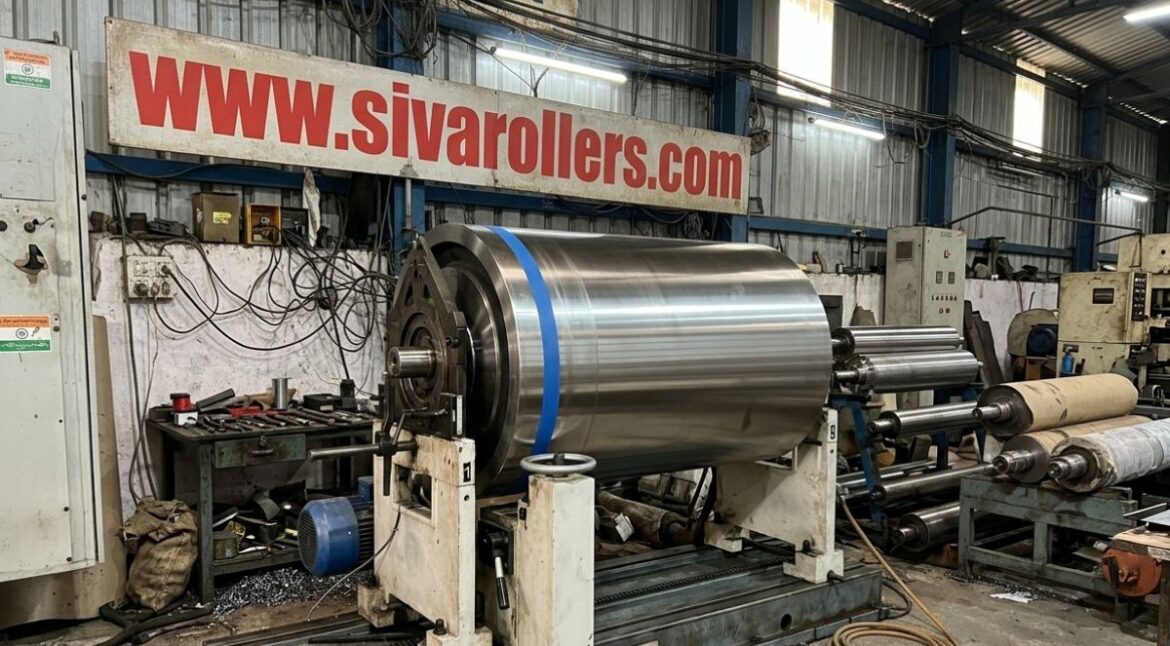
How a High-Precision Heat Transfer Roller Stops Material Stretching in Printing Presses
If you manage a modern printing facility, you already know the sinking feeling that comes with a high-speed production run gone wrong. You load up expensive flexible packaging films, lightweight paper, or speciality foils, bring the press up to speed, and suddenly—misregistration. The colours are misaligned, the material is wrinkling, and your rejection rates are skyrocketing.
More often than not, the culprit isn’t your ink, your plates, or your operators. The invisible enemy destroying your print quality is uncontrolled thermal expansion. When your substrate gets too hot, it stretches. When it stretches, your web tension fails, and your print registration becomes impossible to maintain.
The ultimate solution to this costly problem is to upgrade to a high-precision heat-transfer roller.
In this comprehensive guide, we will explore exactly how these specialised rollers eliminate material stretching, protect your profit margins, and why choosing the right manufacturing partner is critical for your printing success.
The Hidden Cost of Material Stretching in Web Printing
To understand the value of a premium heat transfer roller, we first need to look at the forces acting upon your materials during a print run.
Modern web offset, flexographic, and rotogravure presses operate at blistering speeds. As the web of material travels through the press, it is subjected to immense physical and thermal stress. The friction of the rollers, combined with the intense heat generated by drying units and UV curing lamps, drastically raises the temperature of the substrate.
When materials—especially thin plastic films like PET, BOPP, or LDPE—absorb this excess heat, they undergo thermal expansion. They literally grow in length and width. This causes three massive problems for your printing business:
- Catastrophic Misregistration: In multi-colour printing, each color station must apply ink at the exact millimetre location as the previous one. If the material stretches even a fraction of an inch between station one and station four, your final image will look blurry, misaligned, and unprofessional.
- Web Breaks and Wrinkling: As the material expands, it loses its tautness. Uneven tension leads to severe wrinkling as it passes through the nip rollers, and in worst-case scenarios, the web will snap entirely, forcing a complete halt in production.
- Plummeting Profit Margins: Every yard of stretched, misprinted material goes straight into the scrap bin. Add the cost of wasted ink, lost production time, and the labour required to re-thread the press, and a simple stretching issue can erase the profit from an entire client order.
What is a Heat Transfer Roller and How Does It Solve the Problem?
A heat transfer roller is specifically engineered to take control of the temperature of your printing substrates, ensuring they remain thermally stable throughout the entire printing and drying process.
Often referred to as a chill & heat transfer roller, this critical piece of equipment acts as the thermostat of your printing press. Rather than just guiding the material, these rollers are designed with complex internal channels. A fluid—usually water or thermal oil—is pumped through these channels at a strictly controlled temperature.
When the overheated, stretching web wraps around the surface of the chill roller, the roller rapidly pulls the excess heat out of the material. Alternatively, in processes that require the material to be pre-warmed for better ink adhesion or lamination, the roller transfers heat into the web with perfect uniformity.
By freezing the material at its optimal temperature, the roller completely stops thermal expansion in its tracks. The material stops stretching, web tension normalizes, and your print registration remains flawless from the first impression to the millionth.
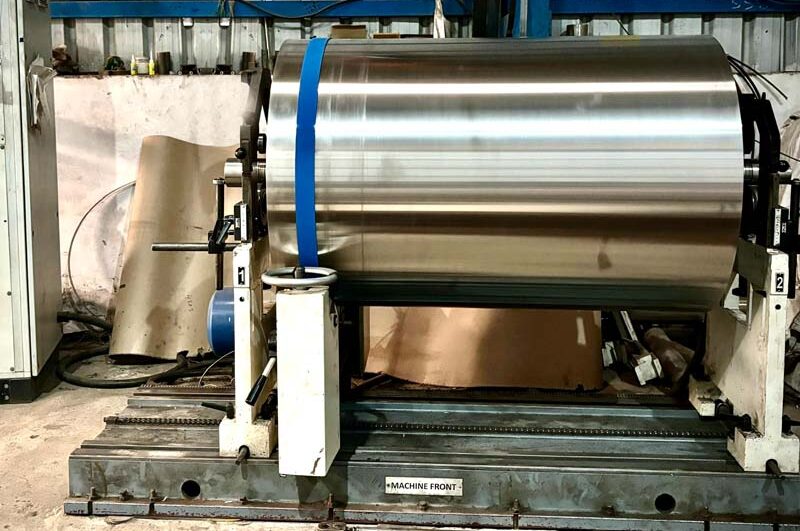
How a High-Quality Roller Prevents Web Deformation
You might be wondering: Don’t all cooling rollers do the same thing? The short answer is a resounding no. Stopping material stretch requires absolute precision. A poorly made roller will actually cause more problems than it solves.
Here is how a high-precision heat transfer roller mechanically prevents your materials from stretching:
1. Eliminating “Hot Spots” Through Advanced Internal Flow
The biggest danger to thin films is uneven cooling. If one side of your roller is cooler than the other, one side of your web will shrink while the other stretches, causing the web to skew off-center. High-precision rollers are designed with highly engineered internal spirals and baffles. This ensures that the thermal fluid flows evenly across the entire face of the roller, maintaining a strictly uniform temperature from edge to edge. No hot spots means no uneven stretching.
2. Perfect Concentricity for Stable Web Tension
Material stretching isn’t just caused by heat; it is also caused by inconsistent pulling forces. If a roller is not perfectly round—a flaw known as poor concentricity—it will “tug” on the web with every single rotation. At high speeds, this rapid tugging stretches the material and causes the web to bounce. Premium rollers are dynamically balanced and precision-machined to ensure a flawless rotation, keeping web tension consistently smooth and eliminating physical stretching.
3. Superior Surface Finishes for Maximum Contact
To extract heat rapidly before the material has a chance to stretch, the web must make perfect, flush contact with the roller’s surface. If the surface finish is rough, uneven, or prone to corrosion, microscopic pockets of air will become trapped between the material and the roller. Air acts as an insulator, preventing heat transfer. A top-tier roller features a flawless, polished surface—often plated for extra durability—ensuring 100% surface contact and instant temperature stabilization.
Why Choosing the Right Heat Transfer Roller Manufacturer Matters
Because these rollers play such a critical role in the quality of your final product, sourcing them from a generic supplier is a massive risk. The internal geometry of a roller is hidden from the naked eye, meaning you won’t know you’ve bought a substandard product until you are dealing with clogged internal channels, fluid leaks, and ruined print runs.
When you partner with a dedicated heat transfer roller manufacturer, you are investing in engineering expertise. A specialized manufacturer understands the specific challenges of the printing industry. They know how to calculate the exact flow rates needed to cool a fast-moving web of BOPP film versus a thick paperboard.
Furthermore, a dedicated printing roller manufacturer guarantees that every roller is rigorously tested before it leaves the facility. They test for dynamic balance at high speeds to ensure vibration-free performance, and they pressure-test the internal jackets to guarantee zero leaks, ensuring your press runs safely and continuously.
Choosing a cheap replacement might save a few dollars upfront, but the cost of constant material stretching, client rejections, and machine downtime will eclipse those savings in a matter of weeks.
Siva Rollers: Your Trusted Partner for Heat Transfer Rollers
When high-speed printing operations need to eliminate material stretching, they turn to Siva Rollers.
As a premier manufacturer of industrial rollers, we understand that in the printing business, precision is everything. A fraction of a degree in temperature variance or a millimeter of vibration can ruin a high-value print run. That is why we engineer our rollers to be the most reliable, efficient, and durable components on your press.
Proudly Manufactured in India, Exported Worldwide
If you are looking for a top-tier heat transfer roller India provides one of the most competitive manufacturing landscapes in the world, and Siva Rollers is at the forefront of this excellence. We combine world-class engineering talent, state-of-the-art machining technology, and rigorous quality control to produce rollers that rival the best in the global market.
While we are deeply proud of our Indian manufacturing roots, our footprint is truly global. We regularly export our high-precision rollers to printing facilities around the world. Whether your plant is located in Mumbai, the Middle East, Europe, or the Americas, Siva Rollers has the logistical expertise to deliver our premium products safely and on time to your doorstep.
Why Printing Businesses Trust Siva Rollers
We don’t just supply metal cylinders; we supply solutions to your most frustrating production bottlenecks.
- Custom-Engineered Solutions: We know that every printing press and substrate is different. We tailor the internal design, surface finish, and sizing of our rollers to match the exact thermal and physical demands of your specific print applications.
- Uncompromising Quality Control: Every roller that leaves the Siva Rollers facility undergoes exhaustive dynamic balancing, pressure testing, and surface inspection. We guarantee flawless performance right out of the crate.
- Longevity and Durability: We build our rollers to withstand the brutal environment of 24/7 continuous web printing. Our robust construction and premium surface treatments ensure maximum lifespan and minimal maintenance downtime.
Stop Wasting Material and Start Maximising Your Profits
Material stretching, color misregistration, and excessive waste do not have to be an accepted cost of doing business. By taking absolute control of your web temperature and tension, you can run your presses faster, print with sharper quality, and dramatically reduce your scrap rates.
Upgrading to a high-precision heat transfer roller is one of the fastest ways to improve the ROI of your printing press. Don’t let subpar rollers eat into your profit margins any longer.
Are you ready to permanently solve your material stretching issues?
Let the experts at Siva Rollers help you optimize your press. Contact our engineering team today to discuss your specific printing challenges. We will help you identify the perfect roller solution to stabilize your production, elevate your print quality, and protect your bottom line.
Contact Siva Rollers Today to Request a Consultation and Quote
- Phone: +91 75070 10009
- Email: info@sivarollers.com
FAQs
Material stretching is mainly caused by excessive heat generated during high-speed printing, drying, and UV curing processes. When substrates like PET, BOPP, paper, or LDPE absorb heat, they expand and lose dimensional stability, leading to print registration errors, wrinkles, and web tension issues.
A high-precision heat transfer roller controls substrate temperature by rapidly removing excess heat or evenly transferring heat when required. This stabilises the material, prevents thermal expansion, and maintains consistent web tension throughout the printing process.
A standard roller mainly guides the web, while a heat transfer roller actively controls temperature using internal fluid circulation systems. High-precision heat transfer rollers are engineered for uniform cooling or heating, helping prevent stretching, misregistration, and web deformation.
Heat transfer rollers are widely used in:
- Flexible packaging printing
- Rotogravure printing
- Flexographic printing
- Web offset printing
- Lamination lines
- Coating and converting industries
- Foil and film processing applications
Uniform cooling prevents uneven shrinkage or expansion across the substrate width. If cooling is inconsistent, one side of the material may stretch more than the other, causing web wandering, wrinkles, and poor print alignment.
Yes. By stabilising the substrate temperature and maintaining consistent web tension, high-precision heat transfer rollers significantly improve multi-color print registration accuracy and reduce blurry or misaligned prints.
Heat transfer rollers are commonly used for:
- BOPP films
- PET films
- LDPE films
- Paper
- Aluminium foil
- Laminates
- Speciality packaging substrates
Precision rollers minimize thermal expansion, wrinkles, web breaks, and misregistration issues. This reduces rejected prints, material scrap, ink wastage, machine downtime, and costly production interruptions.
Key features include:
- Uniform internal fluid flow design
- Precision dynamic balancing
- Excellent concentricity
- Corrosion-resistant surface finish
- Leak-proof construction
- High-speed operational stability
- Custom engineering for specific applications
Siva Rollers manufactures high-precision industrial rollers designed for demanding printing and converting applications. The company provides custom-engineered heat transfer rollers with strict quality control, advanced balancing, durable construction, and global export support for printing industries worldwide.
WhatsApp us