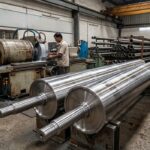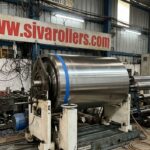
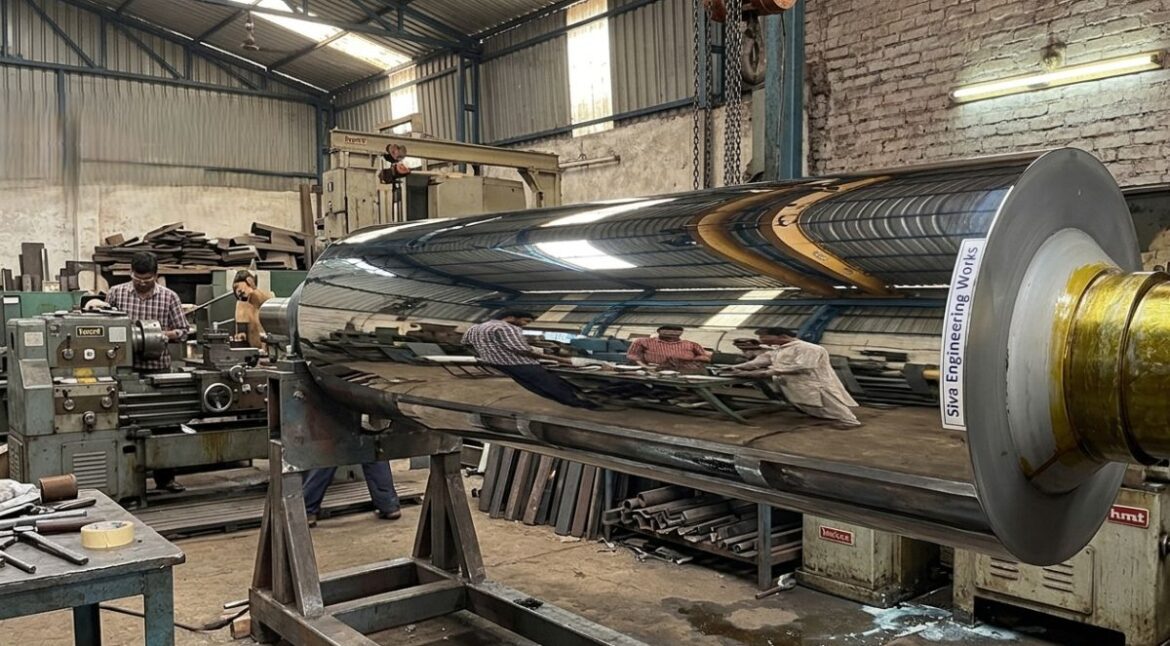
What Are Chill & Heat Transfer Rollers? Working, Uses & Benefits Explained
In the fast-paced world of industrial manufacturing, maintaining precise temperature control during continuous web processing is the difference between a high-quality product and costly material waste. Whether you are producing flexible packaging, extruding plastics, or manufacturing high-grade textiles, thermal management dictates your production speed and product integrity. This is exactly where Chill & Heat Transfer Rollers come into play.
As a leading industrial roller manufacturer, we understand that selecting the right temperature control rollers can dramatically optimise your machinery’s performance. In this comprehensive guide, we will dive deep into what chill and heat transfer rollers are, how their internal engineering works, their diverse industrial applications, and the operational benefits they bring to your production line.
If you are a plant manager, mechanical engineer, or procurement specialist looking to upgrade your web handling systems, understanding the mechanics behind these critical components is your first step toward achieving manufacturing excellence.
Need Heat Transfer Rollers for Plastic, Textile or Paper Industry?
✓ Custom Diameter & Length
✓ Temperature Control Design
✓ Fast Manufacturing
✓ Technical Support
What Are Chill & Heat Transfer Rollers?
To optimize for modern search engines and provide a clear answer (perfect for featured snippets), let’s define these components directly:
Chill & Heat Transfer Rollers are highly engineered, cylindrical industrial rollers designed to precisely add heat to, or remove heat from, a continuous web of material (such as plastic, paper, metal foil, or textile) as it passes over the roller’s surface. While the terms are often used interchangeably or grouped together, they serve two distinct thermodynamic functions:
1. What is a Chill Roller (Cooling Roller)?
Chill rollers, frequently referred to as cooling rollers, are utilized to rapidly lower the temperature of a heated material. In processes like plastic extrusion, the polymer leaves the die in a molten state. The chill roller instantly quenches and solidifies the plastic, locking in its optical properties (like clarity and gloss) and its physical dimensions. Cold water or specialised chilled fluids are circulated through the interior of the roller to maintain a consistently cold surface.
2. What is a Heat Transfer Roller?
Conversely, heat transfer rollers (often called heating rollers or thermal rollers) are designed to elevate or maintain the temperature of a substrate. These are crucial in processes requiring lamination, embossing, or heat-setting. Hot water, steam, or thermal heating oils (diathermic oil) are pumped through these rollers to create a uniformly heated surface, ensuring the material becomes pliable or that adhesives are correctly activated.
Both types fall under the broader category of temperature control rollers, as their primary mission is absolute thermal precision.
How Do Chill & Heat Transfer Rollers Work? The Engineering Explained
The working principle of chill and heat transfer rollers is rooted in the science of thermodynamics and fluid dynamics. At a glance, a roller might look like a solid cylinder of steel, but internally, it is a complex, hollow pressure vessel designed for maximum thermal conductivity.
The Internal Fluid Circulation System
The core mechanism relies on a heat transfer fluid—either a coolant (chilled water, glycol mixtures) or a heating medium (hot water, thermal oil, steam). Here is a step-by-step breakdown of the working process:
- Fluid Entry: The fluid enters the rotating roller through a precision-engineered rotary joint (or rotary union) attached to the journal (the end shaft of the roller).
- Internal Routing: Once inside, the fluid is forced to travel through a specifically designed internal cavity. The design of this cavity is the most critical factor in the roller’s performance.
- Thermal Exchange: As the fluid touches the inner wall of the outer roller shell, thermal conduction occurs.
- In a chill roller: The cold fluid absorbs the heat from the hot material touching the outside of the roller.
- In a heat transfer roller: The hot fluid transfers its thermal energy through the steel shell to warm the material on the outside.
- Fluid Exit: The now-warmed coolant (or cooled heating fluid) exits the roller through the opposite rotary joint (or a concentric pipe within the same joint) and returns to a chiller unit or boiler to be re-conditioned.
The Importance of “Turbulent Flow”
For maximum efficiency, industrial rollers manufacturers engineer these rollers to achieve “turbulent flow” rather than “laminar flow.” Laminar flow acts like a smooth river, where the fluid near the edges moves slowly and acts as an insulator. Turbulent flow, achieved by manipulating fluid velocity and internal geometries, aggressively mixes the fluid, ensuring that fresh fluid is constantly making contact with the inner walls of the roller. This results in vastly superior and uniform heat transfer.
Essential Internal Design Configurations
Not all temperature control rollers are built the same. The internal geometry directly dictates the uniformity of the surface temperature. If a roller has “hot spots” or “cold spots,” the processed material will warp, wrinkle, or fail quality checks.
Here are the three primary internal designs used by top-tier manufacturers:
1. Single-Shell Rollers (Hollow Rollers)
This is the most basic design, consisting of a single hollow cylinder with end caps. The fluid simply enters one end, fills the cavity, and exits the other.
- Pros: Cost-effective, simple to manufacture, suitable for very low-speed or non-critical applications.
- Cons: Prone to fluid pooling, poor temperature uniformity, and slow heat transfer rates. The fluid tends to take the path of least resistance right down the middle, ignoring the inner walls.
2. Double-Shell Rollers with Spiral Baffles (The Industry Standard)
For high-performance heat transfer roller applications, the double-shell spiral design is the gold standard. This design features an outer shell and an inner tube. Between these two shells, a continuous, spiralling metal baffle is welded.
- How it works: The fluid is forced to travel in a tight, corkscrew path from one end of the roller to the other.
- Benefits: This guarantees high fluid velocity, induces turbulent flow, and ensures that the fluid spends equal time against every square inch of the roller’s inner surface. It guarantees a highly uniform surface temperature (often within ±1°C), which is mandatory for sensitive films and foils.
3. Peripheral Drilled Rollers
In applications requiring extreme pressure or intense, rapid heat transfer, holes are drilled continuously through the solid wall of a very thick outer shell, just beneath the surface.
- Benefits: Brings the heating/cooling fluid incredibly close to the material web. It provides the highest rate of heat transfer and structural rigidity but is the most complex and expensive to manufacture.
Critical Material Selection & Surface Finishes
The effectiveness of chill and heat transfer rollers is not just about internal fluids; it also depends heavily on the metals used and the surface coatings applied. As a premier industrial rollers manufacturer, Siva Rollers custom-selects materials based on the client’s specific application.
- Mild Steel & Carbon Steel: Excellent thermal conductivity and structural strength. Often used as the base material for most standard applications.
- Stainless Steel: Used in food processing, medical packaging, or environments where corrosion resistance is paramount.
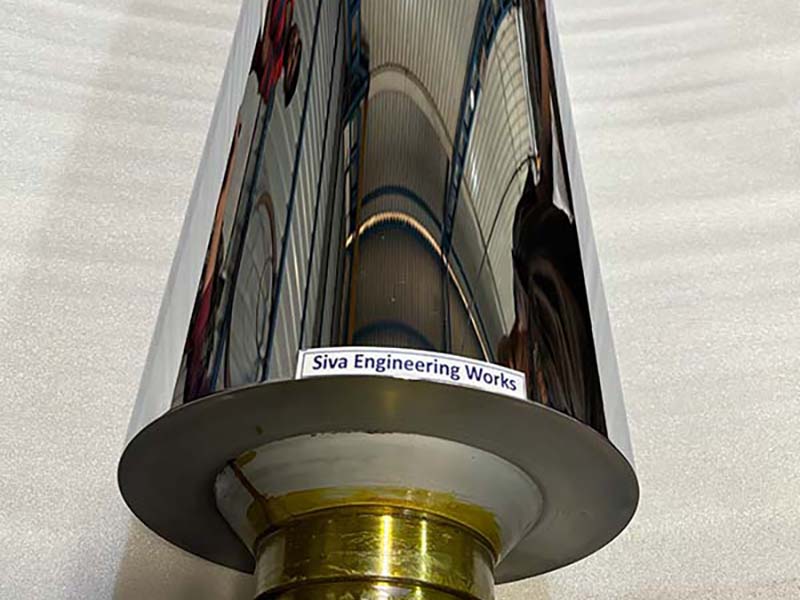
- Hard Chrome Plating: To protect the steel and provide a flawless, mirror-like finish, rollers are heavily plated with hard chrome. This prevents rust, drastically reduces surface friction, and provides a highly polished finish essential for clear plastic films.
- Teflon (PTFE) Coatings: Applied when the material being processed is highly sticky (such as in adhesive laminating).
- Rubber Coatings: Sometimes, a temperature control process requires a softer touch to grip the web without crushing it. In these cases, the metal core is wrapped in specialized, heat-resistant rubber compounds.
Top Heat Transfer Roller Applications Across Industries
The versatility of cooling rollers and heating rollers means they are the backbone of countless manufacturing sectors. Here is a look at the most prominent heat transfer roller applications:
1. Plastics and Flexible Packaging Industry
This is arguably the largest sector utilizing chill rollers.
- Cast Film Extrusion: Molten polymer is extruded onto a massive, highly polished, water-cooled chill roller. The rapid cooling freezes the molecular structure of the plastic, creating clear, strong films used in food packaging and stretch wrap.
- Blown Film Extrusion: Secondary cooling rollers are used to stabilize the flattened plastic bubble before it is wound into rolls.
- Lamination: Heat transfer rollers are used to melt adhesives or thermally bond multiple layers of plastic, aluminum foil, and paper together to create complex packaging materials (like juice boxes or coffee pouches).
2. Paper and Pulp Manufacturing
- Calendering: Paper passes through a series of massive, heated rollers under extreme pressure. The heat transfer rollers iron the paper, making it smooth, glossy, and ready for high-quality printing.
- Coating: When specialized coatings (like wax or clay) are applied to paper, temperature control rollers are used to cure or set the coating evenly.
3. Printing Industry
- Web Offset & Flexography: Modern high-speed printing presses generate immense amounts of heat due to friction and the drying systems used to cure inks. Cooling rollers are strategically placed after the drying ovens to instantly cool the paper or plastic web, preventing the material from shrinking, wrinkling, or melting before it is rewound.
4. Textile and Non-Woven Manufacturing
- Heat Setting: Synthetic fabrics (like polyester) must be heat-set to ensure they do not shrink when washed by the consumer. Heat transfer rollers apply precise, uniform heat to lock in the fabric’s dimensions.
- Non-Wovens: Diapers, medical gowns, and wipes are often thermally bonded. Heated rollers with engraved patterns melt the synthetic fibers together at specific points.
Metal Foil Processing
Aluminum and copper foils require delicate thermal management during rolling and coating processes to prevent warping and ensure uniform thickness.
The Core Benefits of Upgrading Your Temperature Control Rollers
Investing in high-quality, precision-engineered chill and heat transfer rollers yields immediate and measurable ROI for manufacturing plants. Here are the primary benefits:
1. Enhanced Product Quality and Consistency
The most significant benefit is the elimination of thermal inconsistencies. A roller with an optimized double-shell spiral design ensures the temperature is uniform across the entire face of the web. This eliminates defects like curling, puckering, uneven thickness, and cloudy patches in clear plastics.
2. Increased Production Speeds
Heat transfer is often the bottleneck in continuous web manufacturing. If a chill roller cannot extract heat fast enough, the entire production line must be slowed down to allow the material time to cool. Upgrading to high-efficiency cooling rollers allows operators to safely increase line speeds without compromising product quality, directly boosting daily output and profitability.
3. Substantial Reduction in Material Wastage
When temperatures fluctuate, the resulting product is often out-of-spec and must be scrapped. By maintaining absolute thermal stability, precision rollers drastically reduce scrap rates, saving thousands of dollars in raw material costs annually.
4. Energy Efficiency
Poorly designed hollow rollers require chillers and boilers to work overtime to push massive volumes of fluid to achieve desired surface temperatures. Rollers designed for turbulent flow transfer heat much more efficiently, reducing the energy load on your plant’s HVAC, chilling, and heating systems.
Maintenance Best Practices for Longevity
To protect your investment and ensure uninterrupted production, routine maintenance of your temperature control rollers is vital:
- Monitor Rotary Joints: The rotary unions where fluid enters and exits are the most common points of failure. Check them regularly for leaks and replace seals as necessary.
- Descaling: Over time, especially in cooling rollers using hard water, mineral scale can build up on the inner walls. Scale acts as a massive thermal insulator, ruining the roller’s efficiency. Regular chemical flushing of the internal systems is required.
- Surface Care: The highly polished chrome or coated surfaces must be protected from scratches. Never use abrasive tools to clean the face of the roller.
- Bearing Checks: Ensure the journal bearings are properly lubricated to prevent vibration, which can cause web wandering and uneven wear.
Why Choose a Reliable Industrial Rollers Manufacturer Like Siva Rollers?
When it comes to thermal dynamics, precision is not a luxury; it is a strict requirement. Purchasing off-the-shelf rollers with subpar internal engineering will inevitably lead to manufacturing bottlenecks and compromised product quality.
This is where Siva Rollers, a premier industrial rollers manufacturer based in Ahmedabad, India, steps in. With decades of hands-on engineering expertise, we do not just supply rollers; we provide comprehensive web-handling solutions.
Why Partner with Siva Rollers?
- Custom Engineering: We understand that no two manufacturing lines are the same. We custom-design the internal spiral baffles, fluid capacities, and shell thicknesses to perfectly match the thermodynamic demands of your specific application and speed requirements.
- State-of-the-Art Manufacturing: From precise rotary joint alignment to high-definition chrome polishing, our temperature control rollers are guaranteed to deliver uniform heat transfer with absolute minimal deviation across the face length.
- Trusted by Industry Leaders: We have proudly supplied top-tier machinery manufacturers and packaging giants across the globe with robust, reliable, and energy-efficient chill and heat transfer rollers.
- Complete Product Range: Whether you need standard cooling rollers or complex, multi-pass heating rollers for heavy-duty plastic extrusion, we have the manufacturing capabilities and the EEAT (Experience, Expertise, Authoritativeness, Trustworthiness) to exceed your expectations.
Final Thoughts
The speed and quality of modern web manufacturing rely heavily on the unsung heroes of the production line: Chill & Heat Transfer Rollers. These are not simply spinning cylinders; they are precision-engineered thermal management systems. By choosing a roller with the right internal design, material, and surface finish, manufacturers can significantly enhance product quality, drastically reduce waste, and safely increase production speeds.
Ready to upgrade your web handling process? Don’t let thermal inconsistencies hold your production line back.
Contact Siva Rollers today to discuss your specific cooling or heating requirements with our expert engineers, and let us custom-build a solution that drives your manufacturing success forward!
- Phone: +91 75070 10009
- Email: info@sivarollers.com
FAQs
Chill & Heat Transfer Rollers are industrial rollers designed to control temperature during manufacturing. Chill rollers remove heat from materials, while heat transfer rollers add or maintain heat to ensure proper processing of plastics, paper, textiles, and metals.
A chill roller cools down hot materials using chilled water or coolant, while a heat transfer roller heats materials using hot oil, steam, or hot water. Both are used for precise temperature control in continuous production processes.
Chill rollers work by circulating cold fluid inside a hollow roller. As hot material passes over the roller surface, heat is transferred to the coolant, rapidly cooling and solidifying the material.
Heat transfer rollers circulate heated fluids such as thermal oil or steam inside the roller. This heat is transferred to the material surface, ensuring proper bonding, lamination, or heat-setting.
These rollers are widely used in industries like:
- Plastic extrusion and packaging
- Printing and lamination
- Textile and non-woven production
- Paper and pulp processing
- Metal foil manufacturing
Temperature control ensures consistent product quality, prevents defects like warping or shrinking, and improves production efficiency. Without proper thermal management, materials can fail quality standards.
Turbulent flow improves heat transfer efficiency by constantly mixing the fluid inside the roller. This ensures uniform temperature distribution across the roller surface, eliminating hot or cold spots.
Double-shell rollers with spiral baffles are considered the best design. They force fluid to move in a spiral path, ensuring even heat distribution and high efficiency in industrial applications.
Common materials include:
- Mild steel and carbon steel (for strength and conductivity)
- Stainless steel (for corrosion resistance)
- Chrome plating (for smooth finish and durability)
- Teflon and rubber coatings (for special applications)
High-quality rollers offer:
- Better product quality
- Faster production speeds
- Reduced material waste
- Improved energy efficiency
- Longer operational life
Maintenance includes:
- Regular inspection of rotary joints
- Cleaning and descaling internal surfaces
- Protecting the outer surface from damage
- Lubricating bearings for smooth operation
How to choose the right chill & heat transfer roller manufacturer?