How Textile Rubber Rollers Help Reduce Fabric Damage & Waste
In the high-stakes world of textile manufacturing, the difference between a profitable run and a costly batch of rejects often comes down to a few millimetres of precision. For plant managers and procurement heads across India and globally, “waste” isn’t just a metric—it’s a direct hit to the bottom line.
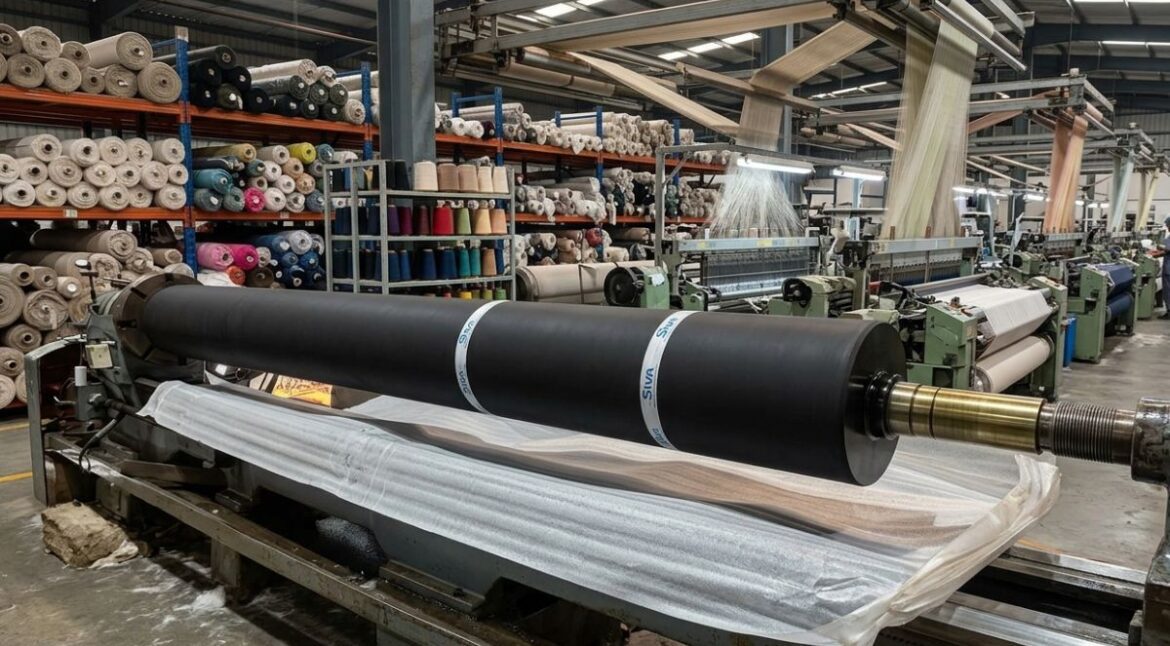
One of the most overlooked yet critical components in the production line is the Textile Rubber Roller. Whether you are involved in dyeing, printing, bleaching, or finishing, the quality of your Rubber Roller determines the uniformity of tension, the precision of chemical application, and the ultimate integrity of the fabric.
At Siva Rollers, we understand that a substandard roller doesn’t just wear out; it destroys fabric. In this guide, we explore how high-performance rollers act as the first line of defence against fabric damage and why choosing the right textile rubber roller manufacturer is a strategic investment in your factory’s future.
What Is a Textile Rubber Roller?
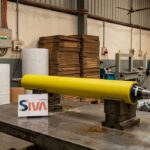
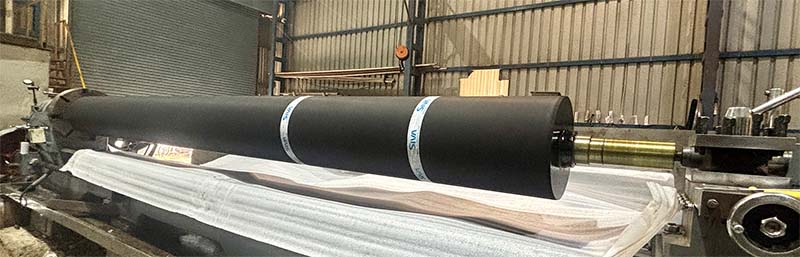
A Textile Rubber Roller is a specialized roller coated with high-performance rubber compounds, designed for use in textile processing machines such as:
- Dyeing machines
- Printing machines
- Laminating units
- Finishing lines
- Calendering systems
These rollers are engineered to handle delicate fabrics while maintaining consistent pressure, grip, and durability under demanding conditions.
The Hidden Cost of Fabric Damage in Modern Textile Mills
Fabric damage—ranging from “bowing” and “skewing” to chemical spotting and physical tears—accounts for significant annual losses in Indian textile hubs like Tirupur, Surat, and Coimbatore. When a roller loses its surface integrity or its “shore hardness” (durometer) becomes uneven, it exerts inconsistent pressure.
The result?
- Creasing and Folding: Improper grip leads to fabric overlapping during high-speed processing.
- Uneven Pick-up: In padding mangles, a worn Rubber Roller causes uneven chemical distribution, leading to shade variation (listing).
- Physical Abrasion: Micro-cracks in the rubber surface can snag delicate fibers, causing pilling or tears.
By partnering with a specialised textile rubber roller supplier, mills can mitigate these risks through engineered precision.
5 Ways High-Quality Textile Rubber Rollers Minimize Waste
1. Precision Tension Control to Prevent Dimensional Distortion
The primary role of a Textile Rubber Roller is to maintain a consistent “nip” (the point of contact between two rollers). If the roller has suffered from “permanent set” or deformation, the tension becomes erratic.
High-quality rollers from a leading roller for textile industry specialist ensure that the fabric remains taut but not stressed. This prevents the fabric from stretching beyond its elastic limit, which is a common cause of shrinkage issues in the final garment stage.
2. Uniform Chemical and Dye Expression
In wet processing, the “expression percentage” (the amount of liquid left in the fabric after passing through the rollers) must be identical across the entire width of the fabric.
- The Problem: Poorly manufactured rollers often develop a “crowned” or “concave” profile over time.
- The Solution: Siva Rollers utilizes advanced grinding technology to ensure a perfect surface profile. This ensures that every inch of the fabric receives the exact same amount of dye or finish, eliminating “center-to-selvedge” color variation and reducing the need for re-dyeing.
3. Heat Resistance and Thermal Stability
Textile processing often involves high temperatures. A standard Rubber Roller might degrade, harden, or become “tacky” when exposed to continuous heat, leading to fabric sticking or surface contamination. As a global textile roller manufacturer, we use specialized synthetic polymers (like EPDM or Nitrile) that maintain their physical properties even under extreme thermal stress. This prevents “melt-stick” accidents that can ruin kilometers of fabric in minutes.
4. Chemical Inertia and Longevity
The textile industry uses a cocktail of acids, alkalis, and bleaching agents. A low-grade roller will swell or “pock” when it reacts with these chemicals. These surface irregularities then transfer onto the fabric as streaks or spots. Choosing a Textile Rubber Roller with the correct chemical resistance profile ensures the surface stays smooth and “glass-like” for longer, protecting the fabric from contamination.
5. Vibration Dampening at High Speeds
Modern looms and processing units operate at incredible speeds. Any eccentricity in the roller core leads to vibrations. These vibrations cause “chatter marks” on the fabric—subtle horizontal lines that are often only visible after the fabric is dyed. High-precision manufacturing ensures dynamic balancing of the rollers, allowing for smooth operation and zero-defect output.
Selecting the Right Textile Rubber Roller: A Buyer’s Checklist
For procurement heads and maintenance engineers, selecting a textile rubber roller supplier shouldn’t be based on price alone. To truly reduce waste, consider these technical factors:
Shore Hardness (Durometer)
Depending on the application (e.g., a squeeze roller vs. a guide roller), the hardness needs to be exact. A roller that is too hard will crush fibers; one that is too soft will provide inadequate grip.
Core Material Integrity
The internal metal shaft must be robust. At Siva Rollers, we ensure that the bonding between the rubber and the metal core is seamless, preventing “delamination”—a catastrophic failure where the rubber peels off the metal during production.
Surface Finish
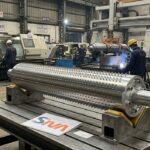
Does your process require a matte finish, a mirror polish, or a specific grooved pattern (like diamond or spiral)? The surface texture dictates how the fabric “tracks” through the machine.
Key Features to Look for in a Textile Rubber Roller
When selecting a Textile Rubber Roller, consider the following:
High-Quality Rubber Compound
Ensures durability and performance under stress
Precision Balancing & Grinding
Delivers uniform pressure and smooth operation
Customization Options
Hardness, size, and coating tailored to your process
Resistance Properties
Heat, chemical, and abrasion resistance
Proven Manufacturer Expertise
Work with an experienced textile rubber roller supplier
Why Siva Rollers is the Preferred Partner for Global Textile Giants
Based in India but serving a global clientele, Siva Rollers has built a reputation as a premier textile rubber roller manufacturer. We don’t just sell parts; we provide “yield-maximization” solutions.
- Custom Engineering: We analyze your specific machinery and fabric types (cotton, polyester, silk, or technical textiles) to recommend the ideal rubber compound.
- Advanced Manufacturing: Our facility uses state-of-the-art CNC grinding and dynamic balancing equipment.
- Export Excellence: With robust logistics, we serve as a reliable textile rubber roller supplier for factories across Southeast Asia, the Middle East, and Africa.
- Downtime Reduction: Our rollers are designed for longevity, meaning fewer changeovers and more “up-time” for your plant.
Impact on Sustainability and Operational Costs
Reducing waste isn’t just about saving fabric; it’s about energy and water conservation. When a Rubber Roller performs efficiently:
- Less Re-work: You save the water and energy required for re-washing or re-dyeing damaged fabric.
- Lower Effluent: Less wasted chemicals mean a lower load on your Effluent Treatment Plant (ETP).
- Carbon Footprint: Longer-lasting rollers mean fewer resources spent on manufacturing and shipping replacements.
For the modern factory owner, a high-quality roller for textile industry applications is an essential component of a “Green Manufacturing” strategy.
Turning Your Rollers Into a Competitive Advantage
In a market where margins are thin, operational efficiency is your greatest lever for growth. Fabric waste is a controllable variable, and the quality of your Textile Rubber Roller is the most effective tool in your arsenal to manage it.
By investing in precision-engineered rollers from a trusted textile roller manufacturer like Siva Rollers, you ensure that your production line remains a well-oiled machine, turning raw materials into flawless fabric with minimal loss.
Ready to upgrade your production line? Whether you are looking for a domestic partner in India or a global textile rubber roller supplier, Siva Rollers is here to help you reduce costs and enhance quality. Contact our engineering team today for a consultation on your specific roller requirements.
Contact Us
Emial : info@sivarollers.com
Phone Number :
FAQs
A textile rubber roller is a precision-coated industrial roller used in textile machines for dyeing, printing, and finishing processes. It ensures uniform pressure, proper fabric grip, and consistent chemical application, which directly reduces fabric defects and production waste.
High-quality textile rubber rollers maintain consistent tension and pressure across the fabric width. This prevents common issues like creasing, stretching, tearing, and uneven dyeing, ensuring better fabric quality and minimal rejection rates.
Uneven pressure, worn-out rollers, improper tension control, chemical inconsistencies, and roller surface defects mainly cause fabric waste. Poor-quality rubber rollers are one of the leading contributors to these issues.
Roller hardness determines how much pressure is applied to the fabric. If the roller is too hard, it can damage fibers; if too soft, it may fail to grip properly. Correct shore hardness ensures optimal performance and reduces fabric distortion and waste.
Uniform chemical application ensures consistent dyeing and finishing across the fabric. High-quality rubber rollers provide even “expression percentage,” preventing shade variation, rework, and material wastage.
Yes, premium textile rubber rollers are made with heat-resistant compounds like EPDM or Nitrile rubber. These materials maintain stability under high temperatures, preventing sticking, deformation, and fabric damage during processing.
By ensuring consistent processing conditions, rubber rollers minimise defects like uneven dyeing and fabric distortion. This reduces the need for reprocessing, saving water, energy, chemicals, and overall operational costs.
Common signs include surface cracks, uneven hardness, vibration during operation, poor fabric grip, and inconsistent output quality. Replacing worn rollers on time prevents large-scale fabric rejection.
Efficient rollers reduce fabric waste, lower chemical usage, and minimise energy consumption. This leads to reduced environmental impact and supports sustainable manufacturing practices.
Look for a manufacturer that offers customized solutions, precision grinding, proper balancing, high-quality rubber compounds, and proven industry experience. A reliable supplier ensures long-lasting performance and reduced downtime.
You can purchase high-performance textile rubber rollers from trusted manufacturers like Siva Rollers, Ahmedabad, who specialize in custom-engineered solutions for spinning and weaving industries.