Why is My PU Roller Cracking? A Troubleshooting Guide for Common Failures
In the fast-paced world of industrial manufacturing, a single equipment failure can halt an entire production line, leading to cascading delays and mounting costs. For factory owners and plant managers across India and globally, the PU roller (Polyurethane roller) is often the unsung hero of the facility—until it cracks.
A cracked PU coated roller isn’t just a minor maintenance issue; it is a symptom of underlying mechanical, chemical, or environmental stress. Understanding why these failures occur is the first step toward reducing downtime and optimizing your procurement strategy.
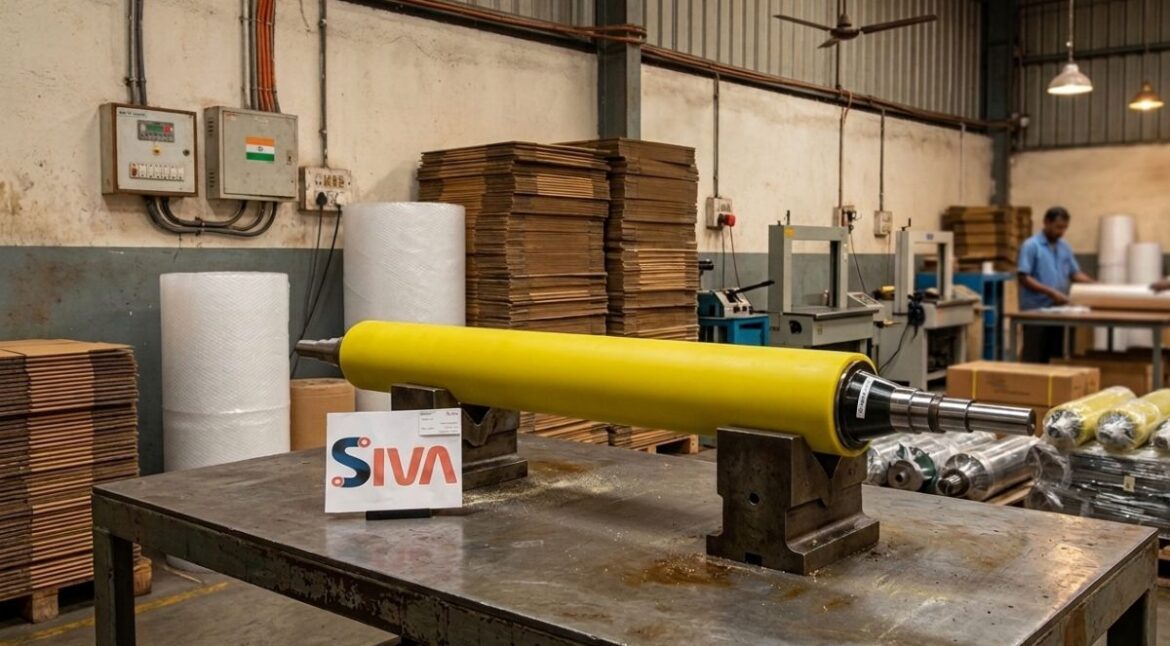
In this guide, we will break down the common causes of PU roller failure and why choosing a high-quality PU roller manufacturer like Siva Rollers is the ultimate solution for long-term durability.
Why PU Coated Rollers Crack
Polyurethane is prized in industrial applications for its high load-bearing capacity, abrasion resistance, and elasticity. However, even the most robust PU coated roller has its limits. Cracking generally falls into three categories: surface crazing, deep structural splitting, or debonding from the metal core.
1. Thermal Overloading and Heat Buildup
One of the most frequent causes of cracking in a PU roller is internal heat generation, also known as hysteresis. When a roller is under constant high-speed rotation and heavy loads, the material undergoes repeated compression and expansion.
If the heat generated exceeds the thermal limits of the polyurethane grade, the material loses its structural integrity. This leads to “chunking” or radial cracks.
- The Siva Rollers Difference: As a leading PU roller manufacturer India, we use specific heat-resistant formulations designed to dissipate thermal energy effectively, even in high-speed printing or laminating applications.
2. Chemical Incompatibility
Factories often use aggressive cleaning agents, solvents, or oils. If your PU coated roller is not specifically engineered to withstand the chemicals present in your environment, the polymer chains will begin to break down. This often manifests as “crazing”—a network of fine surface cracks that eventually deepen into structural failures.
3. Improper Load Distribution
If a machine is misaligned, the load is not distributed evenly across the surface of the PU roller. This creates localized stress points. Over time, the area under the highest pressure will develop fatigue cracks. This is particularly common in heavy-duty material handling and metal processing industries.
Troubleshooting Common PU Roller Failures
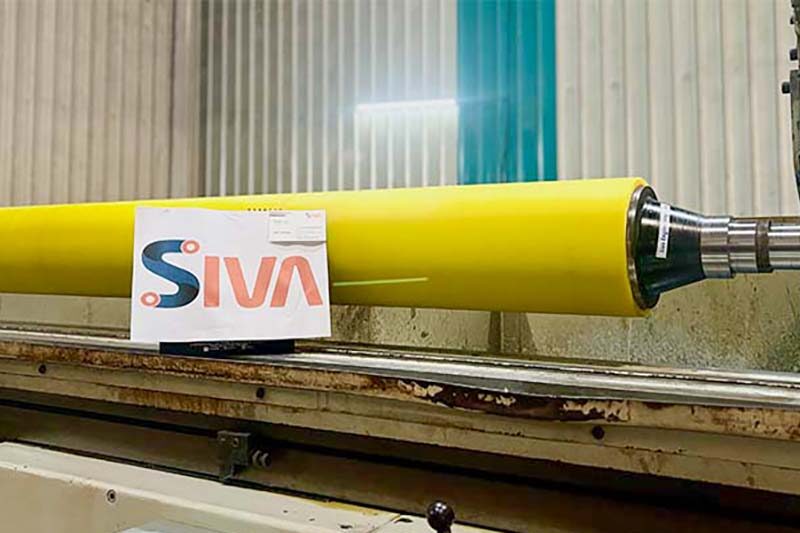
If you are noticing premature wear, use this checklist to identify the root cause before replacing your next batch of rollers.
Check the Durometer (Hardness)
Is the roller too hard or too soft for the application? A roller that is too hard for a high-impact environment will be brittle and prone to cracking. Conversely, a roller that is too soft may “mushroom” under pressure, leading to edge cracking.
Inspect the Core Bonding
Sometimes the crack isn’t in the PU itself, but at the interface where the polyurethane meets the metal shaft. This is often due to poor surface preparation during the manufacturing process. If the bond fails, the PU sleeve will shift, stretch, and eventually crack under torque.
- Expert Tip: Always ensure your PU roller manufacturer utilizes advanced chemical bonding agents and grit-blasting techniques to ensure a permanent weld between the core and the coating.
Environmental Factors: Hydrolysis
In humid industrial environments (common across many manufacturing hubs in India), standard polyurethane can suffer from hydrolysis—the chemical breakdown of the material due to water or moisture exposure. This makes the roller feel “chewed” or crumbly.
Choosing the Right PU Roller Manufacturer
For procurement heads and maintenance engineers, the goal is “Total Cost of Ownership,” not just the initial purchase price. A cheap roller that cracks in three months is infinitely more expensive than a premium roller that lasts three years.
Quality of Raw Materials
Not all polyurethane is created equal. There are MDI, TDI, and PPDI-based systems, each with different performance characteristics. At Siva Rollers, a premier PU roller manufacturer, we source high-grade prepolymers that are tested for consistent molecular weight and purity.
Precision Engineering in India
As a prominent PU roller India specialist, we understand the local manufacturing landscape. From the extreme heat of Northern India to the humid coastal industrial belts, we customize the polyurethane formulation to suit the specific environmental and mechanical stresses of your plant.
Global Export Standards
While we are a rooted PU coated roller manufacturer in India, our quality control processes meet international benchmarks. This allows us to support factory owners globally who require high-performance rollers that won’t fail under pressure.
How to Extend the Life of Your PU Rollers
To avoid the “cracking” dilemma, implement these three maintenance pillars:
- Regular Alignment Audits: Ensure that your rollers are perfectly parallel. Even a 1mm deviation can increase localized stress by 20%.
- Controlled Storage: Store spare PU coated rollers in a cool, dark place. UV light and extreme temperature fluctuations can age the polyurethane prematurely before it even hits the machine.
- Correct Cleaning Protocols: Use only recommended PH-neutral cleaners. Avoid soaking rollers in harsh solvents unless they are specifically rated for “solvent-resistance.”
Partner with Siva Rollers for Zero-Defect Performance
Cracked rollers lead to rejected batches, wasted material, and frustrated teams. While troubleshooting can help identify the symptoms, the ultimate cure is a superior product.
As an expert PU roller manufacturer, Siva Rollers combines deep material science with precision engineering to deliver rollers that thrive in the toughest industrial conditions. Whether you are looking for a PU coated roller for heavy-duty steel plants or high-precision rollers for the packaging industry, we provide the durability you need to keep your facility running at peak efficiency.
Don’t let a crack slow down your production. Contact Siva Rollers today—the trusted PU roller manufacturer India—to discuss your custom requirements and experience the difference that high-performance polyurethane can make for your bottom line.
Contact Siva Rollers Today
- Phone: +91 75070 10009
- Email: info@sivarollers.com
FAQs
PU rollers crack due to excess heat buildup, chemical exposure, uneven load distribution, or poor material quality. These factors weaken the polyurethane structure, leading to surface or deep cracks over time.
The most common cause is thermal overloading (heat buildup from friction and high-speed operation), which breaks down the polyurethane’s internal structure.
Yes, excessive heat causes hysteresis, where repeated compression generates internal heat. If it exceeds the material’s tolerance, it leads to chunking, splitting, or cracking.
Harsh chemicals like solvents and oils can break polymer chains, causing surface crazing (fine cracks) that eventually develop into structural failure.
Surface crazing is a network of small cracks on the roller surface, usually caused by chemical exposure or environmental stress, and is often the first sign of failure.
Yes, misalignment creates uneven pressure points, leading to localized stress and fatigue cracks, especially in heavy-duty industrial applications.
If the roller is:
- Too hard → becomes brittle and cracks under impact
- Too soft → deforms under load and cracks at edges
Choosing the correct durometer is critical for durability.
Debonding occurs when the polyurethane separates from the metal core, usually due to poor bonding during manufacturing, leading to cracking under torque.
Yes, high humidity can cause hydrolysis, where moisture breaks down polyurethane, making it soft, crumbly, and prone to cracking.
You can prevent cracking by:
- Maintaining proper machine alignment
- Using chemical-compatible rollers
- Avoiding overloading and overheating
- Following correct cleaning and storage practices
A high-quality PU roller can last 2–3 years or more, depending on application, maintenance, and operating conditions. Poor-quality rollers may fail within months.
Choose a manufacturer that offers:
- High-grade polyurethane materials (MDI/TDI/PPDI)
- Customized formulations
- Strong core bonding technology
- Application-specific engineering support