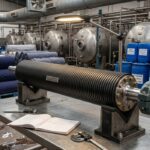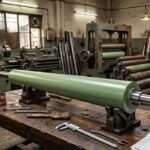
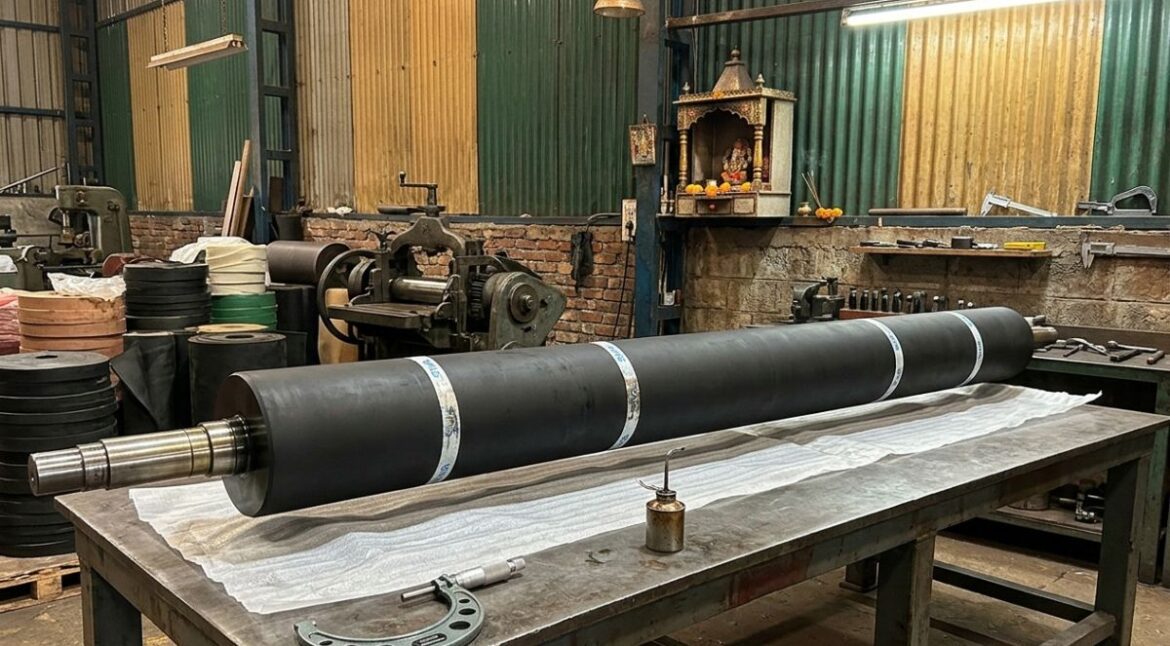
High-Performance Rubber Rollers for the Textile Industry: A Complete Overview
From the initial processing of raw fibres to the final finishing of delicate fabrics, every stage of production relies on a critical component: the Rubber Roller.
For plant managers and engineers in the textile sector, selecting the right Industrial Roller can mean the difference between seamless production and costly downtime. As a leading Rubber Roller Manufacturer, Siva Rollers understands that these components are the heart of your machinery. This guide provides a deep dive into how high-performance rollers optimize textile operations and why quality matters for your bottom line.
The Role of Rubber Rollers in Textile Processing
The textile industry operates in harsh environments where chemicals, high temperatures, and constant friction are the norm. A standard Industrial Rubber Roller must provide consistent pressure and grip without damaging the fabric.
Key Applications:
- Dyeing and Printing: Ensuring even distribution of dyes across the fabric width.
- Sizing and Bleaching: Managing chemical application with high resistance to corrosive agents.
- Mercerizing: Handling high-tension environments while maintaining dimensional stability.
- Washing and Drying: Removing excess moisture efficiently to reduce energy costs in the drying phase.
Why Quality Rubber Rollers for the Textile Industry Matter
When searching for Industrial Rubber Roller Suppliers, industry professionals often look for durability. However, “performance” goes beyond just how long a roller lasts. It’s about how it behaves under pressure.
1. Hardness and Durometer Precision
In textile processing, the “Shore A” hardness of a Rubber Roller must be exact. If a roller is too hard, it may bruise the fabric; if it is too soft, it won’t provide enough extraction. At Siva Rollers, we engineer rollers with specific durometer ratings tailored to your specific machine requirements.
2. Chemical and Heat Resistance
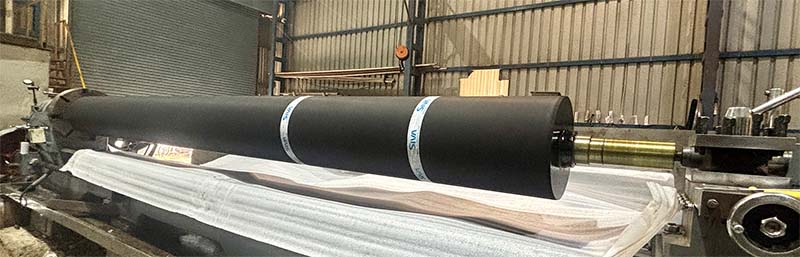
Textile finishing involves various chemicals and thermal processes. A high-quality Rubber Roller for the Textile Industry must resist swelling, softening, or cracking when exposed to oils, acids, or high-temperature steam.
3. Surface Finish and Ra Value
The smoothness of the roller surface (measured as Ra value) determines how the fabric interacts with the machine. A precise finish prevents “picking” or lint accumulation, ensuring a flawless end product.
Challenges Solved by Superior Industrial Rollers
Industrial professionals often face recurring issues like uneven “nip” pressure or premature wear. By choosing a specialized Rubber Roller India based manufacturer like Siva Rollers, you address these problems at the source:
- Eliminating Vibration: High-speed looms and processing lines require perfectly balanced rollers. Vibration leads to uneven fabric tension and machine wear.
- Reducing Energy Consumption: Efficient water extraction rollers (squeeze rollers) significantly reduce the energy needed for thermal drying.
- Minimizing Maintenance: Using superior rubber compounds reduces the frequency of regrinding and replacement, keeping your production line running longer.
Technical Specifications: Choosing the Right Compound
Different stages of textile production require different rubber polymers. Understanding these is vital for making an informed procurement decision:
- Nitrile (NBR): Excellent for oil resistance and general-purpose textile applications.
- EPDM: Ideal for high-temperature environments and resistance to ozone and ageing.
- Hypalon: Preferred for its exceptional chemical resistance in dyeing and bleaching units.
- Silicone: Used when extreme heat resistance and non-stick properties are required.
The Siva Rollers Advantage: Quality Rubber Roller Manufacturer
As a dedicated Rubber Roller Manufacturer, our focus is on engineering solutions, not just selling products. We understand the unique landscape of the Indian textile market. When you search for Rubber Roller India, you need a partner who can provide:
- Custom Engineering: We don’t believe in “one size fits all.” Every Rubber Roller is manufactured to meet your specific load-bearing and chemical exposure needs.
- Precision Grinding: Our state-of-the-art facility ensures that every Industrial Roller has perfect concentricity, which is vital for high-speed operations.
- In-house Testing: From tensile strength to abrasion resistance, every batch of rubber undergoes rigorous testing before it reaches your factory floor.
How to Optimise Your Roller Performance
To get the most out of your Industrial Rubber Roller, follow these expert maintenance tips:
- Correct Alignment: Ensure the rollers are perfectly parallel. Misalignment is the leading cause of uneven wear.
- Pressure Regulation: Never exceed the recommended nip pressure, as this can cause internal heat build-up and “blow-outs” in the rubber.
- Regular Cleaning: Remove chemical residues and lint daily to prevent surface glazing.
- Storage: Store spare rollers in a cool, dark place, ideally wrapped in UV-protective paper to prevent ozone cracking.
Partnering for Success
Investing in high-performance Rubber Rollers for Textile Industry is an investment in your brand’s reputation. High-quality fabric starts with high-quality machinery components. By reducing waste, improving dye consistency, and extending the life of your equipment, the right rollers pay for themselves in a matter of months.
As leading Industrial Rubber Roller Suppliers, Siva Rollers is committed to helping Indian textile hubs reach global standards of efficiency. Whether you are looking to upgrade your current line or need a custom solution for a new project, we are here to provide the expertise you need.
Are you facing issues with roller wear or fabric inconsistency? Contact Siva Rollers, your trusted Rubber Roller Manufacturer, for a technical consultation today. Let’s optimize your production together.
Contact Us
Emial : info@sivarollers.com
Phone Number :
FAQs
A Rubber Roller in the textile industry primarily serves to provide uniform pressure for liquid extraction (squeezing), fabric guidance, and controlled chemical application. It ensures consistent tension and even distribution of dyes or finishes across the fabric surface without causing structural damage.
For high-temperature applications like heat-setting or steam-based processing, Silicone and EPDM are the best compounds. Silicone offers the highest thermal stability (up to 250°C), while EPDM provides excellent resistance to heat and ageing at a more cost-effective price point for mid-range temperatures.
Shore A hardness, or durometer, determines the "nip" or contact area between rollers. A lower durometer (softer) provides a wider nip for delicate fabrics, while a higher durometer (harder) ensures maximum liquid extraction. Incorrect hardness can lead to fabric bruising or poor chemical uptake.
Siva Rollers is recognised as a leading manufacturer of rubber rollers in India for our focus on precision engineering, custom polymer compounding, and advanced grinding technology. We provide end-to-end solutions that help Indian textile mills reduce downtime and improve export-quality fabric output.
Swelling is usually caused by chemical incompatibility, such as using Nitrile rubber with certain oxidising agents. Cracking often results from ozone exposure, excessive nip pressure, or "heat build-up" within the rubber core during high-speed operations.
Rubber roller hardness depends on the application:
- Soft rollers (20–40 Shore A) for delicate pressure and coating
- Medium hardness (50–70 Shore A) for printing and laminating
- Hard rollers (70–95 Shore A) for steel, heavy load, and drive applications
Incorrect hardness leads to uneven pressure, slippage, and wear.
The Ra value represents surface roughness. For textile printing and finishing, a low Ra value (high smoothness) is critical to prevent lint accumulation and "picking" of fibres. Leading Industrial Rubber Roller Suppliers like Siva Rollers ensure precise Ra values through specialised diamond grinding.
A Rubber Roller should be reground whenever surface glazing, uneven wear, or "grooving" appears. Regular regrinding restores the original profile and concentricity, which is essential for maintaining uniform fabric tension across the entire width of the machine.
Spare rollers should be stored horizontally on their journals (not resting on the rubber surface) in a cool, dark, and dry area. Wrapping them in UV-resistant paper prevents ozone cracking and atmospheric degradation, ensuring they are "machine-ready" when needed.
Selection depends on the machine speed, chemical concentration, and operating temperature. It is best to consult a Rubber Roller Manufacturer like Siva Rollers to match the polymer (Nitrile, Hypalon, or Neoprene) and hardness to your specific dyeing process requirements.