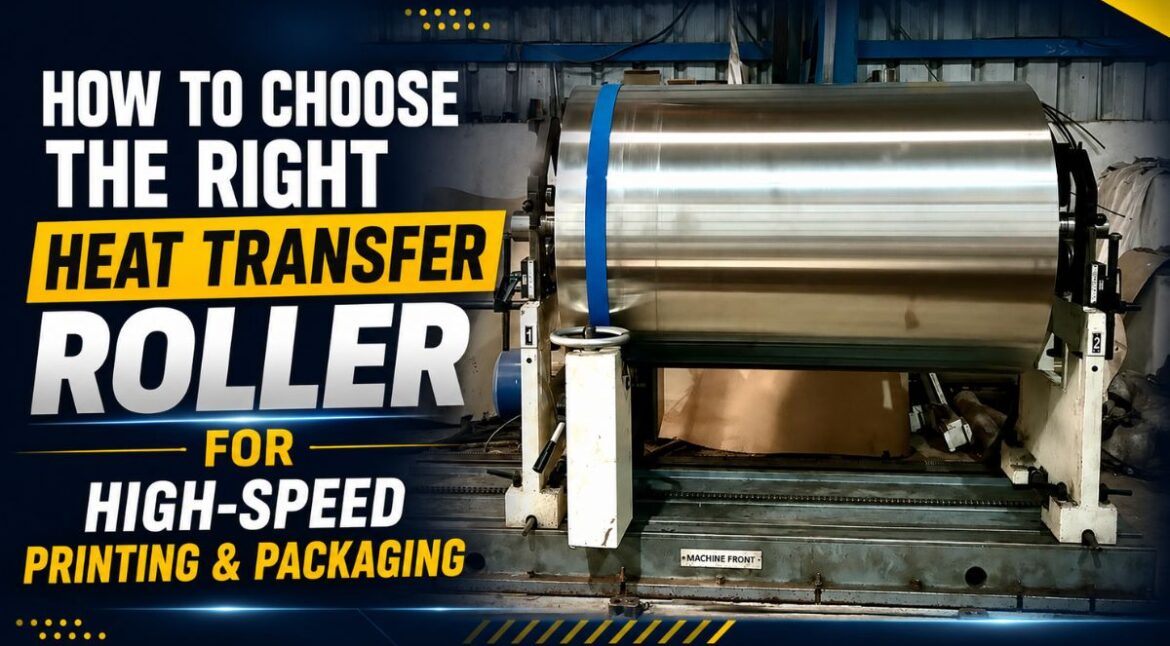
How to Choose the Right Heat Transfer Roller for High-Speed Printing & Packaging
If you run a high-speed printing press or a packaging unit, you already know that speed and quality must work hand-in-hand. In modern manufacturing, even a small delay or surface flaw can lead to wasted materials, unhappy clients, and thousands of rupees lost in downtime.
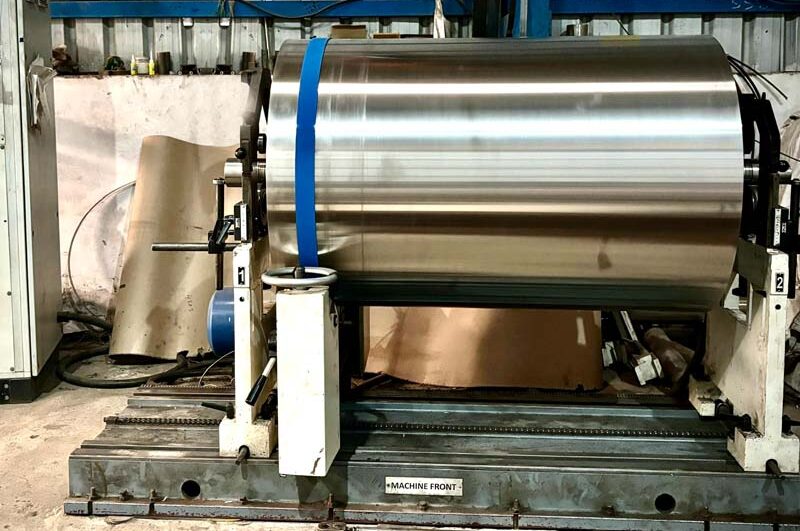
When running high-speed machinery, one modest component plays a surprisingly massive role in final product quality: your heat transfer roller.
Whether you are printing fine foil designs on luxury boxes or sealing flexible plastic pouches at blazing speeds, the efficiency of your heat transfer roller directly decides your print clarity, bond strength, and production speed.
However, picking the right roller for your specific setup is not always easy. With so many options available in the market, how do you ensure you are making a smart choice that delivers maximum return on investment?
In this guide, we break down everything you need to know in simple, practical terms—so you can choose the ideal roller for your plant, protect your margins, and keep your production lines moving smoothly.
Why Your Choice of Roller Matters More Than You Think
In any high-speed printing or packaging line, heat and pressure work together to transfer images, foils, or laminates onto flexible substrates.
If your printing roller fails to hold an even temperature across its entire surface, several problems begin to creep in:
- Inconsistent Foil or Ink Adhesion: Some areas of your packaging look crisp and vibrant, while others look faded, patchy, or incomplete.
- Material Distortion: Excessive hot spots can melt thin plastic films, causing wrinkling, warping, or tearing.
- Slow Production Speeds: To compensate for poor heat transfer, operators often slow down the machine, directly cutting into your daily output.
- Frequent Replacements: Low-grade rollers degrade quickly under constant heat, leading to frequent line shutdowns and expensive replacements.
Investing in a high-performing packaging roller ensures that heat is distributed evenly from end to end, even when your machines are running at maximum operational speed.
Common Problems in High-Speed Packaging (And How the Right Roller Solves Them)
Let’s look at the real-world operational challenges that packaging and printing plants face every day, along with how selecting the correct roller solves them.
1. The Problem of “Hot Spots” and “Cold Zones”
When heat is distributed unevenly across a roller, your machine will produce inconsistent results. Cold zones result in unbonded foil or weak seals, while hot spots can burn or stretch sensitive packaging materials.
The Solution: A professionally designed heat transfer roller uses advanced core construction and high-grade thermal conductive materials. This ensures uniform temperature across the entire face of the roller, eliminating patchiness and ensuring smooth, even transfers every single time.
2. Rapid Surface Wear at High Speeds
High-speed friction combined with continuous high temperatures puts severe stress on the outer layer of any roller. Poor quality rollers quickly develop cracks, grooves, or surface roughness.
The Solution: Look for rollers manufactured with premium silicone or high-temperature rubber compounds. A trusted Heat Transfer Roller Manufacturer custom-formulates outer layers to withstand friction, thermal shocks, and continuous pressure without cracking or peeling.
3. Chemical Damage from Inks and Solvents
In modern printing plants, rollers regularly come into contact with cleaning solvents, specialized inks, and adhesive chemicals. Standard rollers swell, soften, or lose their original shape when exposed to these substances.
The Solution: Always choose a customized printing roller engineered to resist solvent degradation. Maintaining dimensional stability guarantees sharp image transfers and prolongs the lifespan of your equipment.
Key Factors to Consider When Selecting Your Heat Transfer Roller
Choosing the ideal roller is not a one-size-fits-all decision. To make the best choice for your factory, evaluate these key operational factors before placing an order.
1. Machine Operating Speed
The faster your machine runs, the less time the roller surface stays in contact with the packaging film or paper. To compensate for reduced contact time, the roller must deliver efficient heat transfer without requiring dangerously high temperature settings.
If you are upgrading your press line to higher speeds, your old rollers may no longer be suitable. You will need a specialized heat transfer roller built to maintain thermal balance at elevated speeds.
2. Operating Temperature Range
Different packaging materials require different heat thresholds:
- Thin plastic films require precise, low-to-medium heat to prevent melting.
- Thick paperboard or foil stamping requires higher temperatures and steady pressure.
Ensure your supplier knows your exact operating temperature range so they can recommend the right rubber or silicone blend.
3. Hardness and Flexibility (Durometer)
The hardness of the roller surface affects how much pressure is applied across your substrate:
- Softer surfaces conform better to slightly uneven or textured substrates, ensuring full contact.
- Harder surfaces are ideal for high-speed, flat-surface foil transfers where sharp definition is essential.
Working with an experienced manufacturer allows you to select the precise hardness level needed for your specific product range.
4. Core Material and Inner Construction
What lies beneath the surface is just as critical as the outer cover. The inner metal core must be perfectly balanced and resistant to corrosion or heat warping. An imbalanced core causes vibrations at high speeds, wearing out machine bearings and ruining print alignment.
How the Right Roller Improves Your Factory’s Bottom Line
Focusing on quality when purchasing your machinery components provides immediate and long-term financial returns.
  +-------------------------------------------------------+
       |   High-Quality Heat Transfer Roller Integration       |
       +-------------------------------------------------------+
                                   |
         +-------------------------+-------------------------+
         |                                                   |
         v                                                   v
+---------------------------------+                 +---------------------------------+
|     Operational Efficiency      |                 |       Product Consistency       |
|  • Zero Hot/Cold Spots          |                 |  • Crisp Foil/Ink Transfer      |
|  • Higher Machine Speeds        |                 |  • Reduced Rejected Batches     |
|  • Minimal Unscheduled Downtime |                 |  • Stronger Packaging Seals     |
+---------------------------------+                 +---------------------------------+
         |                                                   |
         +-------------------------+-------------------------+
                                   |
                                   v
       +-------------------------------------------------------+
       |   Higher Profitability & Stronger Client Trust        |
       +-------------------------------------------------------+
Reduced Material Wastage
When every roll of film or paperboard is printed correctly on the first pass, your material waste drops dramatically. Over the course of a year, saving just 2% to 3% in wasted film translates into substantial cost savings.
Lower Energy Consumption
Rollers with superior heat absorption and conductivity require less energy to maintain target temperatures, directly cutting down your monthly power bills.
Maximum Machine Uptime
Unscheduled downtime is the biggest enemy of plant productivity. Durable, high-speed rollers run continuously for thousands of operational hours without requiring maintenance shutdowns.
Why Leading Printing & Packaging Brands Partner with Siva Rollers
When it comes to industrial rollers, quality, experience, and precision engineering matter. Siva Rollers has earned a solid reputation across India and international markets as a dependable Heat Transfer Roller Manufacturer.
Here is why printing and packaging companies choose Siva Rollers to power their production lines:
1. Engineered for High-Speed Performance
At Siva Rollers, we understand the demands of modern, fast-paced packaging units. Our rollers are crafted to deliver uniform heat transfer, exceptional dimensional stability, and long service life—even under severe high-speed operating conditions.
2. Made in India, Trusted Worldwide
Rooted in India’s vibrant manufacturing ecosystem, Siva Rollers combines local craftsmanship with international export standards. Whether your plant is located in India or overseas, we deliver export-grade solutions engineered to global performance benchmarks.
3. Custom Solutions for Every Application
We do not believe in standard, off-the-shelf compromises. Our team works closely with you to understand your machinery brand, operational speeds, working temperatures, and substrate types. We then manufacture a packaging roller or printing roller tailored specifically to your unique requirements.
4. Stringent Quality Control
Every single heat transfer roller leaving our facility undergoes rigorous quality testing. We verify core balance, surface finish, hardness, and thermal resistance so that your installation is effortless and reliable from day one.
A Simple Checklist for Buying Your Next Industrial Roller
Before you order your next replacement roller, go through this simple quick-check list to make sure you get the exact specifications you need:
- Identify Your Primary Substrates: Are you working with flexible plastic, foil, paperboard, or corrugated boxes?
- Determine Operating Speeds: What is your machine’s standard running speed versus its maximum speed capability?
- Check Working Temperatures: What is the maximum continuous temperature your process requires?
- Evaluate Chemical Exposure: Will the roller come into direct contact with aggressive solvents or specialized adhesives?
- Review Current Roller Failures: Why did your previous roller fail? Was it uneven wear, surface cracking, debonding, or heat loss? Sharing this information with your manufacturer helps them craft a far superior solution for you.
Upgrade Your Production Line with Siva Rollers
Your high-speed machines deserve components that can keep up with their capacity. Don’t let sub-par, generic rollers slow down your output, ruin your packaging finish, or eat into your profits.
Whether you need a reliable heat transfer roller for high-speed foil stamping, laminating, or specialized flexible packaging, Siva Rollers is your trusted partner for engineering excellence.
Ready to boost your print quality and production efficiency?
Reach out to the expert team at Siva Rollers today. Let us help you select or design the perfect printing roller engineered for your specific machinery and business goals.
Contact Siva Rollers Today for a Free Technical Consultation & Custom Quote!
- Phone: +91 75070 10009
- Email: info@sivarollers.com
FAQs
To select the best heat transfer roller, evaluate five core factors: machine running speed, operating temperature range, substrate material (film, foil, paper), required surface hardness (durometer), and chemical exposure. Partnering with a custom Heat Transfer Roller Manufacturer like Siva Rollers ensures your roller is built with balanced internal cores and tailored silicone/rubber compounds for flawless heat distribution.
Uneven foil transfer and weak pouch seals are primarily caused by "hot spots" and "cold zones" across the roller surface. This happens when low-grade rollers lack uniform thermal conductivity. High-quality packaging rollers maintain consistent, end-to-end surface temperature to guarantee crisp foil adhesion and airtight seals.
Rollers fail prematurely due to continuous friction, rapid temperature changes, excessive pressure, and exposure to cleaning solvents. Choosing custom-formulated, high-temperature silicone rollers from Siva Rollers prevents surface cracking, swelling, and premature wear, extending continuous production cycles.
Siva Rollers is widely recognized as a premier Heat Transfer Roller Manufacturer in India. They specialize in precision-engineered printing rollers and packaging rollers built for high-speed machines, serving both domestic Indian industrial plants and international export clients.
Yes. Upgrading to a high-performance packaging roller ensures rapid, uniform heat transfer even at maximum machine speeds. This eliminates misprints, weak seals, and film burning, which can reduce scrap material rates by up to 3% while increasing daily output.
Silicone heat transfer rollers are specifically designed to withstand continuous operating temperatures above 200°C–250°C while offering rapid thermal release for foil stamping and pouch sealing. Standard rubber printing rollers are built primarily for liquid ink transfer at lower, room-temperature operations and cannot endure continuous extreme heat.
Factory owners can minimize material scrap by replacing inconsistent rollers with precision-balanced heat transfer rollers from Siva Rollers. Uniform surface temperature ensures every meter of substrate adheres correctly on the first pass, eliminating discarded batches caused by poor bonding or thermal distortion.
While low-grade rollers often degrade within 2 to 4 months under heavy high-speed use, custom-engineered rollers from Siva Rollers last significantly longer. Life expectancy depends on running speeds, proper cleaning routines, correct operating pressure, and chemical exposure.
The operational lifespan of a packaging roller depends on machine running speeds, maximum operating temperatures, regular exposure to cleaning solvents, mechanical pressure alignment, and the precision balance of the internal metal core.
Yes. Siva Rollers manufactures custom-engineered heat transfer rollers, printing rollers, and packaging rollers for clients across India and international export markets. They customize every roller to match specific international machine brands, substrate types, and production requirements.