
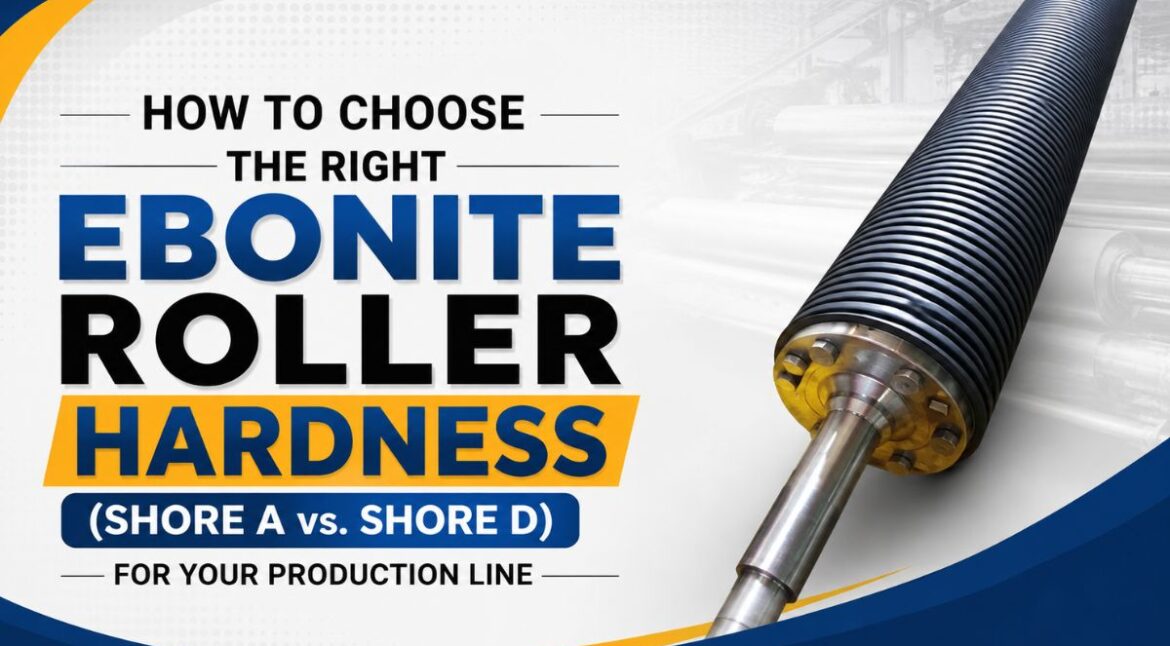
How to Choose the Right Ebonite Roller Hardness (Shore A vs. Shore D) for Your Production Line
Every plant manager and machinery engineer knows the feeling: your production line is running, but something is off. You notice uneven coating on your packaging film, subtle tension drops on your paper slitter, or premature wear on your machine rollers. You stop the line, inspect the setup, and discover the roller surface is either cracking under load or squishing too much under pressure.
In most industrial setups, the silent culprit behind frequent downtime, material wastage, and inconsistent product quality isn’t machine calibration—it is choosing the wrong hardness for your Ebonite Roller.
Selecting between Shore A and Shore D hardness scales can feel confusing when you are trying to balance durability, grip, pressure, and chemical resistance. Should you go for a slightly flexible surface or a rock-hard finish? How does hardness impact your daily output and maintenance budget?
In this practical guide, we will break down everything you need to know about ebonite roller hardness in plain, simple English. Whether you run a paper mill in Gujarat, a flexible packaging plant in South India, or an automated converting line abroad, this guide will help you pick the exact hardness scale to keep your line running smoothly and profitably.
What is an Ebonite Roller and Why Does Hardness Matter?
Before diving into Shore scales, let us look at what makes an Ebonite Coated Roller so valuable in modern manufacturing.
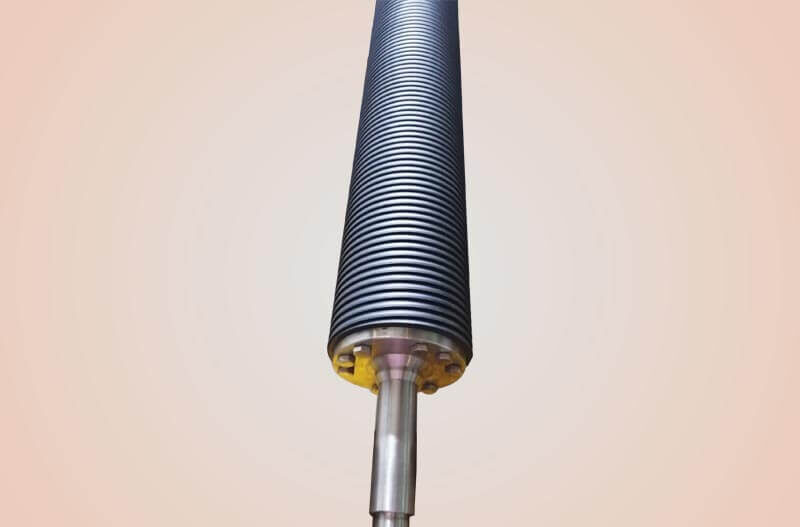
An ebonite roller is made by vulcanizing rubber with a high percentage of sulfur. This process transforms soft, flexible rubber into a dense, hard, and extremely durable material. The result is a roller that combines the toughness of hard plastic or steel with the corrosion resistance and anti-stick qualities of specialized rubber.
Because these rollers handle heavy loads, aggressive chemicals, high tension, and continuous speeds, getting the hardness right is critical.
Hardness directly dictates three key factors on your plant floor:
- Grip vs. Slip: A softer surface grips materials tightly without scratching, while a harder surface lets materials glide with minimal friction.
- Pressure Distribution: Harder surfaces concentrate nip pressure on a narrow line, while softer surfaces spread the force across a wider contact area.
- Wear and Chemical Defense: The right hardness prevents solvents, inks, and heat from swelling or degrading the roller cover prematurely.
If your roller is too hard for the job, it can crush delicate films, cause web slippage, or chatter under high speeds. If it is too soft, it can overheat, deform under pressure, and wear out in months instead of years.
Decoding Roller Hardness: Shore A vs. Shore D Made Simple
When you request a quote from an Ebonite Roller Manufacturer, one of the first questions you will hear is: “What durometer or Shore hardness do you need?”
Hardness is measured using a tool called a durometer, which presses a small pin into the roller surface to see how far it penetrates. Two main scales are used in industrial rubber and ebonite manufacturing: Shore A and Shore D.
SOFT & FLEXIBLE  <===============================================>  ROCK HARD
Rubber Band       Car Tire         Shoe Sole      Hard Hat          Bowling Ball
[ Shore A: 20-50 ] [ Shore A: 60-80 ] [ Shore A: 90-100 ] [ Shore D: 50-70 ] [ Shore D: 85-100 ]
Understanding the Shore A Scale
- What it measures: Soft to medium-hard rubbers and flexible elastomers.
- Range used for rollers: Typically 30 Shore A (soft like a pink eraser) to 90 Shore A (hard like a heavy-duty forklift tire).
- The feel: You can slightly indent the material with a strong thumbnail or pressure tool.
- Best used for: Applications needing cushioning, high friction, vibration damping, or gentle nip pressure on delicate materials.
Understanding the Shore D Scale
- What it measures: Hard rubbers, semi-rigid plastics, and fully vulcanized ebonite compounds.
- Range used for rollers: Typically 50 Shore D (similar to a hard plastic wheel) to 100 Shore D (as hard as a bowling ball or solid resin).
- The feel: Completely rigid to the touch with zero give under hand pressure.
- Best used for: Heavy-duty web handling, high-load squeegee applications, chemical baths, metal strip processing, and guide rolls where zero surface deflection is required.
Where Shore A Meets Shore D
It is common for plant teams to get confused around the overlap area. For instance:
- 90 to 95 Shore A is roughly equivalent to 40 to 45 Shore D.
When your operational needs cross above 95 Shore A, standard flexible rubber compounds reach their physical limits. This is where you transition into the Shore D domain of ebonite coatings, giving you maximum chemical stability, structural rigidity, and heat resistance.
Industry Applications: Which Hardness Does Your Line Need?
Different industries demand different performance characteristics. Here is a practical breakdown of where various hardness levels perform best on production machinery.
+------------------------------------+-----------------------+---------------------------------------+
| Industry / Application             | Recommended Scale     | Primary Benefit                       |
+------------------------------------+-----------------------+---------------------------------------+
| Flexible Packaging & Printing      | 70 Shore A - 50 Shore D | Uniform ink transfer & chemical resistance |
| Paper Mills & Converting           | 50 Shore D - 85 Shore D | High tension control & water shedding |
| Textile Processing & Dyeing        | 60 Shore A - 80 Shore A | Gentle liquid squeeze without damage  |
| Steel & Metal Strip Handling       | 75 Shore D - 95 Shore D | Cut resistance & heavy load bearing   |
| Film Laminating & Extrusion        | 80 Shore A - 60 Shore D | Heat tolerance & bubble-free bonding  |
+------------------------------------+-----------------------+---------------------------------------+
1. Flexible Packaging & Converting
In gravure printing, flexo coating, and pouch-making machines, rollers constantly come into contact with aggressive solvents like ethyl acetate, MEK, and toluene.
- Lower to Medium Hardness (70–90 Shore A): Ideal for impression rolls where gentle, uniform contact is required to transfer ink or adhesive onto thin plastic films without tearing or wrinkling.
- High Hardness (50–75 Shore D): Ideal for ebonite guide rollers and nip rolls that need to resist chemical swelling while maintaining precise film tracking at high running speeds.
2. Paper Mills & Board Manufacturing
Paper processing involves wet environments, high web tension, and continuous heat.
- High Hardness (60–90 Shore D): Fully vulcanized ebonite coated rollers excel as wire return rolls, feeler rolls, and breast rolls. Their glass-smooth surface allows water and pulp slurry to shed easily without sticking to the shell.
3. Textile Processing & Fabric Wet Finishing
In bleaching, dyeing, and washing ranges, rollers continuously squeeze liquids out of moving fabrics.
- Medium Hardness (65–85 Shore A): Gives enough cushion to press liquid evenly through varying fabric thicknesses without crushing synthetic fibers.
- High Hardness (50–70 Shore D): Used in heavy-duty squeegee positions where maximum liquid extraction is required before drying ovens.
4. Steel, Aluminum & Wire Drawing
Metal processing lines subject rollers to sharp edges, high oil exposure, and severe compressive loads.
- Maximum Hardness (80–100 Shore D): Extreme hardness prevents sharp metal edges from cutting into the roller face. Ebonite covers serve as an economical, non-corrosive alternative to chrome-plated steel rolls.
4 Key Factors to Check Before Selecting Roller Hardness
To avoid costly trial-and-error mistakes on your shop floor, run through these four practical questions with your production team before placing an order.
Factor 1: What is Your Operating Temperature and Chemical Exposure?
Rubbers and ebonite compounds react dynamically to heat and chemical contact.
- Soft rubber rollers (Shore A) tend to absorb solvents faster, causing them to swell, soften further, or crack at the edges.
- High-hardness ebonite (Shore D) features a tightly cross-linked molecular structure, giving it outstanding resistance to strong acids, alkalis, and organic solvents even at elevated temperatures up to 100°C–120°C.
Factor 2: How Much Nip Pressure is Being Applied?
Nip pressure is the contact force between two opposing rollers.
- If you apply heavy pneumatic pressure on a soft Shore A roller, the rubber indents deeply, generating internal friction and heat. This can cause internal blowouts or surface deformation over time.
- For heavy nip loads, upgrading to a rigid Shore D ebonite roller ensures the force is directed into the product rather than absorbed by the roller body.
Factor 3: What Material are You Processing?
- Fragile substrates (thin foil, delicate tissue, light gauge PE film) require a cushioned contact area (70–85 Shore A) to prevent web breakage.
- Stiff substrates (heavy paperboard, woven sacks, sheet metal) need a rigid backing surface (65–90 Shore D) to keep the line flat and stable.
Factor 4: Do You Plan to Re-grind the Surface in the Future?
Industrial machinery suffers routine wear. One major advantage of a high-density Ebonite Coated Roller in the 70–90 Shore D range is its machineability. You can turn, grind, and polish an ebonite roller surface multiple times on a lathe just like metal, restoring its original crown and finish without needing a complete re-coating.
3 Common Hardness Mistakes That Cost Factories Money
Over decades of working with plant managers across India and export markets, we frequently see three common purchasing missteps that lead to unnecessary expenses:
Mistake 1: Ordering “The Hardest Possible” Surface Just to Last Longer
It is tempting to think that an 85 Shore D roller will automatically outlast an 80 Shore A roller because it is harder. However, if your process requires slight surface compliance to absorb thickness variations in your material, an overly hard roller will cause edge-pinching, chatter marks, or material slippage. Always select hardness based on process physics, not just abrasion expectations.
Mistake 2: Forgetting That Hardness Changes Under Temperature
Rubber compounds naturally become slightly softer as machine operating temperatures rise. If your line runs continuously at 80°C, a roller rated at 80 Shore A at room temperature might perform like a 70 Shore A roller during a 12-hour shift. Always specify your actual working temperature when consulting with an Ebonite Roller Manufacturer.
Mistake 3: Buying Generic Off-the-Shelf Rollers
Every production line has unique combinations of speed, line tension, chemical washdowns, and roll diameters. Using a standard, off-the-shelf roller often leads to premature cover separation or uneven wear. Working with a specialist who formulates custom rubber compounds guarantees that your roller hardness matches your specific duty cycle.
Why Production Managers Trust Siva Rollers
Selecting the ideal durometer scale is only half the battle. You also need a manufacturing partner who can deliver consistent rubber density, zero air voids, dynamic balancing, and precise surface polishing.
At Siva Rollers, we have built a solid reputation across India and global export markets as a trusted Ebonite Roller Manufacturer. We don’t just supply rollers—we help plant teams solve operational bottlenecks.
[ Custom Compound Formulation ]
                      │
                      ▼
       [ Precision Vulcanization Process ]
                      │
                      ▼
 [ Shore A / Shore D Durometer Verification ]
                      │
                      ▼
   [ Dynamic Balancing & Surface Finishing ]
                      │
                      ▼
What Sets Siva Rollers Apart?
- Tailored Vulcanization Chemistry: We custom-blend our rubber compounds in-house to achieve exact Shore A or Shore D durometer requirements tailored to your chemicals, speeds, and loads.
- Precision Surface Finish: From mirror-smooth super finishes for converting lines to custom crowned profiles for paper mills, our advanced grinding facility ensures micron-level accuracy.
- Flawless Internal Bonding: Using advanced bonding agents and strict temperature controls during vulcanization, we eliminate the risk of ebonite layer peeling or debonding under heavy operational stress.
- Built for Indian & Global Conditions: Designed to withstand continuous multi-shift operations, harsh factory environments, and aggressive chemical washes, our rollers are trusted by manufacturers across India and exported worldwide.
- Consultative Support: Unsure whether 85 Shore A or 55 Shore D is right for your line? Our technical team works directly with your engineering department to review your drawings, process chemicals, and line speeds before manufacturing begins.
Simple Decision Checklist for Buying Your Next Ebonite Roller
To fast-track your next roller purchase, collect these five details before contacting your supplier:
- Machine Type & Position: (e.g., Slitter Rewinder – Guide Roller, Gravure – Impression Roller)
- Current Hardness (if known): (e.g., 85 Shore A or 70 Shore D)
- Primary Material Handled: (e.g., 12-micron PET film, 200 GSM kraft paper, aluminum strip)
- Chemical Exposure: (e.g., Ethyl acetate, water, acids, oils)
- Operating Conditions: Line speed (m/min), continuous operating temperature (°C), and nip pressure (kg/cm).
Upgrade Your Line Performance with Siva Rollers
A minor adjustment in roller hardness can be the difference between frequent line stops and continuous, high-profit output. Whether you need flexible cushion rolls or ultra-hard ebonite covers engineered for extreme chemical environments, Siva Rollers has the expertise, manufacturing technology, and material range to supply the exact solution your plant demands.
Ready to Optimize Your Production Line?
Don’t let guesswork slow down your factory floor. Speak with our industrial roller specialists today for a technical evaluation, custom hardness recommendation, or a competitive quote.
- Contact Siva Rollers Today
- Explore Our Custom Ebonite Coated Roller Solutions
- Serving Manufacturers Across India & Exporting Globally
FAQs
An ebonite roller is an industrial machine roller coated with high-sulfur rubber that undergoes a specialized vulcanization process. This thermal reaction transforms soft rubber into a rigid, non-porous, and chemical-resistant shell with a hardness comparable to hard plastic or metal, while retaining anti-corrosive rubber properties.
Why is an ebonite coated roller preferred over chrome-plated steel rollers?
An ebonite coated roller provides exceptional resistance to corrosive chemicals, acids, and water without rusting or pitting over time. Additionally, ebonite surfaces are easier to re-grind and polish in-house, significantly lowering long-term maintenance costs compared to expensive re-chroming.
For gravure and flexo impression positions, a hardness of 70 to 90 Shore A is ideal to ensure uniform ink or adhesive transfer without pinching thin plastic films. For web guide rolls and solvent bath positions, 50 to 75 Shore D ebonite rollers are recommended to eliminate chemical swelling from solvents like ethyl acetate.
Paper processing requires water-shedding surfaces and high tension control. High-hardness ebonite rollers rated between 60 and 90 Shore D are recommended for feeler rolls, wire return rolls, and breast rolls because their smooth, non-porous finish prevents pulp sticking and web drag.
Yes. Fully vulcanized ebonite covers (typically 60 to 90 Shore D) possess a tightly cross-linked molecular structure. This makes them highly resistant to strong acids, alkalis, organic solvents, and operating temperatures up to 100°C–120°C without softening or swelling.
Continuous machine heat causes rubber and ebonite compounds to soften slightly during long production runs. If your processing line operates at elevated temperatures above 70°C, specify a slightly higher initial Shore rating or consult an expert Ebonite Roller Manufacturer like Siva Rollers to formulate a heat-stabilized compound.
Yes. Ebonite covers in the 60 to 90 Shore D range can be turned, ground, and polished on standard metal lathe or cylindrical grinding equipment multiple times. This restores the original crown, diameter, and surface finish without requiring a full recoat.
Using an overly hard roller can crush delicate materials, cause web slippage, or produce chatter marks. Installing an overly soft roller can lead to premature surface swelling, excessive heat buildup, uneven coating, and shortened roller lifespan under heavy pressure.
Due to its high density and chemical stability, an ebonite coated roller typically lasts 2 to 3 times longer than standard synthetic rubber rollers in demanding environment involving continuous solvent exposure, heavy tension, or high abrasive wear.
Siva Rollers combines in-house custom compound blending, high-precision vulcanization, dynamic balancing, and micron-level surface grinding. Siva Rollers delivers customized roller solutions tailored to your specific line speed, chemical environment, and load requirements, backed by decades of technical expertise.
Yes. Siva Rollers manufactures and exports high-performance ebonite rollers to clients across North America, Europe, the Middle East, Southeast Asia, and Africa, providing export-grade packaging, strict quality assurance, and global technical support.