What Are the Differences Between Industrial Mirror Rollers and Embossed Rollers?
In the high-precision world of material processing—whether you are dealing with plastic films, textiles, steel, or paper—the surface quality of your final product is dictated by a single critical component: the industrial roller.
For production heads and procurement managers, choosing between a Mirror Roller and an Embossed Roller is not just a technical preference; it is a strategic decision that affects product aesthetics, functional performance, and market value.
As a premier Industrial Roller Manufacturer in India, Siva Rollers has spent decades perfecting the surface engineering required for these essential tools. This guide breaks down the core differences, applications, and selection criteria to help you optimise your production line.
The Fundamental Distinction: Smoothness vs. Texture
At the most basic level, the difference lies in the objective of the surface finish.
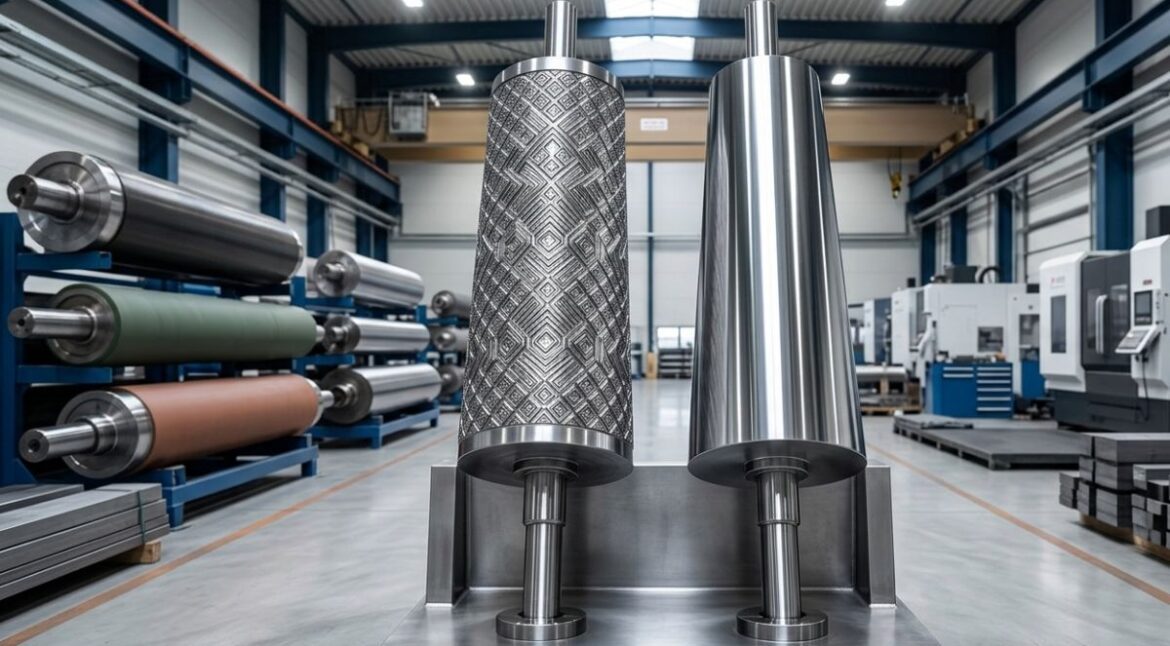
- Mirror Rollers are designed to eliminate any trace of surface irregularity. They aim for “optical clarity” and high gloss.
- Embossed Rollers are designed to introduce a specific, repeatable pattern or texture onto a substrate.
While both are essential in industrial processing, their manufacturing processes, maintenance requirements, and output characteristics are polar opposites.
1. Mirror Rollers: The Standard for High-Gloss Perfection
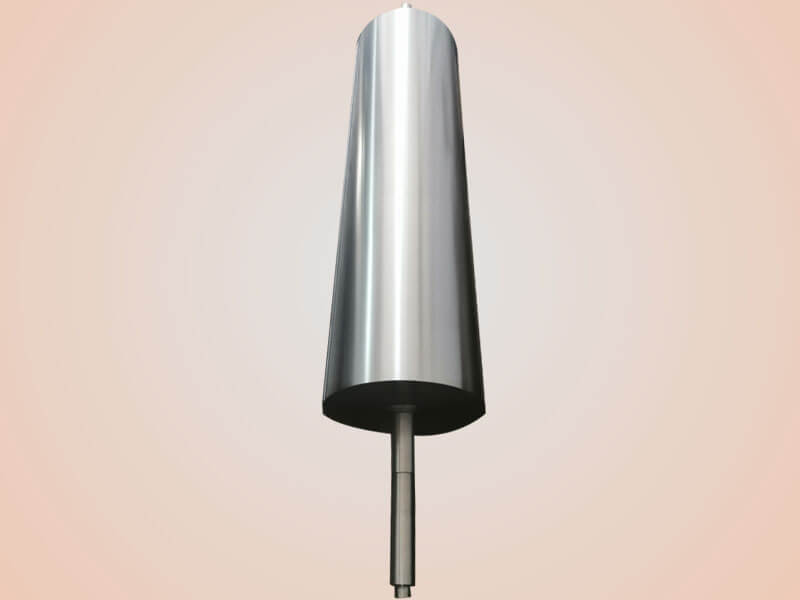
Often referred to as Chrome Plated Mirror Rollers, these are the workhorses of industries where visual clarity and surface smoothness are non-negotiable.
Surface Engineering
A true mirror finish is achieved through a multi-stage process of precision grinding, hard chrome plating, and meticulous polishing. At Siva Rollers, we focus on achieving an ultra-low Ra (Roughness Average) value. The goal is a “mirror-like” reflection that ensures the material passing over it remains flawless.
Key Characteristics
- High Reflectivity: Capable of producing a “super-finish” that translates directly to the substrate.
- Heat Transfer Efficiency: Because the surface is perfectly flat, it provides uniform contact with the material, which is critical for cooling or heating plastic films.
- Hardness: Hard chrome plating provides a surface that resists scratching and wear, maintaining the mirror finish over long production cycles.
Primary Applications
- Plastic Film & Sheet: For BOPP, PET, and PVC films where optical clarity is vital.
- Lamination: Ensuring a bubble-free, high-gloss bond between layers.
- Coating Processes: Facilitating an even distribution of chemicals or adhesives.
2. Embossed Rollers: Precision Engineering for Texture
While mirror rollers aim for “nothingness,” Embossed Rollers (also known as Textured Rollers or Surface Pattern Rollers) are all about “somethingness.” They are engineered to displace material to create a specific 3D effect.
Surface Engineering
Manufacturing an embossed roller is an art of precision. Patterns are created using chemical etching, CNC engraving, or mechanical knurling. These patterns can range from simple matte finishes to complex geometric designs, leather grains, or wood textures.
Key Characteristics
- Functional Texturing: Beyond aesthetics, embossing can provide “grip,” reduce glare (matte finish), or increase the surface area of a material.
- Pattern Consistency: High-quality embossed rollers ensure that the pattern remains consistent across the entire width of the web, preventing “shading” or uneven depth.
- Depth Control: The depth of the engraving is calibrated to the micron to ensure the material isn’t punctured but is clearly defined.
Primary Applications
- Textiles: Creating patterns on synthetic fabrics or non-woven materials.
- Packaging: Adding brand-specific textures to paper or foil.
- Interior Decor: Producing textured laminates for flooring and furniture.
- Steel Industry: Creating anti-skid surfaces or decorative metal sheets.
Comparison Table: Mirror Roller vs. Embossed Roller
Feature | Mirror Roller | Embossed Roller |
Primary Goal | Flawless smoothness & high gloss | Specific texture or pattern |
Surface Finish | Chrome plated, high-polish (Ra < 0.01) | Etched, engraved, or knurled |
Aesthetic Output | Glass-like, transparent, or reflective | Matte, grainy, or patterned |
Material Interaction | Maximum surface contact | Strategic displacement of material |
Typical Substrates | Optical films, clear plastics, foils | Paper, textiles, leatherette, metal |
Strategic Considerations for Procurement Managers
When evaluating an Industrial Roller Supplier, engineers and buyers must look beyond the initial price tag. The “Total Cost of Ownership” is heavily influenced by the quality of the base metal and the precision of the surface treatment.
1. Base Material Integrity
Whether it is a Mirror Roller or an Embossed Roller, the structural integrity of the steel shell is paramount. A roller that deflects under heat or pressure will result in uneven thickness (gauge variation) in your product. Siva Rollers utilizes high-grade forged steel and seamless pipes to ensure zero-deflection performance.
2. Chrome Plating Quality
For Chrome Plated Mirror Rollers, the thickness and bonding of the chrome layer determine how many times the roller can be re-polished before needing a full strip and re-plate. Poor quality plating leads to “pinholes” which can ruin miles of expensive plastic film.
3. Pattern Precision in Embossing
In the textile and paper industries, a mismatch of even a few microns in the engraving depth can lead to “moiré patterns” or structural weaknesses in the material. Precision engraving is a hallmark of a top-tier Embossed Roller Manufacturer.
Maintenance and Longevity: Keeping the Finish
The operational environment of a production plant is harsh. Dust, chemical vapors, and high temperatures can degrade roller surfaces.
- Mirror Roller Care: These require soft-touch cleaning. Even a minor scratch from a stray metal fragment can appear as a continuous line on your finished product. Regular inspections for “pitting” or “dulling” are required.
- Embossed Roller Care: The primary challenge here is “clogging.” Residue from the substrate (like plastic melt or paper dust) can fill the valleys of the texture, resulting in a faded pattern. Regular ultrasonic or chemical cleaning is often necessary.
Why Choose an Indian Manufacturer for Global Exports?
The industrial landscape in India has evolved into a global hub for high-precision engineering. As a leading Mirror Roller Manufacturer in India, Siva Rollers combines cost-effective manufacturing with international quality standards.
The Advantage of Siva Rollers:
- Advanced Grinding Facilities: Achieving the ultra-precise Ra values required by the global packaging industry.
- Custom Pattern Design: Our design team works with production heads to create custom embossed patterns for unique branding needs.
- Export Capability: We understand the logistics of shipping heavy-duty industrial rollers globally, ensuring they arrive with their delicate surfaces perfectly preserved.
- Material Expertise: Whether you require rollers for Plastic, Steel, or Textiles, we calibrate our manufacturing process to the specific thermal and mechanical stresses of your industry.
Selecting the Right Roller for the Job
The choice between a Mirror Roller and an Embossed Roller is defined by your end-user’s requirements.
If your market demands High Gloss Rollers for premium packaging or optical-grade films, the Mirror Roller is your indispensable asset. If your market seeks tactile feedback, non-slip surfaces, or aesthetic depth, the Surface Pattern Roller (Embossed) is the solution.
At Siva Rollers, we don’t just supply hardware; we provide surface engineering solutions. As a trusted Industrial Roller Supplier, we help you bridge the gap between raw material and a high-value finished product.
Ready to upgrade your production line? Consult with our engineering team today to discuss your specific requirements for Mirror or Embossed rollers. Let’s build the surface that defines your brand.
Contact US : +91 75070 10009 , info@sivarollers.com
FAQs
The main difference is their purpose: mirror rollers create a smooth, high-gloss surface, while embossed rollers create textures or patterns on materials. Mirror rollers focus on optical clarity, whereas embossed rollers add functional or decorative surface designs.
Mirror rollers are used in industries like plastic films, lamination, and coating, where high gloss, smoothness, and optical clarity are required. They are essential for producing BOPP, PET, and PVC films with flawless finishes.
Embossed rollers are used to create patterns, textures, or matte finishes on materials such as textiles, paper, plastic, and metal. They are widely used in packaging, interior décor, and non-woven fabric production.
Mirror rollers are the best choice for high-gloss finishing because they have a chrome-plated, ultra-smooth surface that ensures maximum reflectivity and defect-free output.
Embossed rollers improve functionality by adding grip, reducing glare, increasing surface area, and enhancing texture. This makes them ideal for applications like anti-slip surfaces, decorative laminates, and textured packaging.
Ra (Roughness Average) measures surface smoothness. In mirror rollers, a low Ra value (below 0.01 µm) ensures ultra-smooth finishes, better heat transfer, and high-quality output, which is critical for optical-grade materials.
Embossed roller patterns are created using CNC engraving, chemical etching, or mechanical knurling. These techniques allow precise control over pattern depth, consistency, and design complexity.
- Mirror rollers are widely used in plastic film, packaging, lamination, and coating industries.
- Embossed rollers are commonly used in textiles, paper, steel, packaging, and decorative laminate industries.
Buyers should consider:
- Desired surface finish (smooth vs. textured)
- Application type (optical vs. functional)
- Material compatibility
- Roller durability and maintenance requirements
Choosing the right roller directly impacts product quality and production efficiency.
- Mirror rollers require gentle cleaning and scratch prevention, as even minor damage affects product quality.
- Embossed rollers need regular cleaning to prevent clogging of patterns, often using chemical or ultrasonic methods.