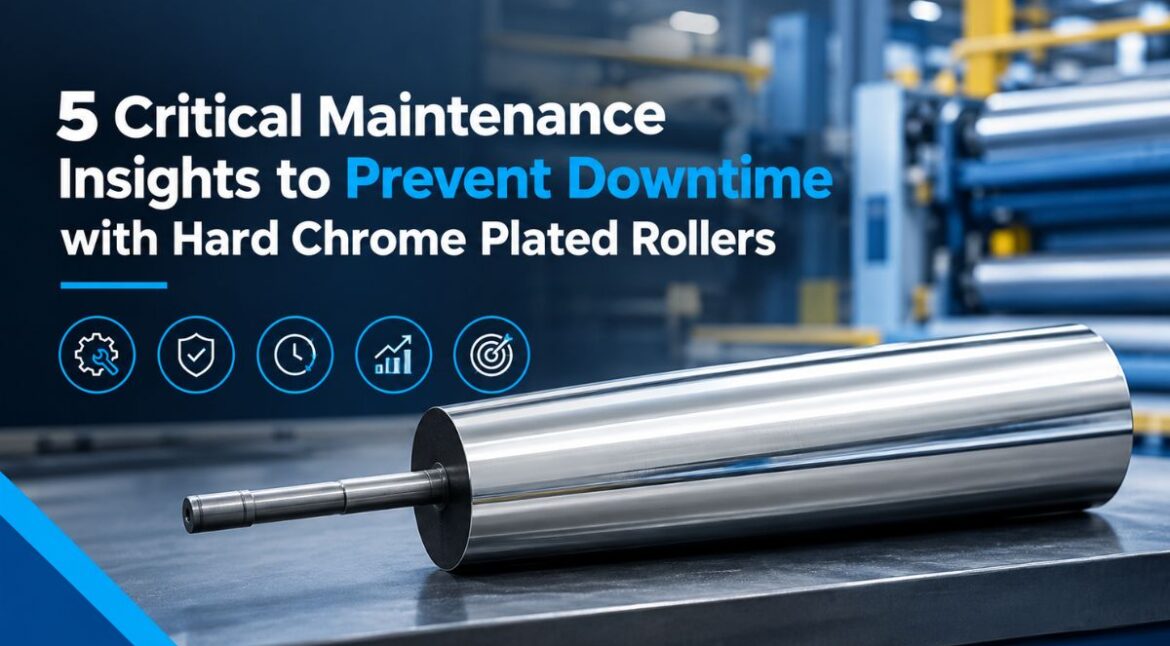
5 Critical Maintenance Insights to Prevent Downtime with Hard Chrome Plated Rollers
In modern high-speed manufacturing, production lines rely on consistency. Whether you operate in flexible packaging, printing, paper converting, textiles, or film extrusion, every piece of rotating equipment plays an essential role in keeping operations smooth.
At the center of many of these continuous operations is the hard chrome plated roller.
When a chrome roller performs as expected, surface quality remains uniform, web tension stays steady, and production targets are met without surprise stops. However, when surface damage, uneven wear, or unexpected corrosion occurs, an entire line can ground to a halt within minutes. Unplanned downtime does not just delay orders—it wastes expensive raw materials, increases maintenance costs, and strains customer relationships.
At Siva Rollers, a leading chrome plated roller manufacturer in India, we regularly work alongside plant managers, maintenance engineers, and machine operators. Over decades of working on shop floors, we have observed a clear pattern: most premature roller failures do not stem from poor manufacturing quality, but from minor, overlooked day-to-day maintenance errors.
In this guide, we break down 5 practical, ground-level maintenance insights to help you extend the operational lifespan of your hard chrome plated rollers, maintain peak product quality, and keep expensive downtime off your schedule.
Why Hard Chrome Plated Rollers Require a Dedicated Care Strategy
Before looking at specific maintenance practices, it is helpful to understand what makes a chrome coated roller so effective in demanding industrial environments.
Industrial chrome plating creates a smooth, highly durable surface layer over a steel or metallic core. This layer provides three primary operating benefits:
- High Wear Resistance: It withstands constant contact with moving webs, doctor blades, and processing chemicals.
- Corrosion Defense: It shields the underlying steel core from moisture, mild acids, solvents, and environmental oxidation.
- Low Surface Friction: It allows smooth web handling, preventing material snagging, dragging, or static buildup.
While hard chrome is exceptionally tough, it is not indestructible. The chrome layer is surprisingly thin compared to the total diameter of the roller. Microscopic micro-cracks—an inherent structural trait of quality hard chrome plating—can allow moisture or corrosive cleaning solvents to reach the core metal if proper cleaning routines are ignored. Furthermore, mechanical impacts, harsh cleaning tools, and improper storage can quickly undermine a perfect surface finish.
Proactive care ensures that your rollers continue to deliver smooth, uniform operation year after year.
Insight 1: Adopt Non-Abrasive Daily Cleaning Routines
The most common cause of early surface degradation on a chrome roller is improper daily cleaning.
During standard production runs, rollers accumulate ink residues, adhesives, plastic polymers, dust, and process chemicals. When operators rush to clean these deposits between shifts, they often reach for aggressive scraping tools or harsh chemical solvents out of convenience.
The Problem with Abrasive Scraping
Using steel scrapers, wire brushes, or harsh scouring pads to lift dried material creates microscopic scratches across the chrome surface. Over time, these hairline scratches:
- Create micro-grooves that trap future dirt and residue, making subsequent cleaning even harder.
- Leave faint streak lines on sensitive substrates like thin plastic film or glossy paper.
- Strip away the protective outer surface, exposing the base metal to oxidation.
Best Practice for Safe Daily Cleaning
- Use Soft Materials: Always clean chrome surfaces using lint-free microfiber cloths, soft cotton rags, or non-abrasive brass-compatible scrapers designed specifically for delicate surfaces.
- Select Safe Solvents: Use mild, manufacturer-approved cleaning solvents tailored to your specific process (e.g., specific ink removers or neutral detergent solutions). Avoid heavily acidic or strong alkaline solutions, as they can slowly etch into the chrome surface.
- Establish a “Clean While Warm” Protocol: Resin or adhesive build-up is far easier to wipe away immediately after a run while the roller is still warm, eliminating the need for force or heavy scraping later.
Need Custom Industrial Rollers?
✓ Custom Diameter & Length
✓ Temperature Control Design
✓ Fast Manufacturing
✓ Technical Support
Insight 2: Protect Rollers from Base Metal Internal Corrosion
When teams think about maintenance, they usually look only at the outer polished surface. However, many hard chrome plated rollers feature internal heating or cooling passages to regulate temperature during process runs.
Neglecting internal water or fluid channels can lead to rust and scale accumulation inside the roller core, creating severe operating issues long before the outer chrome shows visible damage.
How Internal Rust Causes Surface Failure
- Uneven Heat Transfer: Rust and lime-scale deposits act as heat insulators. As scale builds up inside the internal flow channels, heat distribution across the roller surface becomes uneven, causing hot or cold spots that warp processing materials.
- Structural Expansion Stress: Severe internal rusting can create localized pressure that stresses the bond between the base metal and the outer chrome layer, leading to surface blistering or peeling.
- Blocked Fluid Passages: Unfiltered or untreated circulating water causes internal blockages, increasing pump pressure and risking internal seal failures.
Recommended Internal Care Steps
- Condition Your Cooling Water: Ensure circulating cooling water is treated with rust inhibitors and anti-scaling agents. Never run untreated tap water through high-precision heat-transfer rollers.
- Routine Flushing: Periodically flush internal circulation passages with a mild descaling solution to clear out mineral deposits before significant buildup occurs.
- Complete Drainage for Inactive Lines: If a machine line is scheduled to sit idle for more than a few days, drain all internal water passages completely and purge them with dry compressed air to prevent standing water from oxidizing the internal core.
Insight 3: Maintain Precise Alignment and Balanced Pressure
Even the highest quality chrome plated roller will experience rapid, uneven wear if it operates under misaligned mechanical conditions.
In high-speed production environments, improper mounting, uneven pneumatic pressure, or worn support bearings subject the roller to unbalanced mechanical forces.
The Hidden Costs of Misalignment
When a roller is slightly off-parallel relative to its counter-roller or web path:
- Localized Friction Points: One end of the roller bears a disproportionate amount of pressure, accelerating surface wear along a single narrow band.
- Web Tracking Distortion: Misalignment leads to uneven web tension, causing material wrinkling, edge tears, and constant registration errors.
- Bearing and Journal Stress: Operating out of alignment puts extreme lateral force on side journals and drive bearings, leading to premature bearing failure and shaft distortion.
How to Prevent Pressure and Alignment Issues
- Conduct Scheduled Parallelism Checks: Do not wait for web wrinkles to check alignment. Include precision alignment checks in your monthly preventive maintenance routine using laser alignment instruments or feeler gauges.
- Calibrate Nip Pressure Evenly: If your setup uses pneumatic or hydraulic nip pressure, inspect pressure cylinders routinely to ensure equal force is applied to both drive and operator sides.
- Inspect Bearings Regularly: Listen for abnormal vibration or hums near mounting blocks. A worn bearing causes subtle shaft wobble, which quickly ruins the smooth finish of a chrome roller.
Insight 4: Implement Proper Off-Line Handling and Storage Protocols
It is a surprising industry fact: a significant percentage of roller surface damage does not happen while the machine is running—it happens while the roller is being stored or transferred across the factory floor.
Hard chrome is hard, but it is also brittle under direct point impacts. Dropping a wrench on an exposed roller, bumping it against a metal frame during installation, or placing it directly onto a concrete floor can chip or dent the outer surface beyond quick repair.
Safe Storage Rules Every Workshop Should Follow
- Never Place Rollers Directly on the Ground: Store idle rollers on dedicated wooden V-blocks, heavy-duty padded racks, or overhead hanging cradles that support only the side journals (shaft ends), never the main body.
- Rotate Suspended Storage: If a heavy roller remains suspended horizontally in storage for months, rotate it manually by 90 degrees every few weeks to prevent subtle gravity sag (deflection).
- Use Protective Outer Sleeves: Wrap offline rollers in heavy protective paper, breathable plastic sleeving, or thick cardboard guards during transit and storage to protect against accidental tool strikes.
- Apply Anti-Rust Protection: Before long-term storage, coat the polished chrome surface with a light layer of neutral protective oil or specialized anti-corrosion grease to shield against atmospheric humidity.
Insight 5: Schedule Professional Surface Audits and Timely Re-Plating
No industrial roller lasts forever under continuous heavy usage. However, knowing when to service a roller makes the difference between a planned, low-cost surface re-polishing and an expensive, emergency core replacement.
Many operators wait until a surface crack peels off or leaves severe marks on the product line before taking action. By that point, base metal damage may require deep grinding or total replacement.
Indications Your Chrome Roller Needs Servicing
- Faint Surface Dullness: Loss of original mirror polish or micro-scratching that no longer cleans off.
- Edge Wear: Noticeable step-down wear near the edges where the web continuously rides.
- Pin-hole Rust Spots: Tiny brown spots indicating that ambient moisture has penetrated through micro-cracks down to the base steel.
- Inconsistent Surface Finish: Variations in surface roughness across the face width that impact coating thickness or web traction.
The Value of Early Re-Plating
By catching wear early, a trusted chrome plated roller manufacturer can strip the old chrome layer safely, inspect and repair the underlying core metal, re-plate fresh industrial chrome, and precision-grind the roller back to its exact original tolerances. This re-plating process restores full operational performance at a fraction of the cost of buying an entirely new roller.
Why Leading Industries Partner with Siva Rollers
Maintaining continuous production efficiency requires reliable manufacturing partners who understand shop-floor challenges.
As a premier chrome roller manufacturer in India, Siva Rollers has built a reputation grounded in precision engineering, strict quality control, and long-term customer trust.
What Sets Siva Rollers Apart:
- Custom Engineering: Every roller is built or reconditioned to match your precise application requirements, load dynamics, and temperature parameters.
- High-Grade Plating Standards: We utilize advanced hard chrome deposition processes to ensure uniform hardness, superior surface adhesion, and optimal micro-crack structures for enhanced corrosion defense.
- Precision Surface Finishing: Our high-precision cylindrical grinding and mirror-polishing equipment deliver exceptional concentricity, exact TIR (Total Indicator Reading) limits, and customized surface roughness ($Ra$) values.
- End-to-End Support: Beyond new manufacturing, we offer comprehensive inspection, re-grinding, and re-plating services to extend the total service lifespan of your existing roller inventory.
Proactive Care Yields Maximum Productivity
Preventing downtime does not require complex or overly expensive maintenance equipment. In most cases, it comes down to discipline, proper operator training, and building simple daily routines around safe cleaning, steady alignment, careful handling, and treated cooling fluids.
Treating your hard chrome plated roller as a high-precision component rather than a simple piece of steel pays immediate dividends in longer tool life, reduced waste, and uninterrupted manufacturing lines.
Need Expert Advice on Your Rollers?
Whether you are looking to source high-precision new rollers, recondition worn stock, or optimize your machine setup, the team at Siva Rollers is ready to assist.
Contact Siva Rollers today to discuss your production requirements with our technical specialists and keep your operations moving forward smoothly.
FAQs
Maintain hard chrome plated rollers through regular non-abrasive cleaning, proper alignment, balanced nip pressure, careful storage, and periodic surface inspections. For rollers with internal heating or cooling passages, maintain clean fluid circulation to reduce scale buildup and internal corrosion.
Use a lint-free microfiber cloth, soft cotton rag, or another suitable non-abrasive cleaning material. Select a cleaning solvent approved for the roller and your industrial process. Avoid steel scrapers, wire brushes, harsh scouring pads, and aggressive acidic or alkaline chemicals that may damage the chrome surface.
Common warning signs include surface dullness, persistent scratches, uneven wear, edge deterioration, small rust spots, and inconsistent surface finish. If these problems affect material quality or roller performance, arrange a professional inspection to determine whether polishing, re-grinding, re-plating, or replacement is appropriate.
Roller misalignment can create uneven pressure, localized surface wear, inconsistent web tension, fabric or film wrinkles, and material tracking problems. It can also increase stress on bearings, journals, and shafts. Regular alignment checks and balanced nip pressure help reduce these risks.
Internal corrosion can develop in rollers with heating or cooling passages when water quality and fluid circulation are poorly maintained. Rust and scale may reduce heat-transfer efficiency, create uneven temperature distribution, block fluid passages, and contribute to internal damage. Appropriate fluid treatment and periodic maintenance help prevent these problems.
Store rollers horizontally on suitable padded supports or dedicated racks that protect the roller surface. Avoid direct contact with concrete floors, metal edges, and other hard objects. Use suitable protective wrapping during transport and storage, and apply a compatible corrosion-protection product when required.
Yes, some damaged hard chrome plated rollers can be restored through suitable repair processes, depending on the condition of the base metal, the extent of surface damage, and the roller's application requirements. Professional inspection can help determine whether re-grinding, re-plating, or another repair method is practical.
Inspection frequency depends on operating conditions, production intensity, process chemicals, roller design, and the manufacturer's maintenance recommendations. Daily visual checks and cleaning can be combined with scheduled inspections of alignment, bearings, surface condition, and fluid passages where applicable.
Hard chrome plated roller maintenance is important in industries such as flexible packaging, printing, paper converting, textile processing, and plastic film extrusion. Proper maintenance helps protect surface quality, maintain consistent material handling, reduce production waste, and minimize unexpected stoppages.
SIVA ROLLERS (SIVA ENGINEERING WORKS), based in Ahmedabad, Gujarat, provides industrial roller manufacturing and related roller services. Businesses evaluating hard chrome plated roller repair or re-plating should discuss the existing roller's condition, dimensions, application, and surface requirements with the manufacturer to confirm the services suitable for their needs. Visit www.sivarollers.com to enquire about your roller requirements.