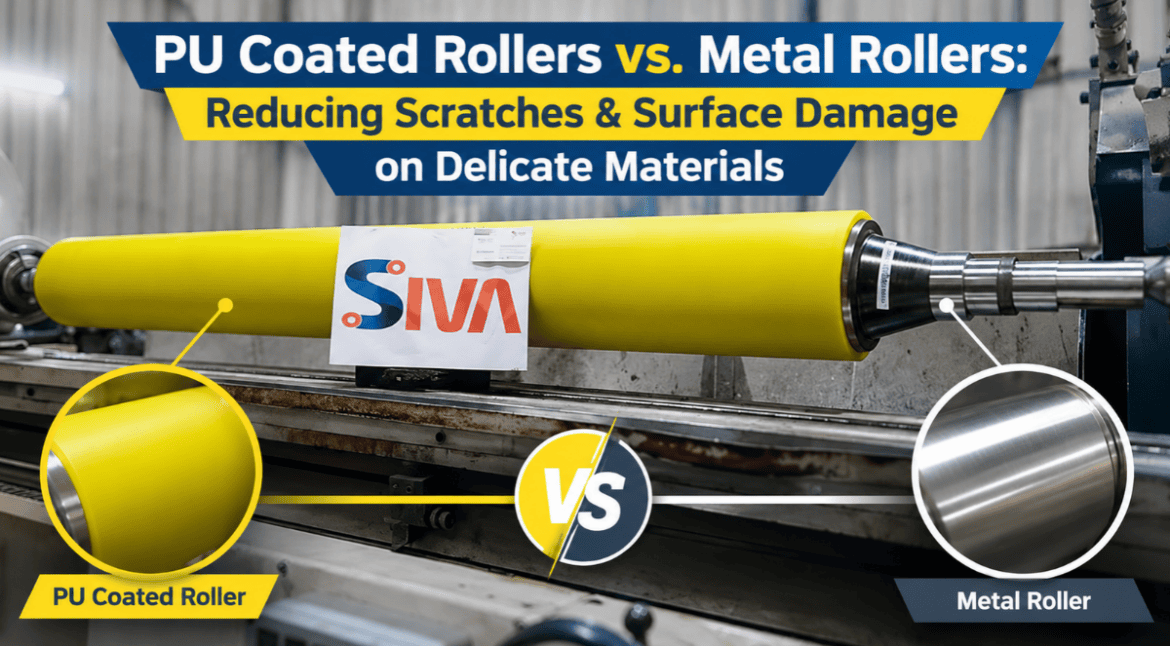
PU Coated Rollers vs. Metal Rollers: Reducing Scratches & Surface Damage on Delicate Materials
In modern high-speed manufacturing, product quality is defined by the finest details. Whether you are running a line for thin plastic packaging films, coated architectural glass, polished stainless steel sheets, or delicate printed labels, your surface quality directly determines your profitability.
Even a hairline scratch, micro-scuff, or tiny dent can turn a premium batch of material into expensive factory scrap.
When production engineers and plant managers audit their lines to find the root cause of surface defects, one mechanical component consistently stands out: the roller interface.
For decades, traditional metal rollers—whether polished steel, chrome-plated, or aluminum—have been the standard workhorses of material handling. However, as substrates become thinner, softer, and more sensitive to friction, rigid metal contact often creates more problems than it solves.
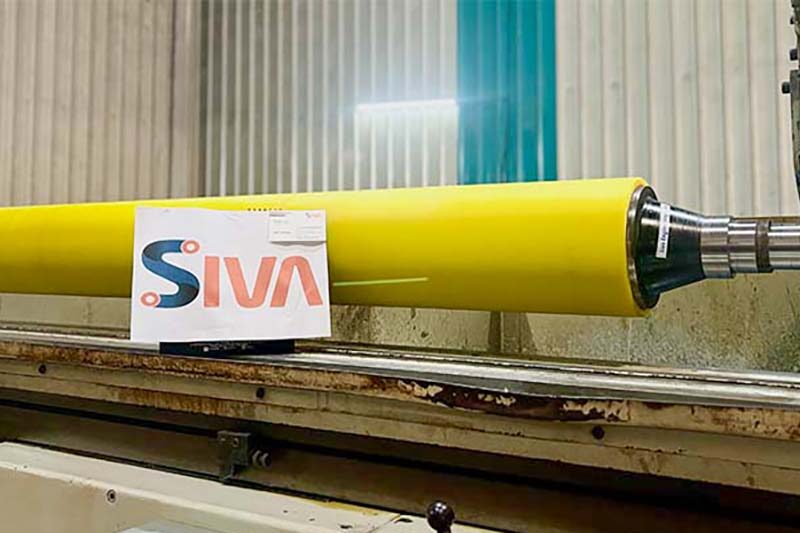
This is where the PU Roller (Polyurethane coated roller) has transformed processing lines across India and globally. By combining the solid strength of a metal core with the gentle, resilient grip of an engineered elastomer coating, a PU Coated Roller protects delicate materials while keeping machine lines moving at top speeds.
In this comprehensive guide, we will explore why metal rollers frequently damage sensitive materials, how polyurethane roller coatings prevent costly surface flaws, and how choosing the right PU Roller Manufacturer can elevate your production line efficiency.
The Real Cost of Micro-Scratches on High-Value Substrates
When a production line experiences material defects, many operators immediately look at tension settings, speed mismatches, or temperature controls. Yet, a large percentage of physical damage happens at the exact point where the moving material presses against the roller surface.
What Happens During High-Speed Material Transport?
When a delicate substrate moves over a handling roller, several physical interactions occur simultaneously:
- Point-Contact Pressure: If the roller surface does not yield, even tiny variations in substrate thickness concentrate the force on small contact spots.
- Micro-Slippage: When friction between the material and the roller drops, the substrate slides over the roller face instead of rolling smoothly with it. This sliding action creates fine drag lines and scuffs.
- Particle Trapping: Dust, airborne debris, or tiny metal shavings trapped between a rigid roller and a delicate surface act like abrasive sandpaper under load.
- Static and Friction Heat: Excessive dry friction creates static buildup and heat, causing thin films to stretch, warp, or stick unexpectedly.
For industries working with optical films, foil laminates, automotive glass, or mirror-finished metals, these defects mean rejected shipments, delayed delivery schedules, and lost customer trust.
Why Traditional Metal Rollers Fail on Sensitive Surfaces
Metal rollers are known for their durability and high load-bearing strength. In heavy-duty operations where raw rigidity is required, they perform reliably. However, when applied to sensitive, high-finish materials, their rigid nature turns into a liability.
Unforgiving Surface Rigidity
Steel and aluminum rollers do not deform under force. When a sensitive film or thin metal sheet encounters a rigid metal surface, there is no shock absorption. Any vibration from the machine frame or sudden surge in line tension is transferred directly to the material face.
The Risk of Chrome Pin-Holes and Flaking
To prevent rust and provide a smooth finish, metal rollers are often hard-chrome plated. Over time, chrome coatings can develop microscopic pin-holes, chip at the edges, or wear down unevenly. These tiny surface imperfections act like razor edges, creating repeating scratches along the entire length of your material roll.
Low Friction Leads to Dragging Marks
Metal-on-metal or metal-on-plastic interfaces often suffer from low mechanical friction. If a metal roller hesitates for even a fraction of a second due to bearing resistance, the web or sheet drags across the stationary surface. This creates wide, hazy abrasion marks that are especially visible on transparent films and glossy sheets.
Zero Debris Tolerance
In an industrial environment, particulate matter is inevitable. When a hard particle lands on a hard steel roller, the pressure cannot displace the particle into the roller body. Instead, the particle gets crushed directly into your soft material surface, leaving permanent pinpoint dents.
How PU Coated Rollers Protect Delicate Materials
A PU Coated Roller solves the underlying physical challenges of material handling by acting as a gentle yet secure mechanical buffer. By applying a layer of high-grade polyurethane over a sturdy steel or aluminum core, you give the roller dual capabilities: structural stability inside, and elastic protection on the outside.
Here is how a quality PU Roller prevents surface damage:
1. Elastic Memory and Cushioning
Polyurethane has remarkable elastic memory. When a delicate material presses against a PU Roller, the coating slightly deflects to distribute the contact weight evenly across a broader surface area. Once the material passes, the polyurethane immediately returns to its original shape. This soft-touch contact eliminates hot spots of extreme pressure.
2. High Coefficient of Friction Without Stickiness
Polyurethane naturally offers superior surface friction compared to polished metals or hard plastics. This means the roller turns effortlessly in complete sync with the moving web or sheet, even at low line tension. By eliminating surface slippage, a PU Coated Roller stops scuffing before it starts.
3. Particle Embedding Action
If a stray dust particle or tiny piece of debris enters the roll nip, the flexible polyurethane layer gives way locally. The particle sinks momentarily into the resilient coating rather than being forced into your product face. Once the nip releases, the debris can be easily wiped clean during routine maintenance without having damaged your output.
4. Vibration Damping
High-speed machinery generates micro-vibrations that travel through shafts and bearings. Polyurethane acts as a natural dampener, absorbing mechanical chatter before it can leave chatter marks or fine ripples on sensitive coatings and wet inks.
Industry Applications: Where PU Rollers Make the Difference
Switching from metal to polyurethane coated rollers provides immediate operational improvements across multiple sectors where surface quality is paramount.
Flexible Packaging and Converting
- The Challenge: Thin polyethylene films, foil laminates, and barrier films stretch easily and tear or scratch when subjected to dry metal friction.
- The PU Advantage: A PU Coated Roller provides steady traction without over-gripping or pinching, maintaining precise web tension while protecting delicate printed layers and barrier coatings.
Glass Processing (Architectural, Automotive, & Solar)
- The Challenge: Glass sheets are susceptible to fine hairline scratches during washing, conveying, cutting, and lamination handling. Once scratched, glass cannot be repaired.
- The PU Advantage: Polyurethane offers gentle, non-marking support that holds glass panels firmly during processing—even when wet or exposed to mild chemical fluids—without leaving permanent drag marks or smudges.
Aluminum and Stainless Steel Coil Processing
- The Challenge: Polished aluminum sheets, decorative trim, and mirror-finish stainless coils are easily scratched during slitting, feeding, and tensioning lines.
- The PU Advantage: Heavy-duty PU tension and pinch rollers provide the firm driving force needed to pull metallic sheets without slipping or scoring bright mill finishes.
Paper, Label, and Commercial Printing
- The Challenge: High-speed paper feeds and label stock require consistent pull without smudging wet inks, crushing embossing, or tearing delicate release liners.
- The PU Advantage: Soft-durometer polyurethane rollers distribute nip pressure gently, preserving delicate print finishes and maintaining consistent feed alignment.
Direct Comparison: PU Coated Rollers vs. Traditional Metal Rollers
To help production managers make informed operational choices, let us compare how these two roller types perform across crucial everyday line conditions:
Operational Consideration | Traditional Metal Rollers | PU Coated Rollers |
Scratch & Scuff Prevention | Low protection. Rigid contact concentrates force and increases scuff risks during tension spikes. | High protection. Resilient coating cushions material and distributes pressure evenly. |
Grip & Traction Control | Poor on smooth or slippery web materials, often requiring higher nip pressure to avoid slipping. | Exceptional. High natural surface friction prevents slippage without excessive nip force. |
Handling Debris & Particles | Crushes dust/particles directly into the product, causing pin-hole dents and repeating flaws. | Yields around particles to prevent impression damage on the product surface. |
Noise & Vibration Damping | Transmits frame vibration directly to the material, contributing to line chatter and high operating noise. | Dampens shock and absorbs mechanical vibration, producing quieter and smoother line runs. |
Maintainability | Requires full roller replacement or expensive, time-consuming re-plating when worn. | Cores can be re-lagged and re-coated repeatedly, significantly lowering long-term operating costs. |
How to Select the Right PU Roller for Your Line
Not all polyurethane rollers are created equal. Achieving optimal performance on your machinery requires matching the roller’s characteristics to your specific operating conditions.
When evaluating options with your PU Roller Manufacturer, pay close attention to these three practical factors:
1. Hardness Selection (Balancing Softness and Stability)
Polyurethane can be formulated across a wide range of firmness levels:
- Softer Coatings: Ideal for delicate web guiding, pressure application on uneven surfaces, and light-duty material transport where maximum cushioning is required.
- Medium Coatings: Perfect for general-purpose conveying, pinching, and guiding across packaging, converting, and paper lines.
- Firmer Coatings: Suited for heavy tension rolls, bridle rolls, and metal coil processing lines where high load-bearing capability is needed alongside scratch protection.
2. Environmental Resistance
Consider the substances your rollers will contact daily:
- Are your rollers exposed to oils, cutting fluids, or chemical cleaning solutions?
- Is there humidity, steam, or direct contact with water?
- Does your process operate under elevated temperatures?
A experienced manufacturer will tailor the chemical compound of your PU coating so it remains stable, resists swelling, and stays resilient under your specific plant conditions.
3. Core Quality and Dynamic Balance
A great PU coating cannot compensate for a poorly balanced core. Ensure your supplier uses precision-machined steel or aluminum cores that undergo thorough dynamic balancing. This prevents vibration wobble at high operating speeds, extending both roller life and machine bearing health.
The Re-Coating Advantage: Sustainable & Cost-Effective Maintenance
One of the greatest operational advantages of choosing a PU Coated Roller over a solid metal or chrome roller is maintainability.
When a metal roller surface becomes scratched or pitted, repairing it often means grinding down the core, re-plating, and re-polishing—or discarding the core altogether.
With polyurethane rollers, the underlying metal core remains intact for years. When the outer PU layer eventually shows wear after long service, you do not need to purchase a brand-new assembly. A specialized manufacturer can strip the worn polyurethane layer, inspect and clean the metal core, and apply a fresh layer of precision polyurethane.
This re-lagging process offers major benefits:
- Substantial Cost Savings: You only pay for the new coating material and labor, avoiding the high cost of raw steel machining.
- Reduced Downspeed Disruption: Re-coating cycles are often faster than fabricating new core shafts from scratch.
- Environmental Sustainability: Reusing metal shafts keeps heavy steel out of scrap yards and lowers your plant’s carbon footprint.
Why Partnering with Siva Rollers Elevates Your Operations
When your production targets depend on zero-defect manufacturing, off-the-shelf components rarely provide the precision you need. Working with an experienced, quality-focused partner ensures that every roller installed on your line is built for long-term reliability.
Siva Rollers has earned its reputation as a leading PU Roller Manufacturer in India by focusing on engineered surface solutions tailored to real-world industrial challenges.
What Sets Siva Rollers Apart?
- Custom Polymer Formulations: We do not believe in one-size-fits-all manufacturing. Every PU compound is selected and prepared based on your material type, line speed, pressure requirements, and environment.
- Precision Surface Finish: From mirror-smooth ground surfaces to custom textures designed for web release, our state-of-the-art grinding technology ensures exact diameter tolerances and concentricity.
- Core Fabrication & Re-Coating Expertise: Whether you need complete new roller assemblies manufactured to drawing specifications or fast-turnaround re-coating for your existing core inventory, our production facility delivers consistent quality.
- Proven Quality Control: Every roller undergoes strict dimensional, hardness, and dynamic balance checks before leaving our facility, ensuring seamless drop-in installation on your production floor.
- Dedicated Industrial Support: Our technical team works closely with plant engineers, production managers, and maintenance teams across India to diagnose recurring surface issues and recommend the ideal roller setup.
Final Thoughts: Upgrade Your Line for Zero-Defect Manufacturing
In an increasingly competitive market, surface scratches and material damage are silent profit killers. Continuing to rely on rigid metal rollers for delicate, high-value substrates exposes your business to avoidable material waste, customer rejections, and unnecessary downtime.
By transitioning to high-performance PU Coated Rollers, you protect sensitive product surfaces, maintain smooth web traction, reduce operating noise, and unlock lower long-term maintenance costs through easy re-coating.
Whether you are setting up a new production line or upgrading an existing converting system, choosing an experienced partner like Siva Rollers ensures you get engineered reliability every step of the way.
Ready to Eliminate Surface Damage on Your Production Line?
Reach out to the technical team at Siva Rollers today to discuss your material handling challenges, request custom roller specifications, or explore our fast-turnaround PU re-coating services for your plant.
FAQs
A PU Coated Roller is an industrial roller with a polyurethane coating applied over a metal core, such as steel or aluminum. The resilient PU surface helps provide controlled material contact, cushioning, traction, and protection for sensitive surfaces.
PU Coated Rollers provide a resilient contact surface that can distribute pressure more evenly and reduce concentrated contact points. This can help minimize scuffing, drag marks, and surface damage when handling delicate films, sheets, labels, and other sensitive materials.
PU Coated Rollers offer a resilient surface that can provide cushioning, higher traction, particle accommodation, and vibration damping. These characteristics can make them suitable where rigid metal roller contact may increase the risk of scratches or scuff marks.
PU Coated Rollers can be used in applications involving flexible packaging and converting, glass processing, aluminum and stainless steel coil processing, paper handling, label processing, and commercial printing.
Polyurethane provides a relatively high-friction roller surface, helping the roller maintain contact with moving webs or sheets. This can reduce surface slippage and support consistent material handling without relying only on excessive nip pressure.
PU hardness should be selected according to the application and operating conditions. Softer coatings can suit delicate handling, medium coatings can support general conveying and guiding, while firmer coatings can be appropriate for higher-load tension and coil-processing applications.
Yes. The content identifies thin plastic films, foil laminates, barrier films, paper, labels, and delicate printed materials as applications where polyurethane rollers can provide controlled traction while helping reduce surface damage.
Yes. When the polyurethane layer becomes worn, the existing metal core can be inspected, cleaned, and recoated with a fresh polyurethane layer. This can allow the core to be reused instead of manufacturing an entirely new roller assembly.
Consider the manufacturer's ability to match PU hardness and compound to your application, maintain the required surface finish, manufacture or refurbish the roller core, and perform dimensional and dynamic balance checks. These factors can affect roller performance and suitability for high-speed production lines.
According to the provided content, Siva Rollers offers PU roller manufacturing and re-coating services, including new roller assemblies and re-coating of existing cores. The content also positions Siva Rollers as a PU Roller Manufacturer in India serving industrial production requirements.