How Textile Industry Rollers Improve Fabric Quality and Production Efficiency
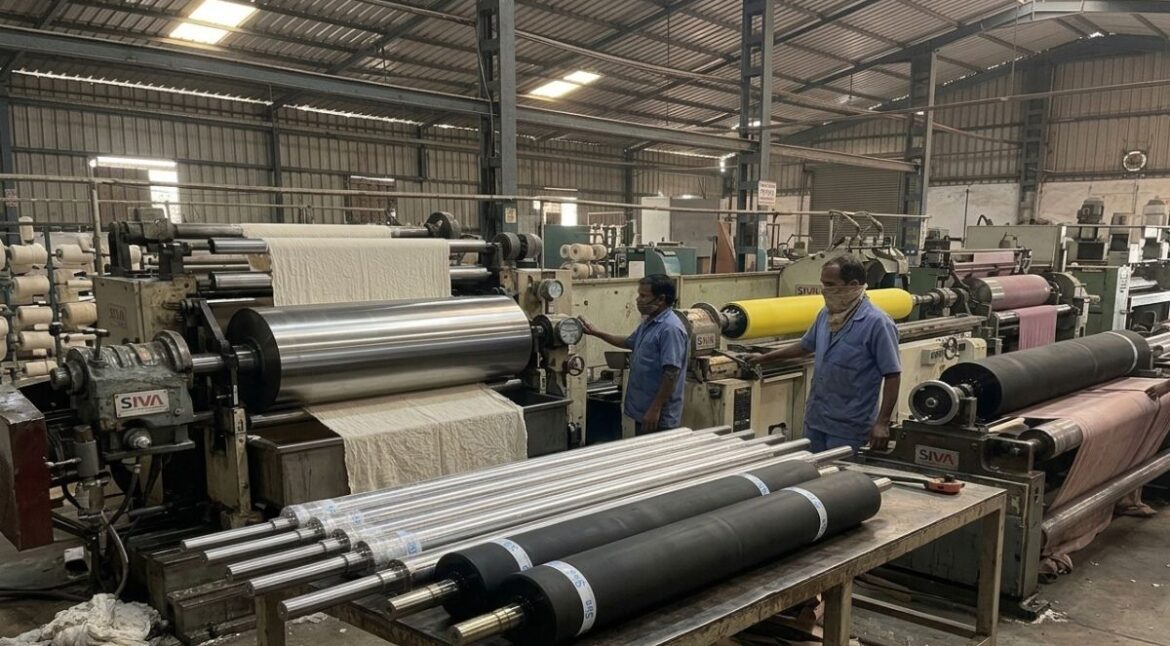
In the fast-paced world of fabric manufacturing, the difference between a premium product and a rejected batch often comes down to the smallest mechanical details. Among the most critical yet frequently overlooked components are Textile Industry Rollers. These precision-engineered tools serve as the backbone of fabric processing, ensuring that every yard of material meets rigorous industry standards.
At Siva Rollers, we understand that a roller is not just a cylinder; it is a performance driver. Whether you are dealing with high-speed weaving or delicate finishing, the right Roller for Textile Industry applications can significantly reduce downtime and eliminate fabric defects.
The Role of Precision Rollers in Modern Textile Mills
Textile production is a sequence of high-pressure environments. From the initial stages of spinning to the final chemical treatments, Textile Mill Rollers must handle constant friction, chemical exposure, and varying tension levels.
When a roller fails to maintain uniform pressure or loses its surface integrity, the consequences are immediate: uneven dyeing, fabric tearing, and inconsistent widths. By investing in high-quality Industrial Textile Rollers, manufacturers can achieve a level of consistency that manual adjustments simply cannot match.
Enhancing Fabric Quality Through Advanced Engineering
Quality is the currency of the textile world. Fabric Processing Rollers impact the “hand feel,” appearance, and structural integrity of the cloth.
- Uniform Tension Control: Inconsistent tension is the leading cause of fabric shrinkage and warping. Precision rollers ensure that the fabric remains taut but not stressed throughout the production line.
- Surface Smoothness: Any microscopic imperfection on a roller surface can cause “pilling” or snags. Modern rollers are polished to mirror finishes to protect delicate fibres.
- Chemical Resistance: During dyeing and bleaching, rollers are submerged in aggressive chemicals. Using rollers with specialized coatings prevents corrosion from transferring onto the fabric.
Maximizing Production Efficiency and Reducing Waste
Efficiency in a textile mill isn’t just about speed; it’s about “uptime.” Every time a machine stops to replace a worn-out part, the bottom line takes a hit. Textile Machinery Rollers designed by experts like Siva Rollers are built for longevity.
Durability in Harsh Environments
Many processes require High-temperature resistant textile rollers. Standard rubber or plastic rollers can soften or deform under the heat of a drying range or heat-setting machine. Specialized rollers maintain their geometric profile even at extreme temperatures, ensuring the machine runs at peak velocity without frequent maintenance breaks.
Reducing Energy Consumption
A well-aligned and balanced roller requires less torque to turn. This might seem minor, but across a mill with hundreds of rollers, the energy savings are substantial. Precision-balanced Industrial Textile Rollers reduce the load on motors, extending the lifespan of the entire machinery suite.
Solving Common Industrial Challenges with Siva Rollers
Industrial operators often face specific “pain points” that stall production. Here is how specialized roller technology solves these issues:
- Problem: Slippage in High-Speed Lines
- Solution: We design rollers with specific friction coefficients (grip) that prevent fabric from slipping, ensuring accurate measurement and cutting.
- Problem: Frequent Bearing Failure
- Solution: Integrated roller designs with reinforced internal structures reduce the vibration that typically kills bearings.
- Problem: Material Buildup (Lapping)
- Solution: Anti-static and non-stick coatings prevent fibres from wrapping around the roller, a common cause of machine jams.
Selecting the Right Roller for Your Application
Choosing a Roller for Textile Industry use requires an understanding of your specific process. Not all rollers are created equal, and using the wrong specification can be a costly mistake.
1. Squeezing and Padding Rollers
Used primarily in wet processing, these rollers must provide perfectly even nip pressure. If the pressure is uneven, the fabric will retain more moisture on one side than the other, leading to shaded dyeing results.
2. Guide and Idler Rollers
These are the workhorses that keep the fabric moving. They must be lightweight yet rigid to prevent bowing. Siva Rollers focuses on high-strength alloys to ensure these rollers remain perfectly straight over years of use.
3. Heat Transfer and Cooling Rollers
In synthetic fibre production, temperature control is everything. Internal cooling or heating systems within the roller allow for precise thermal management of the web.
The Siva Rollers Advantage: Why Quality Matters
At Siva Rollers, our manufacturing process combines traditional craftsmanship with modern CNC technology. We don’t just supply parts; we provide industrial solutions that help textile mills compete on a global scale.
By upgrading to our Textile Industry Rollers, you are choosing:
- Reduced maintenance cycles.
- Higher yield per production hour.
- A significant reduction in fabric waste.
- Expert technical support tailored to your mill’s specific needs.
The Future of Textile Manufacturing
As the industry moves toward more sustainable and automated production, the hardware must keep up. High-performance Textile Mill Rollers are no longer an optional upgrade; they are a necessity for any facility looking to improve fabric quality and production efficiency.
Don’t let subpar components hold back your production capacity. Whether you need High-temperature resistant textile rollers or custom-designed Fabric Processing Rollers, Siva Rollers has the expertise to elevate your manufacturing process.
Take the Next Step
Is your production line underperforming? Are you seeing frequent fabric defects? Contact the experts at Siva Rollers today for a technical consultation. Let us help you identify the right Textile Industry Rollers to optimize your mill and boost your profitability.
Contact US : +91 75070 10009 , info@sivarollers.com
FAQs
Textile Industry Rollers are precision-engineered cylindrical components used in textile machines to guide, press, stretch, and transport fabric during production. They maintain consistent tension and pressure across the fabric surface, which is essential for uniform dyeing, smooth finishing, and accurate fabric width. High-quality rollers help textile mills reduce fabric defects, maintain production stability, and improve overall manufacturing efficiency.
Textile Mill Rollers improve fabric quality by maintaining uniform pressure, smooth fabric movement, and stable tension during processing. When rollers are precisely engineered and balanced, they prevent common fabric problems such as wrinkles, uneven dyeing, stretching, and tearing. Smooth roller surfaces also protect delicate fibres, ensuring the final fabric has consistent texture, appearance, and strength.
Several types of rollers are used throughout textile production, including:
- Guide and Idler Rollers – Maintain fabric alignment and movement through machines.
- Padding and Squeezing Rollers – Control chemical absorption during dyeing and finishing processes.
- Heat Transfer Rollers – Manage temperature during thermal processing.
- Cooling Rollers – Stabilize fabric temperature after heat treatment.
Each roller type plays a specific role in maintaining production efficiency and fabric quality.
Industrial Textile Rollers increase production efficiency by ensuring smooth material flow, reducing machine vibration, and minimizing fabric slippage. Precision-balanced rollers require less motor power to rotate, which lowers energy consumption and mechanical stress on textile machinery. This allows production lines to operate at higher speeds with fewer interruptions or maintenance stoppages.
Tension control is critical because inconsistent tension can distort the fabric structure. If tension is too high, fibres may stretch or break. If it is too low, wrinkles and uneven processing may occur. High-precision rollers maintain consistent tension throughout the production line, ensuring uniform fabric width, stable dye absorption, and consistent product quality.
Low-quality rollers can create several production issues, including:
- Fabric slippage during high-speed processing
- Uneven dyeing or chemical absorption
- Frequent machine downtime due to roller wear
- Increased energy consumption
- Fabric defects such as wrinkles, snags, or stretching
Using high-quality Industrial Textile Rollers helps prevent these problems and keeps production stable.
Textile Industry Rollers are manufactured using materials such as rubber, polyurethane, stainless steel, and ebonite coatings. These materials are selected based on the specific textile process. For example, rubber rollers provide grip for fabric transport, while ebonite or chemically resistant coatings protect rollers from corrosive chemicals used in dyeing and bleaching operations.
High-temperature resistant textile rollers are designed to maintain their shape and surface stability in processes such as drying, heat-setting, and heat transfer printing. These rollers prevent deformation caused by heat exposure, allowing machines to operate continuously at high speeds without affecting fabric quality or requiring frequent roller replacement.
Selecting the right Roller for Textile Industry applications depends on several factors, including machine type, processing temperature, chemical exposure, fabric type, and required pressure levels. Textile mills should work with experienced manufacturers who can design rollers with the correct coating, hardness, diameter, and balancing to match the exact production requirements.
Siva Rollers provides precision-engineered Textile Industry Rollers designed specifically for high-performance textile production. With advanced manufacturing technology, durable materials, and customized roller designs, Siva Rollers helps textile mills reduce downtime, improve fabric quality, and increase production efficiency. Their expertise ensures every roller meets the demanding conditions of modern textile processing lines.