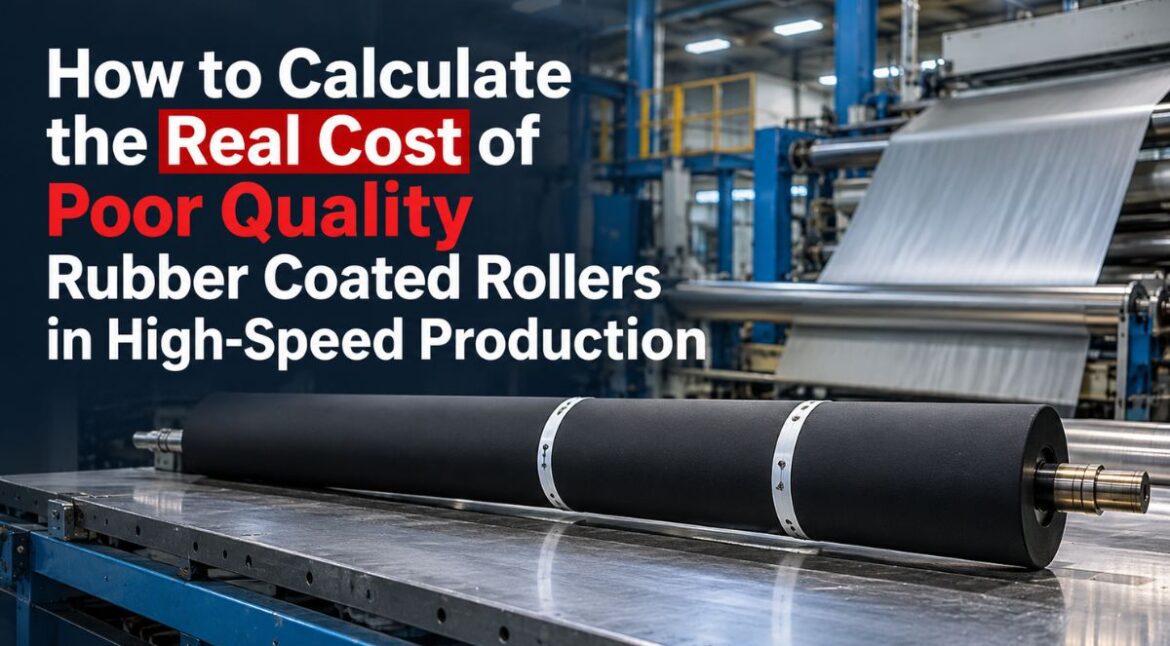
How to Calculate the Real Cost of Poor Quality Rubber Coated Rollers in High-Speed Production
In high-speed manufacturing, even a small production problem can become an expensive issue when it continues throughout the working day. A roller that does not perform consistently may appear to be a minor maintenance concern at first. However, over time, it can affect product quality, increase material waste, interrupt production, and create additional maintenance expenses.
This is particularly important when using a Rubber Coated Roller in applications where consistent material movement and smooth surface contact are essential.
Many industrial buyers focus mainly on the purchase price when selecting a roller. While controlling purchasing costs is important, the initial price does not always represent the actual cost of owning and using that roller.
A lower-priced roller may require more frequent attention, create production difficulties, or need replacement sooner than expected. On the other hand, selecting a suitable roller from an experienced Rubber Coated Roller Manufacturer can help businesses make better purchasing decisions.
The real question is not simply how much a roller costs to purchase. It is how much that roller costs the business throughout its working life.
This guide explains how manufacturers can identify hidden roller-related expenses, calculate their actual financial impact, and make more informed purchasing decisions for high-speed production environments.
Why the Purchase Price Does Not Tell the Complete Story
Imagine a manufacturing plant operating continuously to meet customer orders. Every department depends on consistent production, from material handling to final product inspection.
Now imagine that a rubber coated roller starts creating problems.
The production team notices that the material is not moving as smoothly as before. The maintenance team receives complaints about surface conditions. Operators spend additional time checking the machine, while rejected material begins increasing.
Initially, these problems may not appear serious enough to justify replacing the roller.
However, when similar issues continue over several shifts, their combined cost can become significant.
The purchase price represents only one part of the total expense.
Other costs may include:
- Production interruptions and lost working time.
- Material rejected because of inconsistent product quality.
- Additional labour for inspection and maintenance.
- Frequent cleaning and roller servicing.
- Replacement and installation expenses.
- Delayed customer orders.
- Additional pressure on production planning.
These expenses are often recorded under different departments. As a result, businesses may not immediately connect them with the quality of the roller being used.
Understanding this connection is the first step towards calculating the real cost.
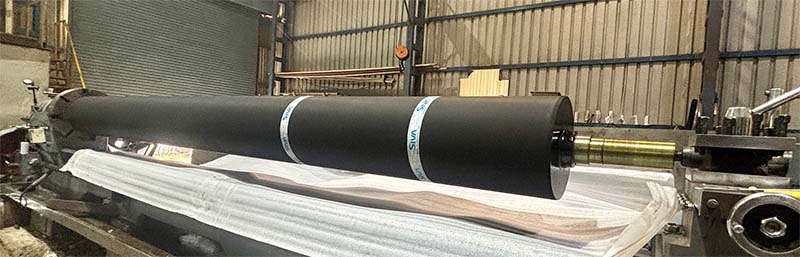
Start by Identifying the Production Problems
Before calculating expenses, manufacturers should understand exactly what is happening on the production floor.
Not every production problem is caused by a rubber coated roller. Machine condition, material quality, operating practices, and other factors can also influence production results.
Therefore, the first step is to identify whether the roller is contributing to the problem.
Look for these common warning signs.
Uneven material movement: If material does not move consistently through the production process, operators may need to make repeated adjustments.
Irregular product appearance: Changes in the roller surface or unsuitable contact may contribute to unwanted marks, inconsistent finishes, or other quality concerns.
Frequent cleaning requirements: If a roller collects unwanted material or becomes difficult to maintain, cleaning can take additional time.
Repeated maintenance complaints: When the same roller requires frequent attention, it is worth investigating whether its condition or suitability is affecting production.
Unexpected replacement: A roller that needs replacement earlier than the plant expected can increase maintenance and purchasing expenses.
Record when these problems occur, how frequently they happen, and whether they are connected to a particular roller.
This information provides a more reliable starting point than making assumptions based on appearance alone.
Need Custom Industrial Rollers?
✓ Custom Diameter & Length
✓ Temperature Control Design
✓ Fast Manufacturing
✓ Technical Support
Calculate the Cost of Production Downtime
One of the most important hidden expenses in high-speed production is lost working time.
When a roller creates a production problem, the machine may need to stop for inspection, cleaning, adjustment, or replacement.
Even a short interruption can affect the production schedule.
Consider a simple example.
A manufacturing plant experiences repeated interruptions because a roller requires attention. Each interruption takes time away from planned production.
To calculate the approximate financial impact, use this formula:
Downtime Cost = Lost Production Hours × Estimated Contribution per Production Hour
The estimated contribution should represent the value the business would reasonably have earned from the production that could not be completed, after accounting for relevant variable costs.
For example, suppose a plant loses two hours of planned production and estimates its contribution at ₹5,000 per hour.
The calculation becomes:
2 × ₹5,000 = ₹10,000.
This means the estimated contribution lost during that interruption is ₹10,000.
This is only an illustrative example, not a guaranteed saving or loss for every manufacturing plant.
For a more accurate calculation, businesses should consider whether the lost production can be recovered during another shift. If it can, the actual financial impact may be different.
The important point is to measure downtime instead of treating every interruption as an ordinary maintenance activity.
Measure the Financial Impact of Material Waste
Material waste is another expense that can remain unnoticed when roller-related problems are not properly monitored.
In high-speed manufacturing, material passes through different production stages continuously. If a roller does not provide suitable contact or consistent movement, the finished material may not meet the required quality expectations.
Depending on the application, this may result in:
- Rejected material.
- Additional inspection.
- Damaged finished products.
- Increased raw material consumption.
The cost of rejected material should include more than its purchase value.
Businesses may also have to consider the cost of processing, labour, energy, and handling already invested in that material.
A practical calculation is:
Material Waste Cost = Rejected Quantity × Cost per Unit of Rejected Material
For example, if a plant rejects 100 units of material and the total relevant cost per rejected unit is ₹40, the material waste cost is ₹4,000.
This example shows why even a seemingly small increase in rejection can affect production expenses.
However, businesses should first establish whether the roller is responsible for the rejection rather than automatically assigning all material waste to roller quality.
Maintaining rejection records before and after roller replacement or servicing can help identify the actual relationship.
Include the Cost of Frequent Maintenance
Maintenance is necessary in every manufacturing facility. The objective should not be to eliminate maintenance but to avoid unnecessary maintenance caused by unsuitable or poorly performing equipment.
A rubber coated roller may require attention because of surface wear, damage, material buildup, or changes in its working condition.
When maintenance becomes frequent, the expenses can extend beyond the direct servicing charge.
For example, a maintenance activity may involve:
- Time spent identifying the problem.
- Labour required for removal and installation.
- Cleaning and inspection.
- Coordination with the maintenance department.
- Additional production planning.
- Replacement or repair arrangements.
To understand this expense, maintain a record of every roller-related maintenance activity.
Use the following calculation:
Annual Maintenance Cost = Total Maintenance Expenses During the Year
Include labour, servicing, transportation where applicable, and other directly related expenses.
Compare the annual maintenance expenses of different rollers used in similar applications.
This makes it easier to understand whether a roller is creating an unusually high maintenance burden.
It also helps procurement teams look beyond the purchase price when evaluating suppliers.
Understand the Cost of Frequent Roller Replacement
Replacing a roller involves more than purchasing another one.
The business may also need to arrange removal, transportation, installation, production planning, and additional inspection.
If replacements happen more frequently than expected, these expenses can accumulate.
For example, consider two purchasing situations.
In the first situation, a business purchases a lower-priced roller but finds that it requires frequent replacement.
In the second situation, the business selects a more suitable roller after discussing its application and working conditions with an experienced manufacturer.
The second roller may have a higher initial purchase price, but its overall cost could be more favourable if it reduces unnecessary replacement and maintenance.
This should be evaluated using actual operating records rather than assumptions.
A useful calculation is:
Replacement Cost = Purchase Cost + Removal Cost + Installation Cost + Related Downtime Cost
Businesses should also record how long each roller remains suitable for its intended application.
This information helps identify whether purchasing decisions are delivering value over time.
Calculate the Hidden Cost of Additional Labour
spend additional time managing the resulting problems.
For example, operators may need to inspect the material more frequently, monitor the roller surface, adjust the production process, or inform maintenance personnel.
These activities can reduce the time available for planned production work.
Additional labour expenses can be calculated by recording:
- Extra hours spent by machine operators.
- Maintenance employee time.
- Inspection and quality-checking time.
- Time spent coordinating roller replacement.
- Additional cleaning activities.
Use this simple formula:
Additional Labour Cost = Extra Labour Hours × Average Labour Cost per Hour
For example, if employees spend an additional 12 hours handling roller-related problems and the average labour cost is ₹250 per hour, the additional expense is ₹3,000.
This amount may seem small when viewed independently.
However, repeated maintenance and inspection activities across several production lines can create a larger financial burden.
Tracking these expenses helps management understand how equipment quality affects workforce productivity.
Do Not Ignore Customer Delivery Delays
Production problems do not always remain inside the factory.
When unexpected interruptions affect manufacturing schedules, businesses may struggle to complete orders on time.
This can create additional expenses such as:
- Expedited transportation.
- Overtime payments.
- Additional production shifts.
- Rescheduling costs.
- Customer coordination expenses.
In some situations, delayed deliveries can also affect customer confidence.
For manufacturers working with regular industrial buyers, consistent delivery performance is an important part of maintaining business relationships.
Not every delivery delay is caused by a roller. However, if roller-related problems repeatedly interrupt production, their contribution should be investigated.
A practical approach is to record the orders affected by unexpected production interruptions and calculate the additional expenses directly associated with those delays.
This helps businesses understand that equipment-related quality problems can affect more than manufacturing costs.
They can also influence customer satisfaction and future business opportunities.
Understand the Difference Between a Cheap Roller and a Cost-Effective Roller
A lower purchase price can make a supplier appear attractive during the procurement process.
However, the cheapest option is not automatically the most economical choice.
A cost-effective roller should be suitable for the actual application, material being handled, working environment, and production requirements.
Before selecting an Industrial Rubber Roller, buyers should consider several important questions.
Is the roller suitable for the application?
Different manufacturing processes have different requirements. A roller that works well in one application may not be appropriate for another.
Is the rubber coating suitable for the working conditions?
The selected coating should be considered in relation to the material being handled and the conditions in which the roller operates.
Is the supplier able to understand the application?
A reliable manufacturer should be willing to understand the customer’s requirements before suggesting a suitable product.
Can the supplier explain the expected maintenance requirements?
Clear communication about care, cleaning, and maintenance helps buyers make better decisions.
Is the manufacturer experienced in roller manufacturing and repair?
Practical manufacturing and servicing experience can be valuable when evaluating the suitability of a roller for a particular production environment.
These questions shift the purchasing discussion from price alone towards long-term operating value.
How to Calculate the Total Cost of a Rubber Coated Roller
Once all the relevant expenses have been identified, manufacturers can bring them together to calculate the overall cost.
A simple approach is to use the following formula:
Total Roller-Related Cost =
- Initial roller purchase cost.
- Maintenance and servicing expenses.
- Replacement and installation expenses.
- Production downtime expenses.
- Material rejection and waste expenses.
- Additional labour expenses.
- Other directly related production expenses.
For a complete comparison, businesses should evaluate the total expenses over the same period.
For example, comparing the cost of one roller over six months with another roller over twelve months would not provide a fair comparison.
It is also important to avoid counting the same expense twice.
For example, if installation expenses already include maintenance labour, that labour should not be added again under a separate category.
A useful approach is to maintain a simple record for every roller.
Record its purchase date, installation date, maintenance history, production interruptions, replacement date, and any related quality concerns.
Over time, these records can help the purchasing and maintenance departments identify which roller choices offer better overall value.
Why Roller Application and Coating Selection Matter
Not all rubber coated rollers are used for the same purpose.
Different manufacturing environments place different demands on roller surfaces.
For example, printing, packaging, textile, paper, plastic, and other industrial processes may require rollers that perform different material-handling functions.
A suitable roller should be selected after understanding its actual working purpose.
Choosing a coating simply because it is commonly used in another factory may not be the right approach.
The following factors deserve attention:
Material being handled: Understand the type of material that comes into contact with the roller.
Working environment: Consider the surrounding conditions and the way the roller is used during production.
Surface requirements: Identify the type of surface contact and finish expected from the application.
Cleaning and maintenance: Understand how the roller will be cleaned and maintained during regular use.
Production expectations: Explain the working conditions and production concerns clearly to the manufacturer.
This information helps a Rubber Roller Manufacturer understand the application before recommending a suitable solution.
It also reduces the possibility of selecting a roller based only on price or general product descriptions.
What Should You Check Before Choosing a Rubber Coated Roller Manufacturer?
Selecting the right supplier is an important part of controlling long-term production expenses.
A manufacturer should understand more than the product name. The ability to discuss the customer’s actual production requirements is equally important.
Before placing an order, consider the following points.
Manufacturing experience: Check whether the supplier has relevant experience in industrial roller manufacturing and repair.
Application understanding: A good supplier should ask about the working purpose of the roller instead of making assumptions.
Product suitability: Discuss the coating and surface requirements according to the intended application.
Communication: Clear discussions about the customer’s requirements help avoid misunderstandings.
Repair and maintenance understanding: A supplier with experience in roller repair may also help customers understand common maintenance concerns.
Manufacturing transparency: Choose a supplier that communicates clearly about the product being offered and the work involved.
For industrial buyers, these considerations are important because a roller is part of an ongoing production process.
The objective should be to build a reliable supplier relationship rather than making a purchasing decision based on the lowest quotation alone.
How SIVA ROLLERS Approaches Industrial Rubber Coated Roller Requirements
Selecting a suitable roller begins with understanding the customer’s manufacturing application.
SIVA ROLLERS (SIVA ENGINEERING WORKS) is an industrial roller manufacturer based in Ahmedabad, Gujarat, India, with 10+ years of experience in industrial roller manufacturing and repair.
The company manufactures rubber coated rollers for industrial applications where suitable surface contact and dependable material handling are important.
Rather than treating every roller requirement as identical, the customer’s application and working needs should guide the product discussion.
When discussing a new Rubber Coated Roller requirement, buyers should share information about:
- The purpose of the roller.
- The material being handled.
- The existing production challenges.
- The expected surface requirements.
- The working environment.
- Any previous roller-related maintenance concerns.
These details help establish a clearer understanding of the requirement before moving towards a suitable manufacturing solution.
For businesses looking for a Rubber Coated Roller Manufacturer in India, working with a manufacturer that understands industrial roller production and repair can make the selection process more informed.
SIVA ROLLERS focuses on industrial roller manufacturing and customer requirements, helping businesses discuss their roller needs with greater clarity.
To learn more about the company’s products and services, visit SIVA ROLLERS.
Turn Roller Maintenance Records into Better Purchasing Decisions
Calculating the cost of poor roller quality should not be a one-time activity.
Manufacturing businesses should regularly review their maintenance and production records to understand where unnecessary expenses are developing.
A practical improvement process can begin with three simple steps.
First, record the existing situation.
Document production interruptions, material rejection, maintenance activities, and replacement frequency.
Second, investigate the cause.
Check whether the roller is contributing to the problem. Discuss the issue with operators, maintenance employees, and the roller manufacturer.
Third, compare actual results.
After selecting a more suitable roller or addressing the existing issue, monitor the same production activities again.
Compare the results over a reasonable period.
This approach helps businesses make decisions based on actual factory observations rather than assumptions.
It also gives procurement teams useful information when evaluating future roller purchases.
The Real Cost of a Roller Is What It Costs Your Production
In high-speed manufacturing, the cost of a Rubber Coated Roller should not be measured only by its purchase price.
Frequent interruptions, rejected material, additional maintenance, unnecessary labour, and replacement expenses can all contribute to the actual operating cost.
A small issue may not appear financially important when viewed separately. However, when it continues across multiple production shifts, the combined impact can become difficult to ignore.
The better approach is to identify roller-related problems early, maintain proper production records, understand the actual application, and select a suitable product based on working requirements.
Choosing an experienced Rubber Coated Roller Manufacturer is an important part of this process.
For manufacturers looking to improve their purchasing decisions and understand their industrial roller requirements, SIVA ROLLERS (SIVA ENGINEERING WORKS) offers industrial roller manufacturing and repair experience from Ahmedabad, India.
Planning to replace an existing rubber coated roller or facing repeated production issues?
Share your roller application and the problems you are experiencing with SIVA ROLLERS. A clear discussion about your requirements is a practical starting point for identifying a suitable roller solution.
Upgrade Your Plant Efficiency Today
FAQs
The actual cost of a rubber coated roller includes its initial purchase price, maintenance, replacement, production downtime, material waste, and additional labour expenses. Evaluating all these costs helps manufacturers understand the roller's total operating cost.
Poor quality or unsuitable rubber coated rollers may contribute to uneven material movement, inconsistent surface contact, product defects, frequent maintenance, and unexpected production interruptions. These issues can increase manufacturing expenses and affect production efficiency.
Downtime cost can be calculated using the formula:
Downtime Cost = Lost Production Hours × Estimated Contribution per Production Hour
For example, if a manufacturing plant loses 2 hours of production and its estimated contribution is ₹5,000 per hour, the estimated downtime cost is ₹10,000.
Material wastage may occur due to inconsistent roller contact, unsuitable surface conditions, uneven material movement, or other production-related problems. Manufacturers should investigate the actual cause before connecting material rejection directly to roller performance.
Manufacturers can manage maintenance expenses by regularly inspecting roller surfaces, maintaining service records, following suitable cleaning practices, identifying repeated problems, and selecting rollers according to their actual working applications.
The right rubber coating helps ensure that the roller is suitable for the material being handled, working environment, surface contact requirements, and production process. Application-based selection helps reduce the risk of unsuitable roller performance and unnecessary maintenance.
A low-cost roller is selected mainly because of its lower purchase price. A cost-effective industrial roller is evaluated based on its overall operating expenses, including maintenance, replacement, downtime, and production-related costs throughout its working life.
Frequent replacement involves additional purchasing, removal, transportation, installation, inspection, and production downtime expenses. These costs can accumulate over time and make an initially inexpensive roller more expensive to operate.
Industrial buyers should evaluate manufacturing experience, application knowledge, coating suitability, product requirements, communication, and roller repair and maintenance experience. These factors help buyers make informed purchasing decisions beyond comparing quotations.
SIVA ROLLERS (SIVA ENGINEERING WORKS), based in Ahmedabad, Gujarat, India, manufactures rubber coated rollers for industrial applications. With 10+ years of experience in industrial roller manufacturing and repair, the company works with customers to understand their roller applications, material-handling requirements, and production challenges.