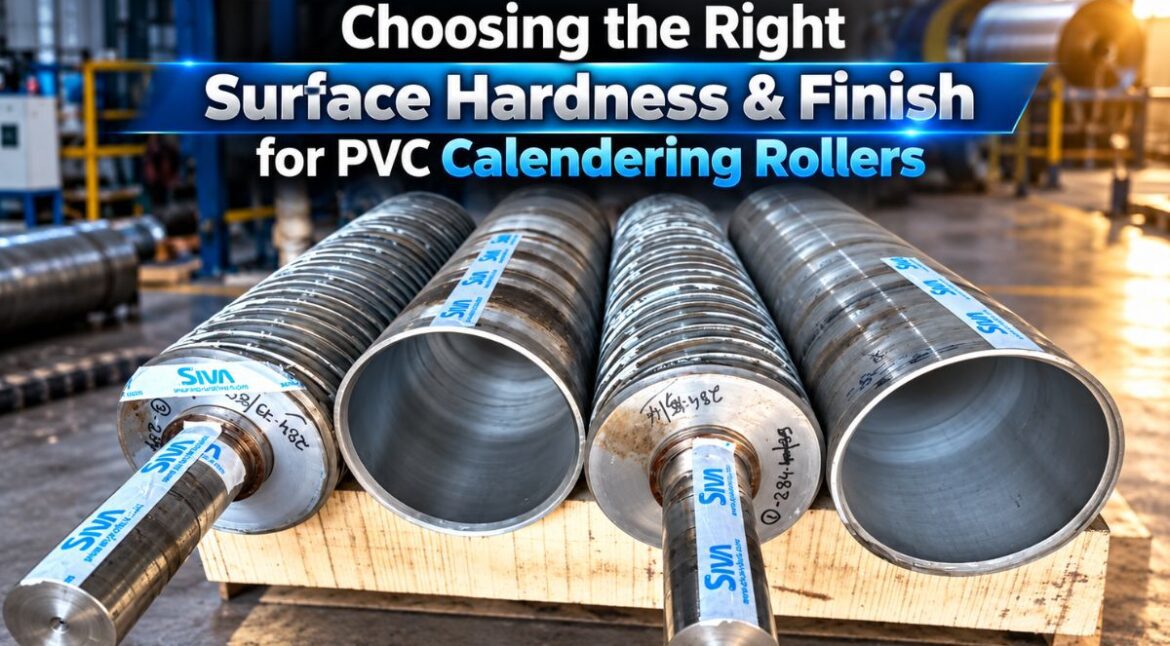
Choosing the Right Surface Hardness & Finish for PVC Calendering Rollers
In PVC sheet and film manufacturing, the quality of the finished material depends on more than the PVC compound and production settings. The condition of the rollers also plays an important role. Their surface hardness and finish can influence how the material moves through the machine, how it comes out of the production line and how consistently the finished product looks.
A roller surface that does not suit the production requirement may contribute to unwanted marks, material sticking, uneven appearance or additional maintenance work. These problems can become more noticeable when a plant produces different PVC materials or operates for long production hours.
This is why choosing the right Calender Rollers for Plastic & PVC Industry requires careful attention to the surface, not just the roller’s size or general construction.
For PVC manufacturers, the important question is not simply whether a roller has a hard or polished surface. It is whether that surface is suitable for the material being processed, the appearance required from the finished sheet and the working conditions of the production line.
In this guide, we will explore how surface hardness and finish influence PVC calendering, what manufacturers should consider before selecting a roller and how to discuss the right roller requirement with a manufacturer.
Why Roller Surface Selection Matters in PVC Calendering
PVC calendering is a manufacturing process in which heated PVC material passes through a series of rotating rollers to form sheets or films. During this process, the rollers help shape the material and influence its thickness, smoothness and appearance.
The roller surface comes into direct contact with the material. Therefore, its condition matters throughout production.
Imagine a plant manufacturing PVC sheets for flooring, decorative applications or other industrial uses. The production team may need a particular surface appearance for each product. If the roller surface is unsuitable, the finished sheet may not achieve the expected appearance consistently.
Similarly, a roller that becomes scratched or worn may create problems that were not present when it was first installed.
The effects can include:
- Unwanted marks appearing on the PVC sheet.
- Changes in the appearance of the finished surface.
- Material sticking to the roller during processing.
- More frequent cleaning and maintenance.
- Production interruptions while roller-related problems are investigated.
- Difficulty maintaining the same product appearance across production batches.
However, these problems do not always originate from the roller surface alone. PVC formulation, operating conditions, roller temperature, machine settings and material handling can also influence the final result.
A proper roller selection process considers the complete production requirement rather than treating surface hardness or polishing as an isolated decision.
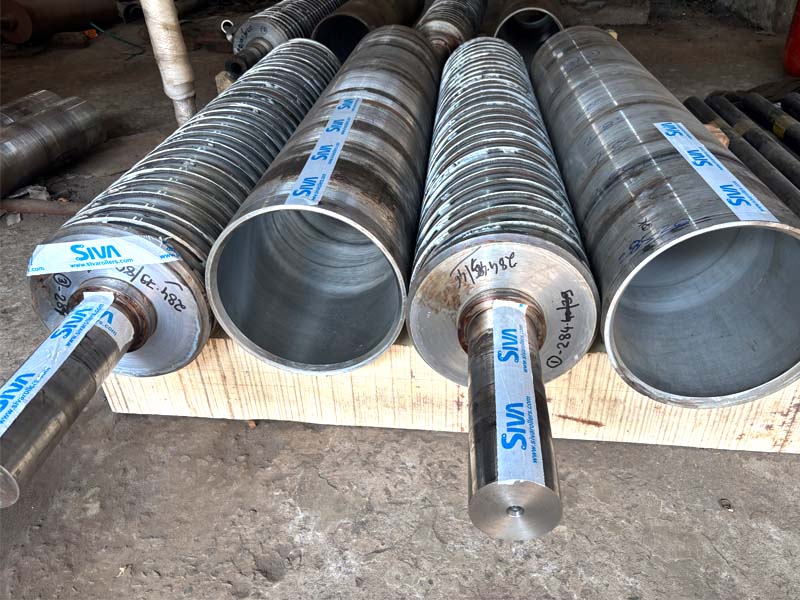
Understanding Surface Hardness: Why Does It Matter?
Surface hardness describes how well a roller’s outer surface can withstand contact, pressure, scratching and everyday wear.
In a PVC calendering line, rollers work continuously under demanding production conditions. Their surfaces come into contact with material and may also be exposed to repeated cleaning and routine maintenance.
If the surface does not have suitable hardness for the application, it may become damaged or lose its original condition over time.
This can affect the appearance of the finished PVC product and create additional maintenance requirements.
1. Resistance to Everyday Wear
Roller surfaces experience repeated contact during production. Over time, unsuitable surface hardness may contribute to visible wear.
For example, a manufacturer producing PVC sheets throughout long production runs needs rollers that can maintain their working surface under the conditions of that particular application.
When discussing a new roller, buyers should explain how frequently the machine operates, what material it processes and whether the existing roller has experienced premature surface damage.
This information helps the manufacturer understand the actual requirement instead of recommending a general-purpose solution.
2. Protection Against Scratches
Small surface scratches can become noticeable during PVC sheet production, particularly when the final product requires a clean and consistent appearance.
A scratch on the roller may leave a repeated mark on the material passing over it.
For this reason, the condition of the roller surface should be considered during both selection and maintenance.
A harder surface alone does not automatically prevent every type of damage. Proper handling, cleaning methods and suitable operating conditions remain important.
3. Maintaining the Working Surface
A roller may initially have the desired finish, but its condition can change with continued use.
Repeated contact, improper cleaning, accidental damage and unsuitable maintenance practices can affect its surface.
PVC manufacturers should therefore consider not only the condition of a newly supplied roller but also how its surface can be maintained throughout its working life.
The right selection should support the actual production requirement while allowing practical inspection and maintenance.
Need Custom Industrial Rollers?
✓ Custom Diameter & Length
✓ Temperature Control Design
✓ Fast Manufacturing
✓ Technical Support
Understanding Roller Surface Finish
Surface finish refers to how smooth, polished or textured the outside of a roller is.
It is an important consideration because the roller surface can influence the appearance of the PVC material that comes into contact with it.
For example, a PVC manufacturer producing a smooth decorative sheet may have different requirements from a manufacturer producing a product with a particular surface appearance.
Choosing a finish simply because it looks premium is not always the right approach. The finish must match the product requirement.
1. Mirror Finish
A mirror finish has a highly polished appearance. It is generally considered when the production process requires a very smooth roller surface.
For suitable PVC applications, this finish may help achieve the required smooth appearance on the material.
However, a mirror finish should not automatically be selected for every PVC calendering application.
The actual requirement depends on the PVC compound, the product being manufactured and the role of that particular roller in the production line.
Manufacturers should discuss whether the finished PVC sheet needs a smooth appearance, a particular level of gloss or another surface characteristic before selecting this option.
2. Matt Finish
A matt finish has a less reflective appearance than a highly polished surface.
It may be considered when the final product requires a less glossy appearance or when the manufacturing process calls for a particular surface effect.
However, it is important to understand the difference between the finish of the roller and the finish of the final PVC product.
A matt roller surface does not automatically guarantee a matt PVC sheet. The final appearance also depends on the complete processing arrangement and whether a separate finishing or embossing stage is used.
This distinction helps buyers avoid selecting a roller based only on the expected appearance of its surface.
3. Smooth and Polished Finish
A smooth and polished roller surface may be suitable for applications where the material needs to pass over the roller without unwanted surface impressions.
The required degree of smoothness depends on the final product.
For example, a manufacturer producing PVC film for printing may have different surface expectations from a manufacturer producing PVC material for flooring or industrial applications.
The correct choice should therefore be based on the product’s intended use and the required appearance after production.
4. Application-Specific Surface Finish
Not every PVC manufacturing requirement fits into a simple matt or mirror-finish category.
Some products require a particular appearance, while others need a surface that supports the next manufacturing stage.
For example, a PVC sheet intended for further printing, lamination or decorative finishing may have different requirements from a sheet used for another industrial purpose.
This is why it is useful to share an actual product sample or reference image with the roller manufacturer whenever possible.
It provides a clearer understanding of the expected result than general descriptions such as smooth, shiny or premium.
How to Choose the Right Surface Hardness and Finish Together
Surface hardness and finish should not be treated as two completely separate decisions.
Hardness relates to how well the roller surface withstands everyday use. Finish relates to the condition and appearance of that surface.
Both influence the suitability of a roller for a particular production requirement.
Here are the important points to consider before making a selection.
1. Start With the Type of PVC Product
The first step is to identify exactly what your production line manufactures.
PVC products can have different requirements depending on their intended application.
For example:
- PVC flexible sheets may require a particular surface appearance and material handling behaviour.
- PVC rigid sheets may have different requirements for their finished appearance.
- PVC decorative sheets may need a consistent surface suitable for further processing.
- PVC flooring materials may require a particular appearance depending on the final design.
- PVC films intended for printing may require attention to surface cleanliness and appearance.
These are examples of different product requirements, not fixed roller recommendations.
A roller suitable for one application may not necessarily be the right choice for another.
2. Identify the Actual Production Problem
Before replacing or ordering a roller, understand why the existing roller is not meeting expectations.
Is the surface becoming scratched?
Is the PVC material sticking?
Are unwanted marks appearing repeatedly?
Does the roller require frequent cleaning?
Is the finished sheet appearance changing during production?
Each problem may have a different cause. Replacing a roller with a harder or more polished option without understanding the reason may not solve the issue.
For instance, material sticking can be influenced by the PVC formulation, processing conditions and material behaviour, not just roller finish.
A clear description of the problem helps the manufacturer recommend a more suitable solution.
3. Consider the Required Appearance of the Finished Sheet
The finished product should guide the surface selection.
A manufacturer producing glossy PVC sheets should communicate the expected appearance clearly. A manufacturer producing matt or decorative products should explain those requirements instead.
If possible, provide a finished product sample.
This helps the roller manufacturer understand what the production team expects and reduces the chances of misunderstanding the surface requirement.
It is also useful to discuss whether the roller directly creates the required appearance or whether another stage of the production process is responsible.
4. Understand the Working Conditions
A roller does not operate in isolation.
It works as part of a complete production line and experiences the conditions created by the machine, material and operating process.
Before selecting a roller, consider:
- How many hours the production line normally operates.
- The type of PVC material being processed.
- Whether the line manufactures one product or several product varieties.
- The cleaning methods used by the maintenance team.
- Whether the existing roller has a history of scratches or surface wear.
- The production conditions under which the problem occurs.
These details help the manufacturer understand the actual working environment.
5. Discuss Maintenance Requirements
A suitable roller should also be practical to maintain.
Even a well-finished roller needs proper handling and routine inspection. Incorrect cleaning materials, rough handling or unsuitable maintenance practices can damage its surface.
PVC manufacturers should discuss recommended cleaning methods and maintenance requirements when ordering replacement rollers.
This is especially important for production lines where surface appearance is a major part of product quality.
6. Do Not Select a Roller Based Only on Appearance
A highly polished roller may look impressive, but appearance alone does not establish whether it is suitable for a particular PVC application.
Similarly, choosing the hardest available surface does not automatically provide the best production result.
A roller should be selected according to its actual working purpose, the material being processed and the desired outcome.
This application-based approach is more useful than choosing a roller based on a single feature.
Common Roller Selection Mistakes PVC Manufacturers Should Avoid
In many factories, roller selection becomes urgent when an existing roller starts creating production problems.
Under pressure to restart production, buyers may focus only on replacement availability or the most visible surface feature.
However, overlooking the original application requirement can lead to another unsuitable selection.
Here are some common mistakes worth avoiding.
Choosing Mirror Finish for Every Application
A mirror finish is not a universal solution.
Some PVC products require a smooth appearance, while others need a different surface result.
Always confirm the final product requirement before selecting the finish.
Ignoring the Existing Roller Condition
If the current roller has developed scratches, worn areas or other visible damage, these observations should be shared with the manufacturer.
They can help identify what needs attention in the replacement roller.
Treating Every PVC Material as the Same
Different PVC products may behave differently during processing.
Flexible films, rigid sheets and decorative materials should not automatically be treated as having identical roller requirements.
The selection should reflect the material and the final product.
Focusing Only on Initial Purchase Cost
A roller should be evaluated in terms of its suitability for the application, expected maintenance and production requirements.
An unsuitable roller may create additional maintenance work or production interruptions.
Therefore, purchasing decisions should consider more than the initial quotation.
Not Sharing Enough Information With the Manufacturer
A request containing only the words “PVC calender roller” may not provide enough information for a proper recommendation.
The manufacturer needs to understand the machine, application, existing roller and expected surface result.
Sharing this information at the beginning makes the discussion more useful.
What Information Should You Share Before Ordering a PVC Calender Roller?
Before approaching a manufacturer, prepare the basic details of your existing machine and production requirement.
You do not need to know every technical detail yourself. Providing clear application information is a useful starting point.
Consider sharing:
1. Product Type: Explain whether you manufacture PVC film, flexible sheets, rigid sheets, flooring material or decorative sheets.
2. Machine Details: Share the machine make, model or existing roller information, wherever available.
3. Existing Roller Information: Provide the available drawing, dimensions or photographs of the existing roller.
4. Required Surface Finish: Explain whether you need a smooth, polished, matt or another application-specific finish.
5. Surface Hardness Requirement: If your existing roller has a known hardness requirement, share the available information. If you are unsure, explain the working conditions and let the manufacturer review the requirement.
6. Existing Problems: Mention scratches, wear, material sticking, repeated marks or other production concerns.
7. Finished Product Reference: A sample or photograph of the required PVC sheet appearance can help communicate the expected result.
The more clearly these details are explained, the easier it becomes to discuss a suitable roller for your production line.
How Roller Manufacturing Quality Supports Consistent Production
Selecting the correct surface finish is only one part of obtaining a suitable roller.
The manufacturing process also matters.
The roller must be produced according to the agreed application and machine requirements. Its working surface should be checked, and the finished roller should be reviewed before it is supplied.
For industrial buyers, it is worth discussing the following points with the manufacturer:
- Whether the roller is being manufactured for the actual machine requirement.
- Whether the agreed surface finish can be provided.
- How the roller surface is inspected before delivery.
- Whether the manufacturer can work from existing drawings or roller details.
- What support is available if the roller requires attention later.
These questions help buyers evaluate a manufacturer’s approach beyond the product description.
They also encourage clear communication between the production team, maintenance department and roller supplier.
Why PVC Manufacturers Should Work With an Application-Focused Roller Manufacturer
A roller manufacturer should understand that two factories may use similar machines but have different production requirements.
One plant may manufacture flexible PVC film, while another may produce decorative sheets. Their surface expectations, operating conditions and maintenance concerns may be different.
A useful manufacturing discussion should therefore begin with the application.
The manufacturer should understand what the roller needs to do, what material it will handle and what result the customer expects.
This is particularly important when ordering a replacement roller. Matching the existing machine requirement and understanding the reason for replacement can help avoid unnecessary changes.
For buyers, the right manufacturing partner is not simply the supplier offering the most impressive surface description. It is the manufacturer who takes the time to understand the actual requirement.
SIVA ROLLERS – Calender Rollers for Plastic & PVC Industry Manufacturer in India
SIVA ROLLERS (SIVA ENGINEERING WORKS) is an industrial roller manufacturer based in Ahmedabad, Gujarat, India, with 10+ years of experience in industrial roller manufacturing and repair.
The company manufactures Calender Rollers for industrial applications, with attention to the requirements of the machine and the material being processed.
For PVC and plastic manufacturers, roller selection should be discussed in relation to the actual production application rather than a general product description.
When discussing a Calender Roller requirement with SIVA ROLLERS, buyers can share their existing roller details, machine information, product application and required surface finish.
This allows the requirement to be understood before moving forward with the manufacturing discussion.
SIVA ROLLERS works with industrial buyers looking for roller manufacturing solutions for their production requirements in India and other markets.
Whether you are planning a new roller, replacing an existing one or reviewing a surface-related production problem, clear application details are an important starting point.
Final Thoughts: Select the Roller Surface According to Your Production Needs
Choosing the right surface hardness and finish for PVC calendering rollers is not about selecting the hardest surface or the most polished roller available.
It is about understanding the relationship between the roller, the PVC material and the finished product.
Surface hardness should be considered in relation to everyday wear and working conditions. Surface finish should match the required appearance and the role of the roller in the production line.
Most importantly, manufacturers should identify the actual production problem before deciding on a replacement or new roller.
A clear discussion with an experienced roller manufacturer can help buyers make a more informed decision and avoid selecting a product based on assumptions.
If you are looking for Calender Rollers for Plastic & PVC Industry, SIVA ROLLERS (SIVA ENGINEERING WORKS) can discuss your roller requirement based on your machine details and application.
Need a Calender Roller for your PVC production line?
Share your existing roller details, PVC application and required surface finish with SIVA ROLLERS.
Upgrade Your Plant Efficiency Today
FAQs
Surface hardness is important because it helps a roller withstand repeated contact, pressure, scratching and everyday wear during PVC production. Suitable surface hardness helps maintain the roller's working condition and supports consistent sheet quality. The right hardness depends on the PVC material, machine conditions and production requirements.
The best surface finish depends on the required appearance of the finished PVC product. Mirror, matt and smooth polished finishes may be considered for different applications. PVC manufacturers should select the finish according to the material being processed, product appearance and further processing requirements.
A matt finish has a less reflective surface, while a mirror finish has a highly polished appearance. The choice depends on the required surface characteristics of the PVC sheet or film. Neither finish is universally suitable for every PVC calendering application.
Yes. The roller surface can influence the appearance of PVC sheets because it comes into contact with the material during calendering. Scratches, worn areas or an unsuitable surface finish may contribute to unwanted marks or inconsistent appearance. However, PVC formulation and processing conditions also influence the final result.
Scratches and repeated marks can result from damage or wear on the roller surface. Improper handling, unsuitable cleaning methods and maintenance practices may also affect roller condition. Other production factors should be checked before deciding that the roller surface is the only cause.
No. A mirror-finish roller is not suitable for every PVC manufacturing application. Some products require a highly polished surface, while others may need a matt or application-specific finish. The selection should depend on the PVC compound, machine requirements and desired finished product appearance.
Start by identifying the type of PVC product, required surface appearance, machine details and working conditions. Also consider existing roller problems such as scratches, material sticking or frequent cleaning. Sharing these details with an experienced roller manufacturer helps determine a suitable roller configuration.
No. Higher surface hardness does not automatically guarantee better PVC production quality. The roller surface must be suitable for the application and operating conditions. Proper handling, cleaning, maintenance and correct machine settings are also important for maintaining production quality.
When ordering a PVC calender roller, manufacturers should provide the following information:
- PVC product type and application.
- Machine make and model, if available.
- Existing roller dimensions or technical drawings.
- Required surface finish.
- Available surface hardness specifications.
- Existing roller problems or production concerns.
- Sample or photograph of the finished PVC product.
These details help the manufacturer understand the actual production requirement.
When ordering a custom ebonite roller, provide the required roller dimensions, target Shore Hardness, operating temperature, line speed, nip pressure, chemical exposure, material being processed, mating roller type, and surface finish requirements. These details help the manufacturer recommend a suitable roller specification for your application.
An unsuitable roller surface may contribute to material sticking in some applications. However, sticking can also be influenced by PVC formulation, processing temperature, operating conditions and material behaviour. The complete production process should be reviewed before selecting a replacement roller.
PVC manufacturers should follow suitable cleaning methods, avoid rough handling and inspect roller surfaces regularly. They should also use appropriate maintenance practices to prevent scratches, accidental damage and premature surface wear. Following the manufacturer's maintenance recommendations helps preserve the working surface.
SIVA ROLLERS (SIVA ENGINEERING WORKS), based in Ahmedabad, Gujarat, India, manufactures industrial Calender Rollers with 10+ years of experience in industrial roller manufacturing and repair. PVC manufacturers can discuss their machine details, roller requirements, surface hardness and required finish with SIVA ROLLERS for application-based manufacturing solutions.