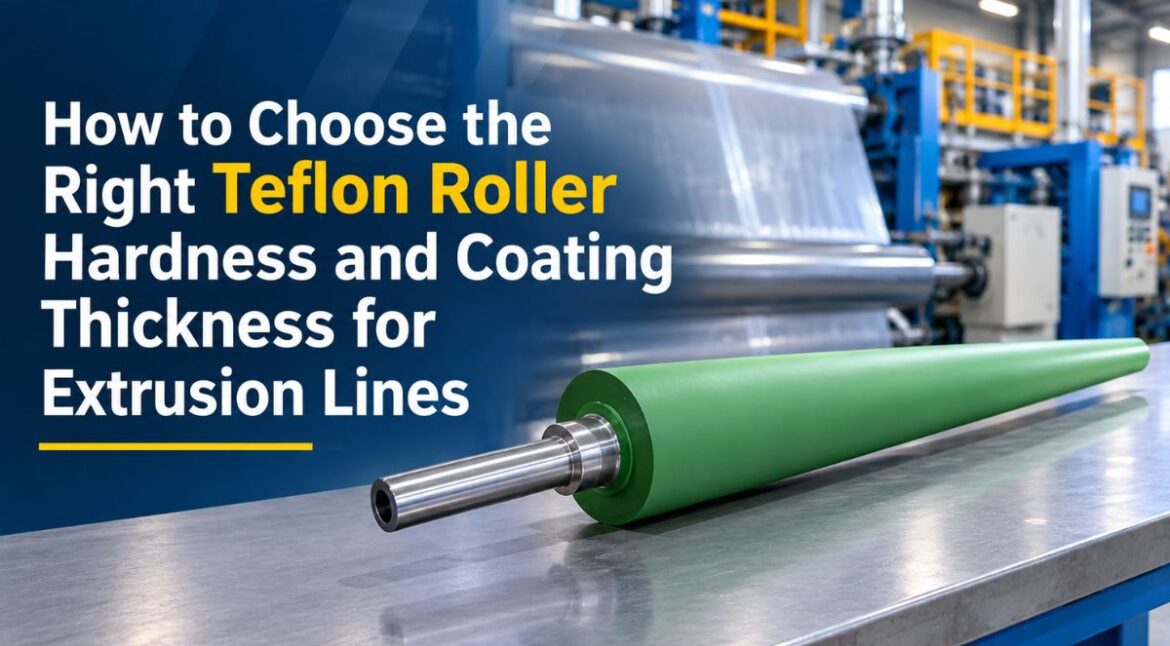
How to Choose the Right Teflon Roller Hardness and Coating Thickness for Extrusion Lines
In plastic extrusion, even a small problem with roller surface performance can affect the smooth movement and quality of the finished material. Film sticking, unwanted marks, uneven material release, and frequent cleaning can interrupt production and create additional work for plant operators.
One important factor behind these problems is the condition and suitability of the roller surface.
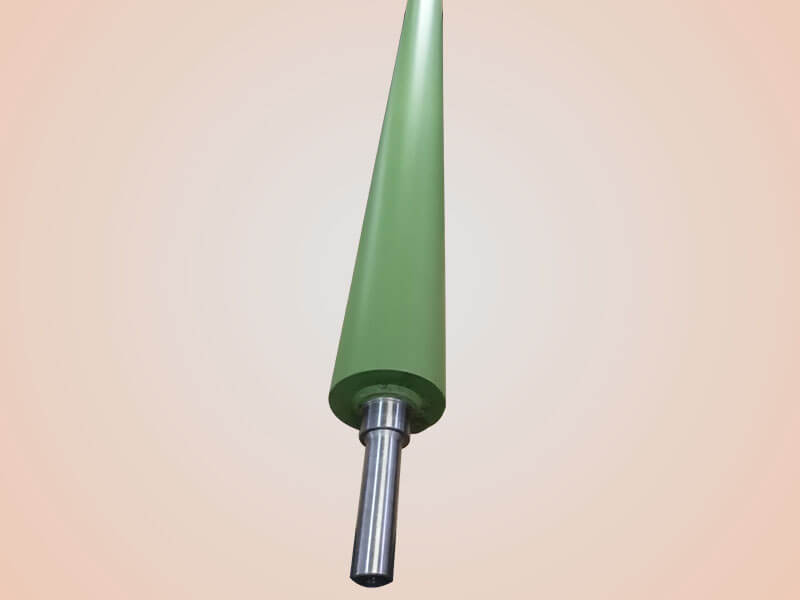
A Teflon Roller is often considered for industrial applications where material sticking needs to be controlled and smooth release is important. However, choosing a roller simply because it has a Teflon coating is not enough. The coating must suit the material being processed, the working conditions, and the actual purpose of the roller in the extrusion line.
Two factors deserve particular attention during selection: surface hardness and coating thickness.
Both influence how the roller behaves during regular production. A coating that is too soft for the working conditions may not provide the expected service life. Similarly, choosing a thicker coating without understanding the application does not automatically mean better performance.
This guide explains how extrusion manufacturers can evaluate these factors, avoid common purchasing mistakes, and select a suitable Teflon Coated Roller for their production requirements.
Why Roller Surface Selection Matters in Plastic Extrusion
Plastic extrusion involves moving processed material through different stages before it reaches its final form. Depending on the production setup, rollers may guide, support, handle, or help move the material through the line.
During this process, the roller surface comes into contact with the material being processed. If the surface is not suitable, operators may experience problems that gradually affect production.
Some common concerns include:
- Plastic material sticking to the roller surface.
- Unwanted marks appearing on the finished film.
- Material movement becoming less consistent.
- Product residue collecting on the roller.
- More frequent cleaning and maintenance.
- Production interruptions caused by surface-related problems.
These issues do not always have the same cause. Sometimes the problem comes from the coating condition. In other cases, the selected surface may not match the material, operating environment, or roller function.
This is why roller selection should begin with understanding the production problem rather than simply choosing a coating thickness.
For extrusion manufacturers, the objective should be to select a roller surface that supports smooth material handling, practical cleaning, and dependable operation under actual production conditions.
Understanding Teflon Roller Hardness Before Making a Purchase
When buyers discuss Teflon Roller hardness, they are generally referring to how the coated surface responds to contact, pressure, and regular use.
It is important to understand that hardness is not the only measure of coating quality. A harder coating does not automatically mean a better roller, and a softer coating is not necessarily unsuitable.
The correct choice depends on the job the roller performs.
For example, a roller that mainly guides plastic film may experience different contact conditions from one that works in a position where material pressure or repeated contact is more noticeable.
A suitable surface should match these working conditions.
1. Consider the Type of Plastic Material
The first step is to understand what material passes over the roller.
Different extrusion applications involve different types of plastic materials. Their behaviour during production can vary depending on the material, processing conditions, and stage of manufacturing.
A roller used for handling a particular plastic film may not require the same surface characteristics as a roller used in another extrusion application.
Before selecting hardness, consider:
- What type of plastic material is being processed?
- Does the material tend to stick to the roller?
- Does it leave residue during regular production?
- Does the roller come into direct contact with the finished material?
- Is surface marking a recurring production concern?
These questions help identify the type of surface behaviour required.
A manufacturer should understand the application before recommending a coating arrangement. This prevents buyers from selecting a roller based on general product descriptions alone.
2. Understand the Roller Position in the Production Line
Not every roller in an extrusion line performs the same task.
Some rollers guide the material, while others support its movement through different production stages. Their contact conditions and responsibilities can vary.
For this reason, the roller’s position should be considered when selecting surface hardness.
A roller that handles delicate film may need particular attention to surface condition and smooth material movement. A roller operating in a different position may have different contact and wear requirements.
Selecting the same surface arrangement for every roller without checking its purpose can lead to an unsuitable purchase.
A useful approach is to identify each roller’s role before discussing the coating with the manufacturer.
3. Consider Regular Contact and Production Conditions
The way a roller is used has a direct influence on how its surface performs over time.
Regular material contact, cleaning practices, production interruptions, and the surrounding working environment can all affect coating condition.
If the roller experiences frequent contact or comes into contact with material that leaves deposits, the surface may require closer attention.
Buyers should also explain whether the roller works continuously or is used intermittently.
This information helps the manufacturer understand the actual working conditions rather than relying on assumptions.
The aim is not to select the hardest available coating. It is to select a coating that is appropriate for the roller’s intended use.
Need Custom Industrial Rollers?
✓ Custom Diameter & Length
✓ Temperature Control Design
✓ Fast Manufacturing
✓ Technical Support
Why Teflon Coating Thickness Should Match the Application
Coating thickness is another important consideration when purchasing a Teflon Coated Roller.
Many buyers assume that a thicker coating will always provide longer service life. However, this is not a reliable rule.
The appropriate coating thickness depends on the roller’s intended application, surface condition, preparation, and the coating system being used.
A thicker coating does not automatically provide better release, smoother film movement, or greater durability.
Likewise, choosing a coating that is unsuitable for the application can result in surface-related problems even when the coating appears satisfactory initially.
1. Start With the Roller’s Actual Purpose
Before deciding on coating thickness, establish why the roller needs a Teflon coating.
Is the main requirement to reduce material sticking?
Does the roller need to release plastic film smoothly?
Is residue collecting on the existing roller?
Is cleaning becoming difficult during production?
The answers help establish the actual purpose of the coating.
For example, if the main concern is material sticking, the coating should be selected with attention to release behaviour and the material being handled.
If the concern is an existing surface problem, the manufacturer should also understand the condition of the roller before suggesting a replacement or recoating solution.
This makes the selection process more practical and avoids choosing thickness based only on general market descriptions.
2. Do Not Treat More Coating as Automatically Better
A common purchasing mistake is assuming that increasing coating thickness will solve every surface-related problem.
In reality, coating thickness must be suitable for the roller and its intended working conditions.
An unsuitable coating arrangement may affect the finished surface condition and the way the roller performs in the production line.
The complete coating process also matters. Surface preparation, coating application, and finishing should be considered together rather than treating thickness as an isolated decision.
Buyers should therefore ask the manufacturer why a particular coating thickness is being recommended and how it relates to their application.
A clear explanation is more useful than an unsupported promise of longer roller life.
3. Consider the Existing Roller Condition
When replacing or recoating an existing roller, its present condition should not be ignored.
The roller may have surface damage, old coating residue, uneven wear, or other visible problems.
Simply applying another coating over an unsuitable surface may not address the original issue.
Before deciding on coating thickness, the manufacturer should understand the roller’s condition and determine whether the existing roller is suitable for recoating.
This is especially important for extrusion plants that want to restore an existing roller instead of purchasing a completely new one.
A proper assessment helps establish whether a new Teflon Coated Roller or a recoating solution is more appropriate.
Hardness vs Coating Thickness: What Should Buyers Prioritise?
Hardness and coating thickness are related to coating selection, but they serve different purposes.
Hardness concerns how the coated surface responds to contact and use. Thickness concerns the amount of coating applied over the roller surface.
Neither factor should be considered independently.
For example, a buyer may select a thicker coating while overlooking whether its surface characteristics suit the material being processed.
Another buyer may focus only on hardness without considering the roller’s existing condition or the way the coating will be applied.
Both approaches can lead to an unsuitable selection.
A more useful purchasing approach is to evaluate the following together:
Surface behaviour: Does the coating provide the release characteristics required by the application?
Contact conditions: How does the roller interact with the material during production?
Existing roller condition: Is the roller new, worn, damaged, or being considered for recoating?
Production environment: What conditions does the roller experience during normal operation?
Maintenance requirements: How often is the roller cleaned, inspected, or removed for maintenance?
When these factors are understood, it becomes easier for the manufacturer and buyer to discuss a suitable coating arrangement.
Five Signs That Your Existing Teflon Roller May Need Attention
Extrusion manufacturers do not always recognise coating-related problems immediately. In many cases, small changes in roller performance become noticeable before a major production interruption occurs.
The following signs deserve attention.
1. Plastic Material Starts Sticking to the Surface
If material that previously released smoothly begins sticking to the roller, the surface condition should be checked.
Possible reasons include coating wear, contamination, unsuitable cleaning practices, or changes in production conditions.
The problem should be investigated before assuming that the coating simply needs to be thicker.
2. Cleaning Takes More Time Than Before
A Teflon-coated surface is often selected where easy release and cleaning are important.
If operators need additional time to remove material deposits, it may indicate that the surface requires inspection.
However, cleaning difficulty can also result from the type of residue or the cleaning method being used.
Reviewing both factors can help identify the actual cause.
3. Visible Surface Damage Appears
Scratches, peeling, damaged areas, or changes in the coating surface should not be ignored.
Such conditions may affect the way the roller comes into contact with the material.
The roller should be inspected to understand whether recoating or replacement is the appropriate next step.
4. Finished Film Shows Unwanted Marks
If unwanted marks begin appearing on the plastic film, check the roller surfaces that come into contact with the material.
Do not immediately assume that the coating is responsible.
Other production conditions may also contribute to the problem. A proper inspection can help determine whether the roller surface needs attention.
5. Maintenance Interruptions Become More Frequent
Repeated cleaning, roller removal, and surface-related maintenance can affect production schedules.
Keeping a record of recurring problems helps maintenance teams identify whether the same roller is repeatedly creating difficulties.
This information is also useful when discussing a replacement or recoating requirement with a roller manufacturer.
Common Mistakes to Avoid When Selecting a Teflon Coated Roller
Choosing a roller based on a single feature can create problems later. Buyers should consider the complete application rather than focusing only on product descriptions.
Here are some mistakes worth avoiding.
Choosing thickness without discussing the application
A coating thickness should be recommended according to the roller’s actual working requirements. Selecting it simply because another plant uses the same thickness may not produce the same results.
Assuming every Teflon coating is identical
Coating quality, application methods, surface preparation, and finishing can differ. Buyers should understand what is being offered instead of comparing products only by name.
Ignoring the roller’s existing surface condition
An old or damaged roller may require attention before recoating. The condition of the underlying roller should be evaluated first.
Selecting hardness without considering material contact
The roller’s job, contact conditions, and production environment all influence the selection. Hardness should not be chosen without this information.
Not discussing cleaning practices
The cleaning materials and methods used in the plant can influence coating condition. These details should be shared with the manufacturer before finalising the order.
Accepting general performance promises
Statements such as guaranteed longer life or zero maintenance should be supported by relevant information. Actual performance depends on the application and working conditions.
What Should You Discuss With a Teflon Roller Manufacturer Before Ordering?
A useful discussion with the manufacturer can prevent misunderstandings and help ensure that the supplied roller suits the production requirement.
Instead of asking only for a quotation, provide clear information about the application.
The following details can make the discussion more productive:
- Type of extrusion process.
- Plastic material being handled.
- Purpose and position of the roller.
- Whether the roller is new or requires recoating.
- Existing surface-related problems.
- Production and working conditions.
- Cleaning methods followed by operators.
- Any visible damage or wear on the existing roller.
- Roller drawings or relevant photographs, where available.
These details help the manufacturer understand the requirement before recommending a suitable Teflon coating.
It is also worth asking how the roller surface is prepared, how coating quality is checked, and whether the proposed coating is appropriate for the intended application.
A dependable supplier should be willing to discuss these points clearly.
How to Compare Teflon Roller Manufacturers in India
Choosing a manufacturer should involve more than comparing quotations.
Different suppliers may offer products under similar descriptions, but their manufacturing experience, application understanding, coating arrangements, and customer support can differ.
When evaluating a Teflon Roller Manufacturer in India, consider these points:
1. Relevant application understanding
Check whether the manufacturer understands industrial roller requirements and can discuss the purpose of the roller in your extrusion process.
2. Clear coating recommendations
The supplier should be able to explain why a particular coating arrangement is suitable for your application.
3. Attention to roller condition
For existing rollers, the supplier should consider the condition of the roller before recommending recoating.
4. Manufacturing and quality checks
Ask about the manufacturing process, surface preparation, coating inspection, and finishing checks relevant to the product.
5. Communication and after-sales support
Clear communication is important when discussing custom roller requirements, maintenance concerns, and future replacement needs.
6. Application-based quotations
A quotation should reflect the actual roller requirement rather than a generic product description.
For buyers comparing manufacturers, it is useful to review their published product information and confirm whether their experience matches the specific extrusion application. Do not rely on unsupported claims, generic rankings, or promotional comparisons.
Why Application-Based Selection Is Important for Extrusion Manufacturers
Every extrusion line has its own operating conditions. The material, roller position, production requirements, and maintenance practices can vary between plants.
This means a Teflon Roller that works satisfactorily in one application may not automatically be the right choice for another.
For example, a plastic film manufacturer experiencing material sticking may need a different solution from a plant whose main concern is surface damage or difficult cleaning.
In the first situation, material release may be the main selection consideration. In the second, the condition of the existing roller and the cause of the damage may need closer investigation.
This is why an application-based recommendation is more valuable than a standard product suggestion.
It also helps buyers avoid unnecessary changes when the original production problem may have another cause.
A practical selection process should always connect the coating decision with the actual problem the plant wants to solve.
How SIVA ROLLERS Supports Industrial Teflon Roller Requirements
SIVA ROLLERS (SIVA ENGINEERING WORKS) is an Ahmedabad-based industrial roller manufacturer serving manufacturing requirements across different industries.
With 10+ years in industrial roller manufacturing and repair, the company focuses on understanding customer requirements and providing roller solutions based on the intended application.
Teflon Coated Rollers are relevant for industrial processes where non-stick surface behaviour and smooth material release are important.
For extrusion and film-handling applications, selecting the right roller involves understanding the material, roller position, working conditions, and existing surface concerns.
Rather than treating coating thickness as the only deciding factor, buyers should discuss the complete application before finalising their requirement.
SIVA ROLLERS also manufactures other industrial roller solutions, including PU Coated Rollers, Ebonite Coated Rollers, Calender Rollers, Chrome Coated Rollers, and other specialised rollers.
The company’s approach is centred on understanding industrial requirements and helping buyers identify a suitable roller solution without making unsupported performance promises.
For manufacturers looking for a Teflon Roller Manufacturer in India, discussing the application directly with the supplier is a practical starting point.
Final Thoughts: Choose the Coating for the Job, Not Just the Specification
Selecting the right Teflon Roller for an extrusion line requires more consideration than choosing a hardness level or coating thickness from a product list.
The type of plastic material, roller position, contact conditions, existing surface condition, and cleaning practices all influence the selection.
A thicker coating is not automatically better, and the hardest surface is not always the most suitable.
The right approach is to understand the production requirement first and then discuss the coating arrangement with an experienced manufacturer.
This helps extrusion manufacturers make more informed purchasing decisions, avoid unnecessary maintenance, and select rollers that are appropriate for their actual working conditions.
If your extrusion line is experiencing material sticking, difficult cleaning, or recurring roller surface problems, consider reviewing the application before deciding on a replacement.
Looking for a Teflon Coated Roller for your extrusion application?
Share your roller requirements, production application, and existing surface concerns with SIVA ROLLERS (SIVA ENGINEERING WORKS) to discuss a suitable roller solution.
Upgrade Your Plant Efficiency Today
FAQs
A Teflon Roller is used in industrial applications where smooth material release and reduced sticking are important. In plastic extrusion lines, it can help handle plastic film and other materials where surface contact needs to be managed carefully.
The right hardness depends on the type of plastic material, roller position, contact conditions, and production environment. Buyers should consider how the roller is used rather than automatically selecting the hardest available coating.
Coating thickness influences the suitability of the roller surface for its intended application. However, a thicker coating does not automatically provide better performance or longer service life. The selection should consider the roller's condition, surface preparation, and working requirements.
Not necessarily. Roller life depends on several factors, including coating quality, application conditions, material contact, cleaning practices, and surface maintenance. Selecting suitable coating thickness is more important than simply choosing a thicker coating.
Teflon Roller performance can be influenced by the plastic material being processed, roller position, regular contact, production conditions, coating condition, and cleaning methods. Understanding these factors helps manufacturers select a suitable roller.
Plastic film may stick because of coating wear, surface contamination, unsuitable cleaning practices, or changes in production conditions. The roller surface should be inspected to identify the actual reason before deciding whether recoating or replacement is required.
Recoating may be considered when the existing roller has coating damage, visible wear, or surface-related problems. However, the underlying roller condition should first be checked to determine whether it is suitable for recoating.
Common signs include scratches, peeling, damaged surface areas, material sticking, and increasing difficulty during cleaning. Regular inspection helps identify surface problems before they create repeated production interruptions.
Provide the type of extrusion process, plastic material, roller position, intended application, existing surface problems, working conditions, and cleaning practices. Roller drawings and photographs can also help the manufacturer understand your requirements.
Consider the type of film, material release requirements, roller contact conditions, and the possibility of surface marking or sticking. The coating arrangement should be selected according to the actual production application.
Check the manufacturer's industrial roller experience, application understanding, coating recommendations, surface preparation practices, quality checks, and communication. A reliable manufacturer should explain why a particular roller coating is suitable for your requirements.
You can contact SIVA ROLLERS (SIVA ENGINEERING WORKS), an Ahmedabad-based industrial roller manufacturer with 10+ years of experience in industrial roller manufacturing and repair. Share your extrusion application, roller requirements, and existing surface concerns to discuss a suitable Teflon Coated Roller solution.