How to Choose the Right Anti-Deflection Rollers for Uniform Nip Pressure & Zero Deflection
If you run a manufacturing plant—whether in paper production, textile processing, film converting, or high-speed printing—you already know that product quality depends heavily on consistent machine performance. Yet, many plant managers face the exact same frustrating problem every day: uneven coating thickness, annoying wrinkles across the material web, edge wear, and unexpected material tearing.
In many cases, the root cause isn’t your raw material or your operator’s skill. It is roller bending.
When industrial rollers operate under heavy loads or long spans, they naturally flex in the centre. Even a microscopic bend creates uneven contact across the face width, leading to costly rejection rates and lost production time.
This is precisely where Anti-Deflection Rollers come in. Designed specifically to neutralize bending forces and maintain consistent nip pressure from edge to edge, these specialised components are essential for modern high-speed machinery.
In this practical guide, we will break down everything you need to know about choosing the right Anti-Deflection Rollers for your plant, how to spot deflection issues early, and why partnering with the right manufacturing expert can transform your line’s efficiency.
What Is Roller Deflection and Why Does It Ruin Your Output?
To understand how to fix the problem, let’s keep things simple. Think of a long wooden plank supported at both ends. If you step on the middle of that plank, what happens? It dips in the center.
Industrial rollers behave the exact same way. When two heavy rollers press against each other to squeeze, coat, laminate, or dry a continuous roll of material, the pressure forces the middle of the roller shaft to bow outward.
In manufacturing terms, this gap in the center creates an uneven contact area—known in the industry as nip pressure imbalance.
Common Problems Caused by Roller Deflection:
- Uneven Liquid Coating or Glue Application: Your material ends up thick on the edges and dry or thin in the middle.
- Material Wrinkles and Creases: Uneven pressure causes the moving web to pull irregularly, leading to folds and ruinous wrinkles.
- Web Breakage and Machine Downtime: High tension at the tight edges causes delicate paper, plastic films, or fabrics to snap at high speeds.
- Premature Rubber Cover Wear: Uneven pressure forces the outer edges of the roller cover to wear down much faster than the center, requiring frequent re-grinding or replacement.
- High Scrap Rates: A significant percentage of finished goods fail quality control checks, burning through profits.
If any of these issues sound familiar, your current standard solid rollers are simply bowing under load. You need a dedicated engineering solution built to maintain a completely flat, uniform nip contact under actual operating conditions.
How Anti-Deflection Rollers Work to Guarantee Uniform Nip Pressure
So, how do Anti-Deflection Rollers overcome the natural laws of physics?
Instead of relying on a simple straight cylindrical core that bows under load, anti-deflection designs are custom-engineered to compensate for bending before or while it happens.
There are two primary ways this issue is solved in modern industrial roller design:
1. Controlled Crown Profiling (Crowned Rollers)
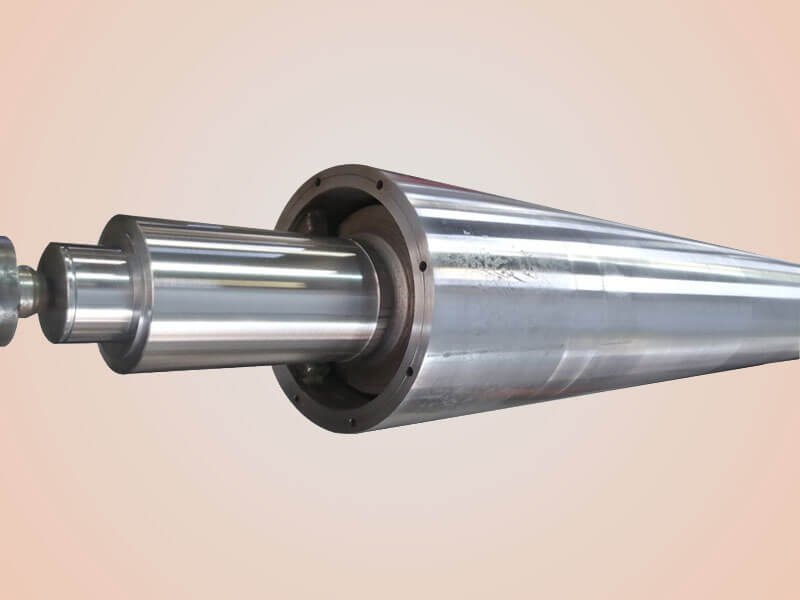
The roller body is machined with a precise, microscopic parabolic taper. The middle diameter is crafted slightly larger than the two ends. When heavy operational pressure is applied during production, the middle bows down just enough to flatten out completely against the counter roll. The result? Perfectly straight, uniform pressure across the entire working width.
2. Internal Core & Shell Engineering
For heavy-duty applications or long-span machinery, advanced internal core designs transfer the bending force away from the outer working shell. The outer surface remains completely straight and flat regardless of how much pressure the internal shaft experiences.
By eliminating centre gaps, Anti-Deflection Rollers ensure every millimetre of your material—from the left edge to the right edge—receives the exact same pressing force.
How to Choose the Right Anti-Deflection Rollers: A Practical Step-by-Step Guide
Not all industrial rollers are created equal. Choosing the wrong design, wrong hardness, or incorrect crown calculation can leave you with the exact same production issues you started with.
Here are the key factors you must consider before placing an order:
1. Define Your Actual Operating Load (Nip Load)
Deflection is directly tied to force. A roller designed for light film converting will flex terribly if installed on a heavy paper squeezing line.
Before consulting your supplier, collect accurate operational data:
- What is your total downward operating force (measured in kg/cm or pounds per linear inch)?
- Is the load constant, or does it vary depending on the product run?
- What is the total face width and overall length of the roller?
A precise load calculation allows engineers to design a crown profile tailored specifically to your exact working weight.
2. Choose the Right Outer Covering Material
The core provides the structural strength, but the outer covering interacts directly with your product. Depending on your industry, you may require:
- Specialised Rubber Compounds (EBR, NBR, EPDM, Silicone): Ideal for flexible resilience, chemical resistance, and wet squeezing applications.
- Polyurethane Coatings: Perfect for high abrasion resistance, cut resistance, and heavy load carrying capacity.
- Precision Metal Surfaces (Steel, Stainless Steel, Chrome Plated): Used for smooth finishing, high-heat applications, or rigid calendering lines.
Ensure the outer cover hardness (measured in Shore A or Shore D) matches your process. Softer covers offer forgiving pressure distribution but wear faster, while harder covers demand ultra-precise crown alignment.
3. Consider Temperature and Chemical Exposure
Heat causes metals and rubber to expand, while aggressive chemicals can degrade synthetic coverings over time.
- Are your rollers exposed to high-temperature drying ovens or hot laminating oils?
- Do they come into direct contact with solvent-based inks, acids, or industrial cleaning solutions?
Sharing these environmental details with your manufacturer ensures they select raw materials that won’t swell, crack, or degrade prematurely.
4. Account for Line Speed and Dynamic Balance
At high operating speeds, even a minor weight imbalance causes severe machine vibration. Vibration destroys bearings, ruins surface finishes, and accelerates roller fatigue. Ensure your chosen rollers undergo dynamic balancing at or above your actual operational running speed to guarantee smooth, whisper-quiet performance.
Key Industries That Benefit from Zero Deflection Technology
If your manufacturing process involves continuous web handling, flexible packaging, or fluid extraction, zero-deflection performance is a non-negotiable requirement for high profitability.
Paper & Board Mills
Paper processing lines run long spans at high moisture levels and heavy pressures. Using proper anti-deflection designs prevents moisture streaks, guarantees even water extraction during dewatering stages, and protects against paper web snaps.
Converting & Flexible Packaging
Whether laminating foil to plastic film or applying ultra-thin adhesives, consistency is critical. Uniform nip pressure prevents air bubbles, prevents glue pooling, and keeps delicate films flat without stretching.
Textile Processing & Dyeing
In textile padding and squeezing mangles, uneven roller pressure leads to shade variation between the center and edges of the fabric roll. Proper deflection control guarantees uniform liquor retention and consistent color shades across the entire width of the fabric.
Flexo & Gravure Printing
High-speed printing demands exact ink transfer. Any center gap leads to faint printing down the middle of the web, forcing operators to over-tighten rollers and ruin the plates. Deflection-free rollers maintain clean, crisp print reproduction from edge to edge.
How to Test Your Current Rollers for Deflection (Before Ordering a Replacement)
Unsure if your current production bottlenecks are caused by roller bending? You can run three quick, simple tests on your shop floor today:
- The Carbon Paper / Foil Nip Test: Place a sheet of pressure-sensitive paper (or plain paper with carbon sheets) across the full width of the unheated roller nip. Press the rollers together under normal working load, then release. Inspect the impression mark. If the band of contact is thin in the middle and wide at the ends, your roller is deflecting under pressure.
- Coating Thickness Gauge Checks: Take thickness measurements across a finished roll of coated material. If the center consistently measures thinner or thicker than the outer borders, roller flex is the primary suspect.
- Visual Edge Wear Inspection: Check the rubber coating on your retired rollers. If the edges are heavily worn down while the middle looks barely touched, your machines are compensating for center gaps through excessive edge pressure.
Why Partnering with the Right Anti-Deflection Rollers Manufacturer Matters
Designing a truly deflection-free roller isn’t a matter of guessing measurements or using one-size-fits-all templates. It requires sophisticated mechanical engineering, deep material knowledge, and high-precision CNC machining capabilities.
Off-the-shelf rollers often fail because every production line has unique variables—line speed, web tension, chemistry, and mechanical setup.
Working with an experienced Anti-Deflection Rollers Manufacturer guarantees:
- Custom Engineering: Rollers designed around your exact machine blueprints and production requirements.
- Superior ROI: Longer roller lifespan, lower maintenance costs, and drastically reduced scrap generation.
- Precision Surface Finishing: Perfect concentricity and mirror-smooth surface tolerances for flawless material handling.
Siva Rollers: Your Trusted Anti-Deflection Rollers India Partner for Global Excellence
When it comes to high-precision industrial roller engineering, Siva Rollers stands out as an industry leader in India, serving both domestic plants and international markets across the globe.
At Siva Rollers, we understand that every minute of machine downtime costs your business real money. That is why we combine decades of hands-on industry expertise with advanced manufacturing infrastructure to deliver world-class roller solutions tailored to your exact operational challenges.
Why Industry Leaders Choose Siva Rollers:
- Tailored Engineering Solutions: We don’t just sell standard products—we analyze your specific load, speed, and material requirements to engineer perfect Anti-Deflection Rollers that solve your real-world shop floor problems.
- World-Class Quality from India: Built with top-grade raw materials, advanced core construction, and precision rubber/polyurethane formulations, our products offer European-level performance at competitive Indian manufacturing value.
- Global Export Capabilities: Trusted by clients across India and exported worldwide, Siva Rollers adheres to international quality standards, robust packaging, and reliable global delivery schedules.
- End-to-End Support: From initial consultation and nip load calculations to after-sales support and re-covering services, our expert technical team stands beside you at every stage.
By upgrading your production line with custom-built solutions from a reliable Anti-Deflection Rollers Manufacturer like Siva Rollers, you protect your machinery investment, eliminate material waste, and deliver flawless product quality to your customers every single time.
Upgrade Your Line to Zero Deflection Today
Don’t let uneven nip pressure, wrinkles, and costly web breakage drain your plant’s profitability. Fixing your roller deflection issues is one of the fastest, most effective ways to boost product quality and increase daily production output.
Whether you need to upgrade an existing production line or require custom-designed rollers for a new machine installation, the engineering team at Siva Rollers is ready to assist you.
Ready to eliminate roller bending and achieve perfect nip pressure?
Contact Siva Rollers today to speak directly with an industrial application specialist, request a custom quote, or schedule a technical consultation for your plant!
- Email Inquiry: info@sivarollers.com
- Phone / WhatsApp: +91-75070 10009
- Factory Location: India (Proudly Serving Clients Globally)
- Explore Our Solutions: Visit Siva Rollers Contact Page
FAQs
An anti-deflection roller is a specially engineered industrial roll designed to counter structural bending (flexing) caused by heavy operational loads or long spans. Under heavy pressure, standard solid rollers bow out in the middle, creating a gap in the center. Anti-deflection rollers use precision internal core engineering or controlled parabolic crowned profiling to ensure the surface remains completely straight and flat under load. This guarantees uniform nip pressure across the entire working face width.
Roller deflection is caused by mechanical force, heavy operating loads (pounds per linear inch / kg per cm), long shaft spans, and high web tension. When two rolls press together to squeeze, coat, dry, or laminate materials, the force naturally pushes the center of the shaft outward, leading to center-gap issues, uneven web tension, and irregular pressure distribution.
Common signs of roller bending on the shop floor include:
- Wrinkling and creasing across the center or edges of the moving web.
- Uneven coating or adhesive application (thick on the edges, thin/dry in the middle).
- Accelerated wear on the edges of rubber or polyurethane coverings compared to the center.
- Frequent web breakage due to tight tension spikes at the outer borders.
- Shade variations across fabric rolls in textile dyeing processes.
By maintaining zero deflection and consistent nip pressure from edge to edge, anti-deflection rollers eliminate coating gaps, prevent air bubble trapping, reduce material tearing, and eliminate edge-to-center thickness variations. This leads to higher product consistency, significantly lower scrap/rejection rates, and continuous high-speed production with minimal downtime.
- Crowned Rollers: The outer diameter is ground slightly larger in the center than at the ends (parabolic taper). When heavy load is applied, the middle flexes down to create a flat contact surface. This is ideal for fixed, predictable operating loads.
- Internal Anti-Deflection Rollers: Advanced internal shaft designs isolate bending forces away from the outer working shell. The outer surface remains completely flat even if operating pressure varies dynamically.
Anti-deflection rollers are essential in continuous web-handling industries, including:
- Paper & Board Mills (dewatering, pressing, and calendering)
- Flexible Packaging & Film Converting (lamination, adhesive coating, slitting)
- Textile Processing & Dyeing (liquor extraction and padding mangles)
- Flexo & Gravure Printing (uniform ink transfer)
- Non-woven & Foil Processing
The choice of outer cover depends on chemical exposure, temperature, and hardness requirements:
- Rubber Compounds (NBR, EPDM, Silicone, Neoprene): Excellent resilience, chemical resistance, and wet squeezing.
- Polyurethane: High abrasion resistance, extreme cut resistance, and high load-bearing capacity.
- Precision Metal Surfaces (Steel, Stainless Steel, Chrome Plated): Ideal for high heat, mirror finishing, or rigid calendering.
Plant managers can conduct three simple on-site tests:
- Carbon Paper / Foil Nip Impression Test: Place carbon paper across the static nip width under load. Inspect the impression mark; if the band is wider at the ends and thin in the middle, the roll is deflecting.
- Coating Thickness Measurement: Check finished roll thickness across left, middle, and right sections.
- Cover Wear Inspection: Inspect retired rubber covers for uneven shoulder/edge wear.
Siva Rollers is a premier manufacturer and exporter of custom-engineered Anti-Deflection Rollers in India. With deep engineering expertise, state-of-the-art CNC machining, dynamic balancing, and custom rubber/polyurethane formulations, Siva Rollers provides high-precision, zero-deflection roller solutions tailored to client machine specifications across India and international markets.
Yes. Siva Rollers provides complete global export capabilities. Rollers engineered by Siva Rollers are manufactured to strict international quality standards, packed in export-grade protective packaging, and delivered to manufacturing plants across global markets with comprehensive technical support.
Standard off-the-shelf rollers use generic wall thicknesses and flat profiles that cannot withstand specialized line speeds, chemical exposures, or high nip forces. Custom-engineered rollers from Siva Rollers are built using precise nip load calculations, machine blueprints, and application-specific cover compounds, guaranteeing longer roll life, lower maintenance costs, and zero bending under actual working conditions.
Plant engineers and purchase managers can contact Siva Rollers directly through their official website or customer service team. By providing key operating details—such as face width, operating load (kg/cm or PLI), line speed, working temperature, and material environment—Siva Rollers' technical experts will calculate the required crown or core design and provide a tailored solution and quote.