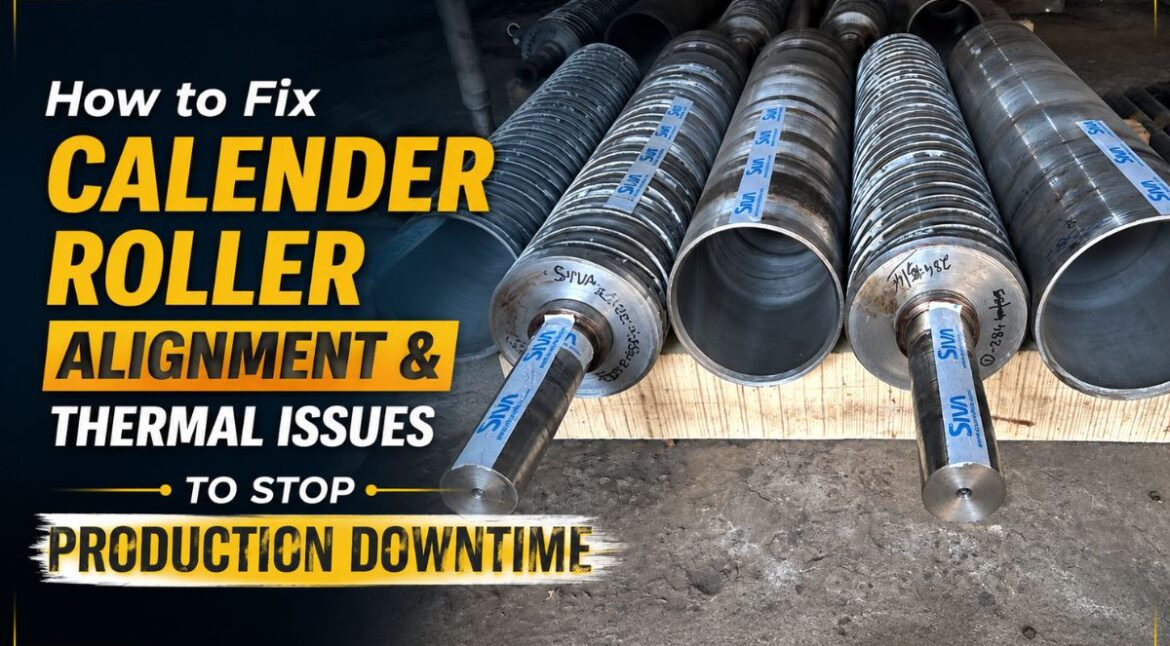
How to Fix Calender Roller Alignment & Thermal Issues to Stop Production Downtime
Every plant supervisor and operations director knows the sudden sinking feeling when a continuous manufacturing line comes to an unexpected halt. In high-precision industries such as paper manufacturing, plastics processing, rubber sheet production, non-woven textiles, and steel converting, the calender machine sits right at the heart of the production ecosystem.
When the calender section runs smoothly, product thickness is precise, surface finish is uniform, and output stays on schedule. But when issues arise, the consequences are immediate. Creasing in sheet materials, uneven thickness across the web, edge cracking, and premature bearing failures often point back to one core component: improper alignment and poor thermal control of your calender roller.
In this guide, we will break down why these two issues disrupt your plant productivity, how to spot early warning signs before total failure occurs, and practical step-by-step methods to fix them. We will also explore how partnering with an experienced industrial roller manufacturer can help you eliminate recurring downtime forever.
The Hidden Cost of Misalignment and Heat Imbalance
In a fast-paced production plant, downtime is not just a minor inconvenience; it is a major financial drain. When a calender section stops unexpectedly, the costs compound rapidly:
- Wasted Raw Material: Uncontrolled thermal expansion or slight misalignment leads to uneven pressure. This creates defective rolls that end up as scrap.
- Energy Loss: Heating and reheating massive solid rolls takes considerable thermal energy. Unplanned stops mean heating elements run without producing sellable material.
- Upstream & Downstream Choke Points: If the calender station fails, extrusion, coating, or slitting lines ahead and behind it are forced to idle or slow down.
- Accelerated Equipment Wear: Operating misaligned rolls places severe mechanical stress on journal bearings, drive gears, hydraulic actuators, and rotary unions.
According to industrial reliability studies from organizations like the Society of Reliability and Maintenance Professionals (SMRP), unexpected equipment downtime can cost process manufacturers anywhere from 5% to 20% of their total production capacity annually. Most of these breakdowns stem from root causes that could have been prevented with regular maintenance checks and correct roll engineering.
Problem 1: Calender Roller Misalignment (Causes & Solutions)
Roll alignment sounds straightforward on paper: two or more cylindrical rolls placed perfectly parallel to each other. In practice, maintaining parallel orientation under high pressure, heavy loads, and continuous thermal cycles is a complex challenge.
Key Warning Signs of Misaligned Rollers
Before a line breaks down entirely, your production output will display distinct warning signs:
- Uneven Gauge (Thickness Variation): The finished film or sheet is thicker on one side than the other.
- Material Wrinkling or Creasing: Uneven nip pressure causes tension imbalances across the web, forcing the material to gather or fold.
- Edge Tracking Issues: The web constantly wanders left or right instead of tracking straight through the center line.
- Uneven Wear Patterns: One side of the roll surface shows premature dulling, scoring, or rubber cover degradation.
- Bearing Overheating: Bearings on one end of the roll run significantly hotter than those on the opposite side.
Root Causes of Misalignment
Understanding why rolls shift out of position helps you prevent future occurrences:
- Foundation & Frame Movement: Floor settling, ground vibration from neighboring heavy machinery, or thermal expansion of the machine frame can pull housing blocks out of square over time.
- Uneven Bearing Wear: As bearings age, subtle internal clearance changes occur unevenly across the drive side and operator side.
- Improper Load Distribution: Operating hydraulic clamping cylinders with unbalanced hydraulic pressure creates uneven deflection across the face length.
- Incorrect Installation: Placing rolls into the machine without using precision optical or laser verification during maintenance turnarounds.
How to Fix Alignment Issues (Step-by-Step)
Step 1: Perform a Nip Impression Test
Before making physical adjustments, verify where the pressure imbalance exists. Use pressure-sensitive indicator film or traditional carbon paper across the full face length of the rolls. Close the nip under standard working load. Inspect the imprint width: an even impression band indicates parallel alignment, while a tapered wedge shape confirms misalignment.
Step 2: Inspect Bearings and Housing Frames
Check drive-side and operator-side bearing housings for wear, loose mounting bolts, or damaged shims. Replace worn bearings before attempting line adjustments; aligning rolls on worn bearings yields temporary results at best.
Step 3: Utilize Modern Alignment Tools
While traditional spirit levels and mechanical feeler gauges provide a rough baseline, high-speed lines require greater accuracy. Modern maintenance teams rely on precision laser alignment systems or optical transit methods to verify parallelism, axial centerlines, and squareness to the machine centerline.
Step 4: Re-balance Clamping and Bending Systems
Ensure hydraulic cylinders on both sides deliver equal pressure. If your machine utilizes roll-bending or roll-crossing mechanisms to compensate for natural roll deflection, verify that these systems are calibrated correctly for your current material thickness and speed.
Problem 2: Thermal Imbalance & Heat Distribution Issues
Heat control is critical in calendering operations. Whether heating plastic resins, curing rubber, or glazing paper, the surface temperature of every calender roller must remain consistent across its entire working width.
What Happens When Thermal Control Fails?
When heat distribution becomes uneven, metal rolls expand unevenly—a condition known as thermal distortion or “crown warping.”
- Hot Spots and Cold Spots: Variations of just a few degrees across the roll face lead to inconsistent material density, gloss variations, and uneven bonding.
- Thermal Expansion Deflection: Metal expands when heated. If internal heating fluid channels are clogged or improperly designed, the roll expands more in certain zones, changing the gap profile and ruining sheet tolerance.
- Cover Delamination: On rubber-coated or polyurethane-covered rolls, localized hot spots accelerate cover degradation, leading to blistering, cracking, or complete cover separation.
Causes of Thermal Instability
- Fluid Channel Fouling: In fluid-heated rolls (hot water or thermal oil), scale build-up, rust, or fluid degradation creates insulating barriers inside internal passages.
- Rotary Union Leakage: Damaged rotary joints restrict fluid flow rate, leading to stagnant fluid pockets and uneven heat delivery.
- Air Entrapment: Trapped air inside roll cavities creates localized cold zones because air is a poor conductor of thermal energy.
- Inadequate Internal Shell Design: Older or lower-quality roll structures lack optimized internal fluid paths, resulting in poor heat transfer efficiency.
How to Fix Thermal and Heating Problems
Step 1: Conduct Infrared Thermal Scanning
Regularly scan working roll surfaces using calibrated handheld thermal imaging devices or stationary infrared sensors. Map out hot and cold zones across the face length during standard production runs.
Step 2: Flush and Descale Internal Fluid Paths
Periodically flush internal heating passages with recommended chemical cleaning agents to remove rust and fluid deposits. Check return lines to ensure fluid flow rates match manufacturer specifications.
Step 3: Inspect and Servicing Rotary Joints
Replace worn mechanical seals in rotary unions proactively. Inspect internal siphon tubes to confirm condensation or fluid is being evacuated cleanly without pooling at the bottom of the roll.
Step 4: Verify Heating Element Controls
For electrically heated rolls, test individual heating zone circuits, slip rings, and temperature sensors. A failed heating element in one zone creates an immediate drop in localized surface temperature.
Preventive Maintenance Checklist for Calender Rolls
To transition from reactive fire-fighting to smooth, reliable operations, implement a structured preventive maintenance routine.
Frequency | Inspection Task | Objective |
Daily / Shift Basis | Surface Inspection & Temp Check | Identify surface debris, scratches, or thermal hot spots early. |
Weekly | Hydraulic & Rotary Joint Inspection | Ensure clean fluid flow, check for oil leaks, verify steady pressure. |
Monthly | Nip Impression Verification | Confirm parallel contact and uniform load across the full roll width. |
Quarterly | Bearing & Drive Alignment Checks | Measure vibration levels and check structural mounting hardware. |
Annual Turnaround | Full Roll Regrinding & Deep Service | Restore surface profile, balance roll dynamically, flush fluid passages. |
Why Roll Quality Matters: The Role of Engineering Excellence
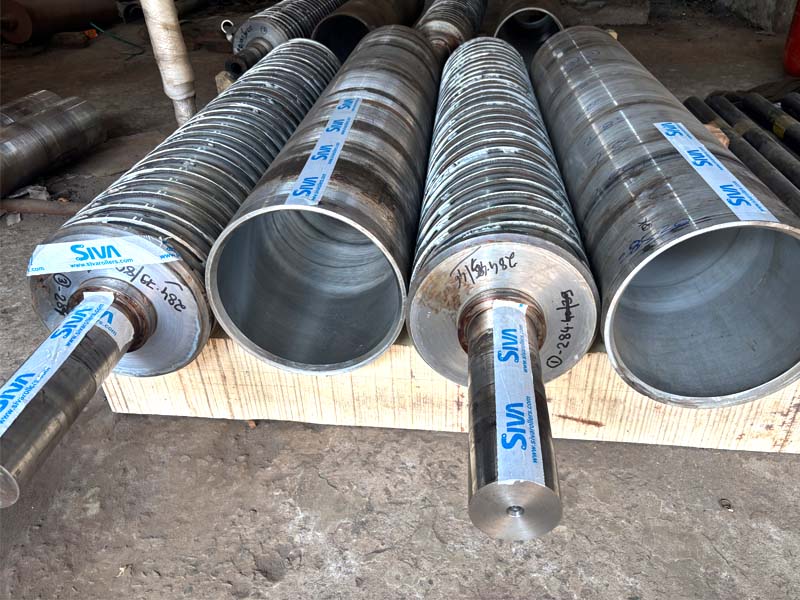
Fixing alignment and temperature issues requires strict maintenance discipline, but equipment longevity ultimately depends on roll construction quality. A poorly manufactured roll with internal material flaws, uneven wall thickness, or unground internal passages will warp under high temperature and stress—regardless of how carefully your maintenance team operates.
When sourcing new or replacement units, selecting an experienced industrial roller manufacturer is critical. High-performance rolls require:
- Precision Balancing: Dynamic balancing eliminates vibration at high production speeds.
- Uniform Internal Geometry: Machined fluid channels ensure balanced thermal transfer across the entire surface.
- High-Grade Metallurgical Standards: Quality base metals resist flexure, thermal fatigue, and premature surface wear under continuous load.
- Exact Surface Finishes: Mirror-polished or specialized texturing maintains material release properties without damaging sensitive web substrates.
Industry standards established by organizations like the American Gear Manufacturers Association (AGMA) emphasize that precision mechanical alignment depends on the foundational tolerance standards established during manufacturing.
Siva Rollers: Your Trusted Partner for Industrial Rollers
When high performance and zero downtime are critical to your plant’s bottom line, relying on proven engineering expertise makes all the difference.
As a leading Calender Roller Manufacturer in India, Siva Rollers has built a strong reputation across diverse process industries by delivering engineered roll solutions tailored to demanding operational environments.
With deep experience in custom manufacturing, refurbishing, and precision grinding, Siva Rollers understands the unique challenges production teams face daily. Whether you need heavy-duty heating rolls, cooling rolls, precision nip rolls, or specialized surface coatings, Siva Rollers focuses on quality manufacturing practices that maximize service life and reduce operating costs.
What Sets Siva Rollers Apart?
- Custom Mechanical Engineering: Designed to match your exact line dimensions, load parameters, and material requirements.
- Advanced Thermal Design: Optimized internal flow passages for uniform heat distribution across the entire face length.
- Precision Surface Finishing: High-accuracy cylindrical grinding and polishing options to achieve exact surface mirror finishes or matte textures.
- End-to-End Reliability: From initial material selection to final dynamic balancing, every step is tested to ensure seamless integration into your machinery.
Stop Downtime Before It Starts
Unplanned production stops caused by calender roller misalignment or thermal warping are entirely preventable. By implementing regular nip tests, using thermal imaging tools, maintaining clean fluid lines, and adhering to strict alignment protocols, you can protect your machinery, reduce scrap material, and maintain smooth line operations.
When replacement or custom engineering is required, partner with a proven industrial roller manufacturer who understands the demands of high-speed manufacturing.
If your plant is experiencing recurring web defects, thickness variations, or roll heating challenges, reach out to the engineering team at Siva Rollers to discuss custom solutions that keep your production line running smoothly.
- Email Us: info@sivarollers.com
- Call/WhatsApp Us: +91 75070 10009
- Send an Inquiry: Simply fill out our quick contact form on the website with your roller dimensions, and our technical team will get back to you within 24 hours!
FAQs
A Calender Roller is a precision roller used in calendering processes to apply controlled pressure and, in some applications, heat or cooling to materials such as plastic films, rubber sheets, paper, and non-woven materials. Proper roller alignment and temperature control help maintain consistent product quality.
Common signs include uneven material thickness, wrinkles or creases, web tracking problems, uneven roller wear, and higher bearing temperature on one side of the roller. These symptoms can indicate uneven pressure across the roll width.
Misalignment can create uneven pressure across the material, resulting in thickness variation, wrinkles, edge problems, material waste, and increased wear on bearings and other machine components. If ignored, these issues can contribute to unplanned production downtime.
A practical first check is a nip impression test using pressure-sensitive film or carbon paper across the roller width. An even impression indicates more uniform contact, while a tapered impression can indicate an alignment problem. Precision alignment equipment can then be used for a more detailed inspection.
Uneven temperature can result from blocked or dirty internal fluid passages, rotary joint problems, trapped air, or unsuitable internal flow design. These conditions can create hot and cold areas and affect the final material quality.
Start by checking the roller surface temperature across its working width. Internal fluid passages may need cleaning or flushing, rotary joints should be inspected, and heating elements and temperature sensors should be checked where applicable. Regular thermal monitoring can help identify problems before they cause major downtime.
Calender Rollers should be monitored regularly as part of preventive maintenance. Surface and temperature checks can be performed during routine production, while nip verification, bearing checks, alignment inspection, and deeper roller servicing can be scheduled at appropriate maintenance intervals based on operating conditions.
Premature wear can be linked to misalignment, uneven loading, bearing wear, improper installation, excessive thermal imbalance, or unsuitable operating and maintenance conditions. Identifying the underlying cause is important because simply replacing the roller may not prevent the problem from returning.
Roll construction quality can influence roller stability, thermal performance, surface condition, and long-term reliability. Proper manufacturing, balancing, internal design, and surface finishing can help the roller perform consistently under demanding production conditions.
Choose a manufacturer with experience in custom roller manufacturing, precision grinding, thermal roller design, surface finishing, balancing, and roller refurbishment. The manufacturer should also understand the operating requirements of your specific production line rather than supplying a generic roller.
Yes, depending on the roller's condition and the nature of the problem, refurbishment can be considered. Services may include precision grinding, surface restoration, balancing, and cleaning or servicing of internal passages. A proper inspection should determine whether refurbishment or replacement is more suitable.
Siva Rollers, a Calender Roller Manufacturer in India, provides custom roller solutions along with manufacturing, refurbishing, precision grinding, and surface finishing services for demanding industrial applications.