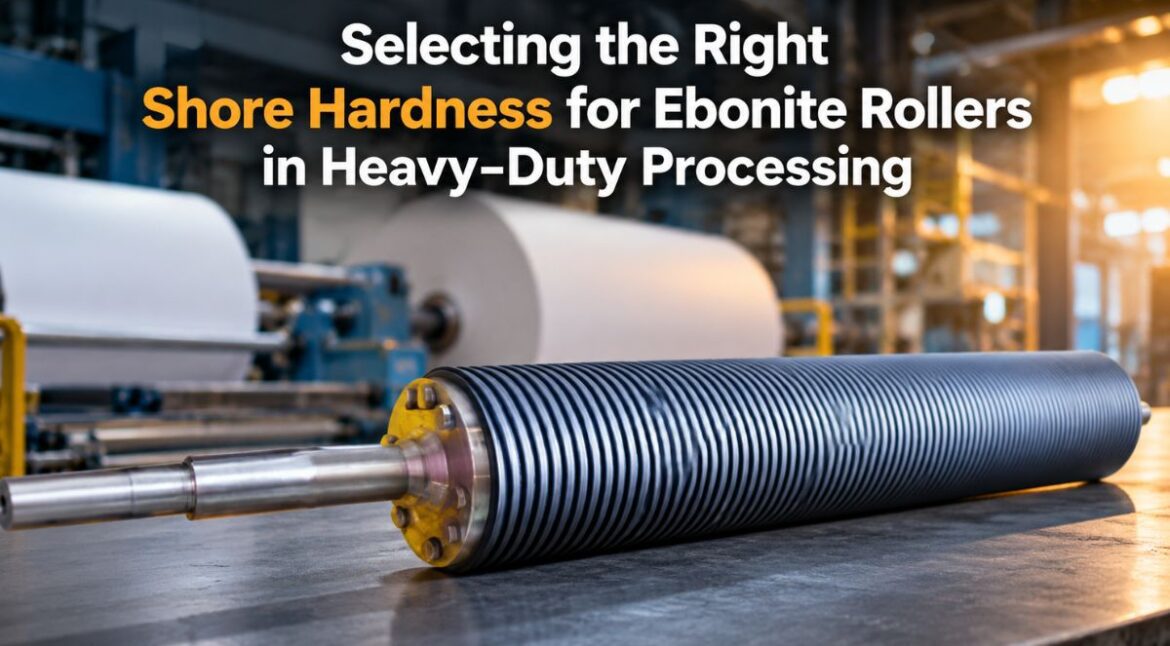
Selecting the Right Shore Hardness for Ebonite Rollers in Heavy-Duty Processing
When you run a heavy-duty processing plant—whether in paper production, textile finishing, steel processing, or film converting—every machine component matters. Downward pressure, heat, aggressive chemicals, and constant friction test your equipment daily. Among all key parts, industrial rollers carry a heavy load.
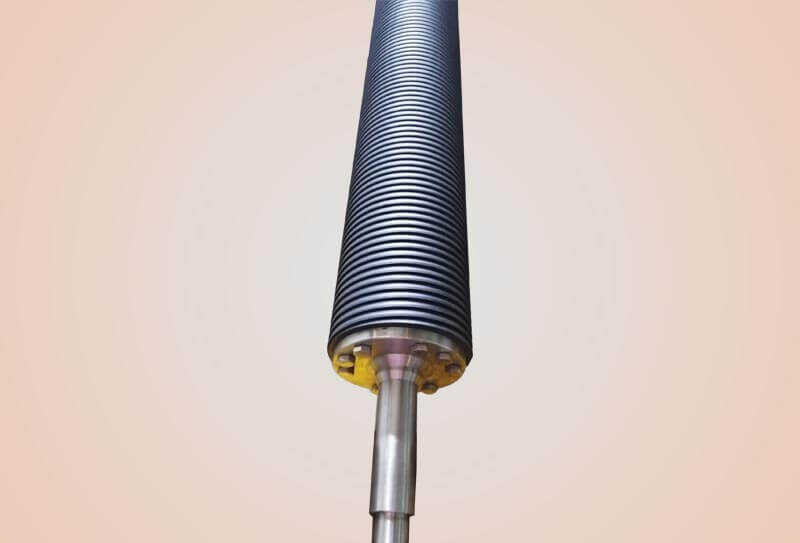
A popular and reliable choice across processing plants is the ebonite roller. Known for its incredible toughness, chemical resistance, and ability to hold precise dimensions, an ebonite roller can run smoothly for years when chosen correctly.
However, many plant operators and maintenance engineers face a common challenge: How do you pick the right Shore Hardness for your ebonite roller?
Choosing a roller that is too hard can mark your material, cause uneven nip pressure, or lead to surface cracking under extreme loads. Choosing one that is too soft can cause premature wear, dimensional distortion, and frequent maintenance downtime.
In this practical guide, we break down what Shore Hardness means for ebonite coated rollers, how to match hardness to your specific heavy-duty application, and how to protect your machinery investment over the long haul.
What Makes Ebonite Rollers Different?
Before diving into hardness levels, let us look at what makes an ebonite roller unique in industrial environments.
Ebonite is a hard rubber material formed by vulcanizing natural or synthetic rubber with a high proportion of sulfur. This chemical reaction transforms soft rubber into a rigid, resilient, and highly durable material.
Unlike standard flexible rubber covers, ebonite sits in a sweet spot between soft rubber and hard metal.
Key Advantages of Ebonite Coated Rollers:
- High Chemical Resistance: They stand up to acids, alkalis, solvents, and corrosive processing fluids better than many standard rubber compounds.
- Low Water Absorption: Perfect for wet processing lines where moisture can ruin softer covers.
- Dimensional Stability: They maintain their structural shape even under heavy mechanical pressure.
- Excellent Machinability: They can be ground, polished, and grooved to precise surface specifications.
Because of these properties, top plant managers rely on an experienced ebonite roller manufacturer to custom-build rollers tailored to their line speeds and operating environments.
Understanding Shore Hardness in Simple Terms
When industrial professionals talk about roller hardness, they use a scale called Shore Hardness.
Think of Shore Hardness as a measure of how easily a material resists surface indentation.
- A lower number means the roller surface has more give or cushion.
- A higher number means the roller surface is rigid and firm.
For ebonite rollers, measurement usually falls on the Shore D scale (used for hard polymers and rigid rubbers) or the high end of the Shore A scale.
Why Does Hardness Matter in Heavy-Duty Processing?
In heavy manufacturing lines, your roller surface comes into direct contact with moving webs, fabrics, metals, or paper. The hardness of the ebonite cover controls three critical factors:
- Nip Width and Contact Area: A softer roller flattens slightly under load, creating a wider contact zone (nip). A harder roller creates a narrow, concentrated contact zone.
- Pressure Distribution: Hardness determines how evenly force spreads across the width of your web.
- Heat Generation: Repeated flexing of a roller surface generates internal heat (hysteresis). Harder ebonite flexes less, reducing heat buildup at high line speeds.
Getting this balance right ensures your end product stays defect-free while keeping machine wear to a minimum.
Need Custom Industrial Rollers?
✓ Custom Diameter & Length
✓ Temperature Control Design
✓ Fast Manufacturing
✓ Technical Support
How to Select the Right Hardness for Your Application
Every manufacturing process puts different demands on an industrial roller. Here is a clear, practical look at how to select the right hardness based on your operating conditions.
1. High-Load and High-Pressure Lines
If your processing line runs under heavy nip pressure—such as squeeze rollers, dewatering lines, or heavy lamination—you need a higher Shore Hardness.
- Why it works: Rigid ebonite covers resist deep compression, ensuring that force transfers directly and evenly to the material passing through.
- Real-world tip: If your roller is too soft under high pressure, the cover will bulge out sideways (known as bulging or heat buildup), which causes premature cover separation.
2. Applications Requiring Chemical and Solvent Contact
In chemical treatment tanks, pickling lines, or textile dye baths, chemical exposure can soften standard covers.
- Why it works: Higher-hardness ebonite formulations contain higher sulfur content, creating a tighter chemical bond structure. This bond resists swelling, blistering, and chemical breakdown.
- Real-world tip: Always share the exact chemical composition and operating temperature of your fluid bath with your roller partner before finalizing hardness ratings.
3. Delicately Handled Webs (Paper, Film, and Foils)
When processing delicate sheets, thin plastic films, or fine paper, an overly hard surface can cause pinching, wrinkling, or surface marks.
- Why it works: A slightly lower hardness level provides enough surface cushioning to compensate for minor thickness variations across your web material.
- Real-world tip: A medium-hardness ebonite cover gives you precise traction without scratching high-finish film surfaces.
4. High Line-Speed Processing
When rollers rotate at high speeds, friction creates surface heat.
- Why it works: Harder ebonite covers flex less during rotation. Less flex means less internal heat generation, which prolongs the working life of both the cover and the steel core.
Common Signs You Are Using the Wrong Hardness
How do you know if your current ebonite coated rollers are not matched correctly to your process? Keep an eye out for these clear warning signs on your factory floor:
- Frequent Surface Cracking: If the cover shows micro-cracks along the surface, the roller may be too hard for the mechanical shock loads on your line.
- Uneven Material Wear: If the center of your product wears out faster than the edges (or vice versa), your roller hardness may not match the crowning or pressure settings.
- Cover Deformation or Bulging: A cover that looks wavy or soft in patches was likely specified too low in hardness for the operating pressure.
- Premature Delamination: If the ebonite layer peels away from the inner steel core, excessive internal heat from over-flexing (a sign of overly soft material) could be the culprit.
Key Operating Factors to Review Before Ordering
To get the best performance out of your investment, avoid ordering off-the-shelf sizes without evaluating your specific process setup. Before consulting your manufacturer, pull together the following details:
- Operating Temperature: Is the roller working at room temperature, or is it exposed to heated fluids and heated drums?
- Chemical Environment: What acids, solvents, oils, or wash-down fluids come into contact with the surface?
- Line Speed and Tension: How fast is your web moving, and how much pull tension is applied?
- Mating Roller Material: Is your ebonite roller running against a hard steel roller, a granite roll, or another rubber-covered roll?
- Nip Force / Load per Linear Inch: How much total hydraulic or pneumatic pressure is pushed through the bearing housings?
Sharing these details with your supplier ensures you receive a custom-compounded cover designed specifically for your plant’s workload.
Why Partnering with the Right Manufacturer Matters
Building a reliable ebonite roller is both a science and a practical craft. It requires careful rubber compounding, precise vulcanization cycles, accurate cylindrical grinding, and strict quality checks.
Work with a trusted manufacturer who understands modern processing challenges:
- Siva Rollers has established a strong reputation as a dependable Ebonite Roller Manufacturer in India, delivering engineered roller solutions for heavy-duty industrial processing lines.
- By focusing on material purity, accurate vulcanization, and exact hardness matching, Siva Rollers helps plant managers optimize production efficiency, reduce maintenance downtime, and achieve long service life across demanding applications.
Whether you need to upgrade an existing processing line or replace worn components, getting advice from experts who focus on long-term performance makes all the difference.
Simple Care Guidelines to Extend Ebonite Roller Life
Even a perfectly selected ebonite roller requires basic operational care to stay in top shape:
- Avoid Dry Running: Running hard rollers against hard surfaces without web material or liquid lubricant can cause friction heat and surface scarring.
- Inspect Nips Regularly: Use nip impression paper to verify that pressure remains even across the entire face length of the roller.
- Store Rollers Correctly: When keeping spare rollers in stock, support them by their journal ends—never store them resting on the ebonite cover surface. Rotate stored rollers periodically to prevent sagging.
- Clean with Recommended Solvents: Use cleaning agents recommended by your supplier to avoid sudden surface hardening or cracking.
Final Thoughts
Choosing the right Shore Hardness for your ebonite roller is one of the simplest ways to boost efficiency and prevent unplanned shutdown time in heavy-duty processing. By balancing your plant’s pressure requirements, line speeds, and chemical exposure, you can select a hardness profile that protects both your equipment and your final product.
When quality, longevity, and reliable performance matter, partner with a trusted specialist like Siva Rollers to get tailored industrial roller solutions built for your precise operational demands.
Upgrade Your Plant Efficiency Today
FAQs
The ideal Shore Hardness for an ebonite roller depends on the application, nip pressure, operating temperature, line speed, and chemical exposure. High-load applications may require a harder cover, while delicate paper and film processing may need a carefully selected hardness to prevent surface marking. Consult an experienced ebonite roller manufacturer to determine the appropriate specification.
Shore Hardness measures a material's resistance to surface indentation. It helps industrial buyers understand how rigid an ebonite roller cover is. Ebonite hardness may be evaluated using the Shore D scale or an appropriate high-hardness Shore A method, depending on the material and testing requirements.
Shore A is generally used for softer elastomers, while Shore D is designed for harder materials. Since ebonite is a rigid, hard rubber material, Shore D may be more appropriate for its evaluation. The correct scale should be selected according to the material and applicable testing standard.
Shore Hardness affects surface rigidity, contact area, pressure distribution, wear behaviour, and resistance to deformation. Incorrect hardness selection can contribute to uneven contact, surface damage, premature wear, or cracking. Matching hardness to actual operating conditions helps improve roller performance and service life.
High-pressure applications generally require an ebonite cover with sufficient rigidity to resist deformation under the specified load. However, hardness alone does not determine load capacity. Roller dimensions, core strength, cover thickness, bonding quality, nip geometry, and operating temperature must also be considered.
Yes, ebonite rollers can be suitable for certain chemical processing environments because ebonite offers resistance to many corrosive substances. Actual compatibility depends on the specific chemical, its concentration, operating temperature, and exposure duration. Always confirm material compatibility before selecting an ebonite-coated industrial roller.
A harder ebonite roller may reduce surface deformation under certain operating conditions, but a higher Shore Hardness does not automatically guarantee better high-speed performance. Line speed, friction, nip pressure, roller balance, surface finish, and heat dissipation also influence performance. The complete operating conditions should guide hardness selection.
Yes, an excessively hard roller surface can contribute to marking, pinching, or uneven contact when the roller is used with delicate paper, plastic film, or foil. The actual risk depends on nip pressure, surface finish, material thickness, and alignment. Proper hardness selection and nip adjustment help protect sensitive materials.
Common warning signs include surface cracking, uneven wear, material marking, cover deformation, and premature cover separation. These problems can also result from excessive loads, chemical incompatibility, overheating, poor bonding, or misalignment. Inspect the roller and operating conditions before deciding whether a hardness change is necessary.
When ordering a custom ebonite roller, provide the required roller dimensions, target Shore Hardness, operating temperature, line speed, nip pressure, chemical exposure, material being processed, mating roller type, and surface finish requirements. These details help the manufacturer recommend a suitable roller specification for your application.
To extend ebonite roller life, inspect the surface regularly, maintain correct nip pressure and alignment, avoid unnecessary dry running, and use cleaning agents compatible with the cover material. Store spare rollers with appropriate support and follow the manufacturer's handling and maintenance recommendations to reduce premature wear and damage.
SIVA ROLLERS (SIVA ENGINEERING WORKS) is an industrial roller manufacturer based in Ahmedabad, Gujarat, India, offering ebonite-coated rollers for suitable industrial processing applications. When requesting a quotation, share your operating conditions, roller dimensions, chemical exposure, and hardness requirements to discuss a solution suited to your production needs.