What is a Calendar Roller? A Simple Guide to Industrial Processing Rollers
Every day, we interact with hundreds of smooth, continuous materials without ever thinking about how they were made.
Think about the seamless vinyl sheet flooring in a hospital, the glossy coating on flexible food packaging, the durable rubber layer inside a car tire, or the soft, water-resistant surface of a raincoat. None of these products start out perfectly flat, smooth, or uniform. They begin as thick mixtures, loose fibers, or molten resins.
So, how do manufacturers turn raw, uneven materials into smooth, continuous sheets with exact thickness from end to end?
The answer lies in a vital piece of industrial machinery: the Calender Roller.
In this guide, we will explore what a calender roller is, how it works, where it is used across major industries, and how to choose the right manufacturing partner for your plant. Whether you are upgrading your equipment or searching for a trusted Calender Roller Manufacturer, this comprehensive overview provides practical insights without confusing technical jargon.
What is a Calender Roller?
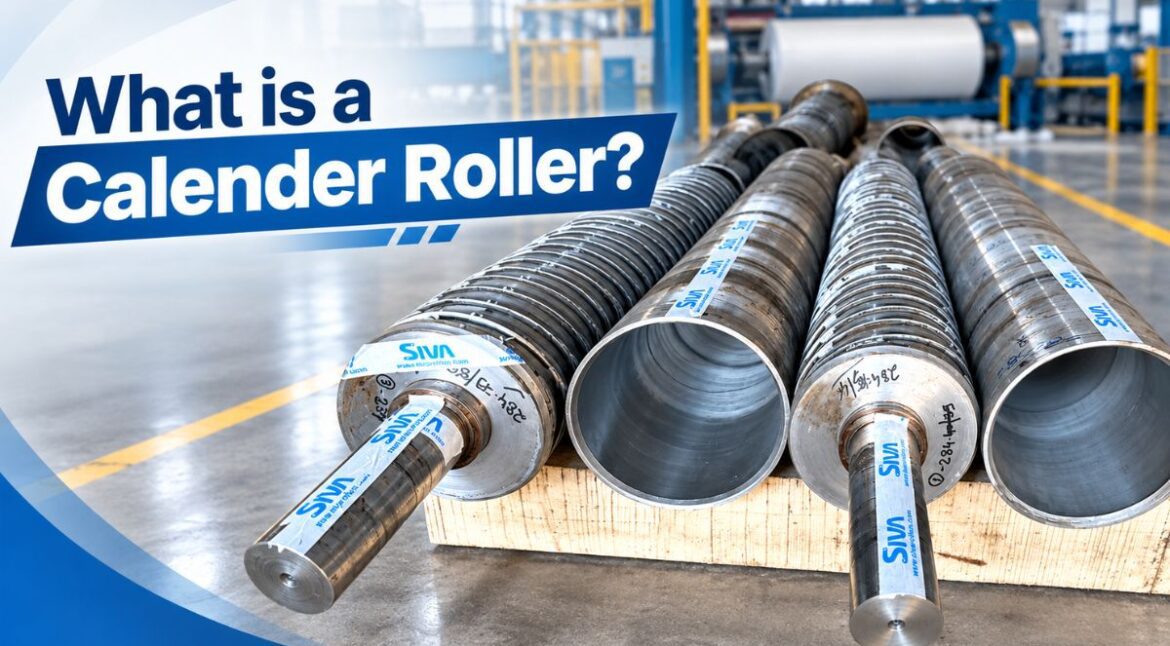
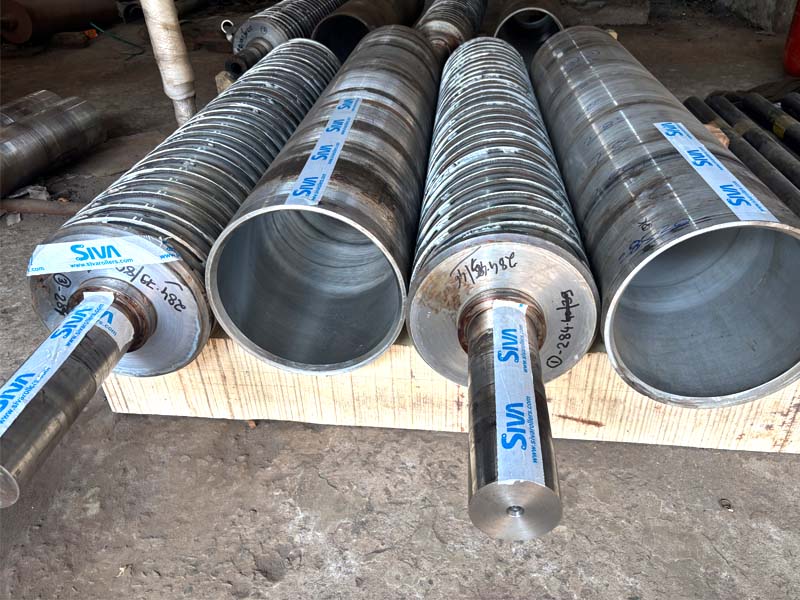
At its simplest, a Calender Roller is a heavy, precision-engineered cylinder that presses, flattens, smooths, or shapes continuous material as it moves through a manufacturing line.
To visualize how it works, think of a baker rolling out pastry dough with a wooden pin. If you press down with uneven hand pressure, one side of the dough becomes thin while the other stays thick. To get a uniform sheet, you need consistent force, a perfectly smooth rolling tool, and proper temperature control.
In an industrial plant, a calender roller does this same job on a massive scale. Operating inside a multi-roll machine stack, two or more heavy cylinders rotate against each other under precise pressure.
As material—such as plastic resin, uncured rubber, paper pulp, or woven fabric—passes through the narrow opening between the spinning rollers (known in the industry as the “nip”), it is compressed, smoothed, and formed into a uniform sheet.
Need Custom Industrial Rollers?
✓ Custom Diameter & Length
✓ Temperature Control Design
✓ Fast Manufacturing
✓ Technical Support
The Basic Working Principle
The operating mechanism of a calendar roller relies on three fundamental factors:
- Pressure: The rollers exert high mechanical force to squeeze the material to a uniform thickness.
- Temperature: Many calendering operations use heated or chilled rollers to melt, set, or cool the surface of the processed material.
- Speed Ratio: Rollers can rotate at identical speeds to simply press material, or at slightly different speeds to create friction that polishes or glazes the surface.
By fine-tuning these three variables, plant operators can achieve exact material properties, ranging from silky smooth textiles to durable rubber sheets.
How a Calender Roller Shapes Everyday Materials
While the core concept is easy to understand, achieving consistent product quality depends on three main factors working together on the shop floor:
1. Controlled Pressure
The rollers apply continuous, even force across the full width of the material. This squeezes out air pockets, eliminates surface lumps, and ensures the sheet has identical thickness from edge to edge.
2. Temperature Control
Most calender rollers are equipped with internal heating or cooling passages. Heating the roller softens polymers and rubber so they flow easily into a flat sheet. Cooling rollers, on the other hand, set the material into its final, stable form so it holds its shape during handling and packaging.
3. Surface Speed Mechanics
When two rollers turn at the exact same speed, they flatten the material evenly. However, if one roller turns slightly faster than the other, it creates a gentle rubbing action. This friction polishes the surface, giving materials like coated paper or decorative vinyl an extra glossy sheen.
Where Are Calender Rollers Used? Key Industry Applications
Calender rollers are quiet workhorses in modern manufacturing. Because different materials react differently to pressure and heat, rollers are customized to suit specific industrial goals.
Plastic and Polymer Sheet Production
In polymer manufacturing, melted plastic resin is fed into a bank of heated rollers. The rollers form the plastic into continuous films, thick decorative sheets, or waterproof membranes. Precise roll surfaces ensure the plastic comes out clear, smooth, and free of cloudy patches or pinholes.
Rubber and Tire Manufacturing
Processing raw rubber requires substantial mechanical strength. Heavy calender rollers press uncured rubber into smooth sheets used for industrial gaskets, conveyor belts, and tank linings. In tire manufacturing plants, multi-roll calender systems press rubber directly into fabric or steel wire netting to build tough, reinforced tire plies.
Textile and Fabric Finishing
In the textile sector, calendering is often the final step in fabric treatment. Passing woven or knitted cloth through heated rollers flattens the individual threads. This closes up small gaps in the weave, making the fabric smoother to the touch, more wind-resistant, and visually appealing.
Paper and Packaging Board
Near the end of a papermaking line, wet paper pulp travels through heavy steel rollers. The pressure compresses the paper fibers, creating a smooth, dense surface. This smooth finish prevents ink from bleeding during high-speed commercial printing.
Non-Woven Products
Everyday hygienic products—such as medical masks, baby wipes, and cleaning cloths—are made from loose synthetic fibers. Heated rollers with patterned surfaces press and bond these fibers together, giving the material strength while keeping it soft and breathable.
The Hidden Costs of Roll Wear and Poor Surface Quality
In continuous high-speed production, your final product is only as good as the surface of your roller. Even microscopic surface imperfections or minor weight imbalances can cause major production headaches.
Here is how poor-quality or worn rollers directly impact your bottom line:
- Uneven Sheet Thickness: If a roller bends or flexes slightly under pressure, the middle of your material sheet will be thicker than the edges. This causes customer complaints and wastes expensive raw materials.
- Surface Flaws: Small scratches, dents, or grinding marks on the roller surface transfer directly onto your product, ruining glossy films or delicate textiles.
- Inconsistent Heat Transfer: Uneven internal heating creates hot and cold spots across the roller. This causes plastic or rubber sheets to cure unevenly, leading to warping or weak spots.
- Vibration and Equipment Wear: Unbalanced rollers cause subtle vibrations at high operational speeds. Over time, this vibration wears out bearings, damages drive gears, and leads to unexpected downtime.
The Global and Indian Machinery Landscape
When sourcing equipment or replacement parts, facility managers often look at both international suppliers and regional specialists.
The Global Machinery Tradition
Historically, European and North American equipment manufacturers—such as KraussMaffei, Comerio Ercole, and Rodolfo Comerio—established early global benchmarks for heavy calendering machinery, particularly in polymer and tire processing lines. These heavy-duty machine builders earned strong global reputations over decades of industrial expansion.
However, relying entirely on overseas manufacturers for replacement rollers or surface reconditioning can mean high shipping costs, complex import logistics, and long delivery wait times that stall production schedules.
The Growth of High-Precision Manufacturing in India
Over the last two decades, Indian precision engineering has grown significantly. Modern Indian engineering facilities now manufacture high-performance industrial rollers that meet strict global performance standards while offering agile, local technical support.
Today, plant leaders do not need to rely solely on long overseas lead times. By partnering with a dependable domestic Calender Roller Manufacturer, facilities achieve reliable performance, fast turnaround, and practical, hands-on service.
What to Look for in a Calender Roller Partner
Choosing a machinery partner is a long-term business decision. Whether you are searching for an established Calender Roller Manufacturer or looking for specialized roll engineering under common search terms like a Calenderr Roller Manufacturer, keep these critical factors in mind:
1. Material and Engineering Knowledge
A skilled manufacturer understands how different metals react under continuous mechanical load and varying temperatures. They help you select the right base materials, heat treatments, and protective surface coatings tailored specifically to your working environment.
2. High-Precision Finishing Capabilities
The surface finish of the roller directly dictates the texture of your finished product. Look for a partner with proven grinding and polishing capabilities, capable of delivering everything from mirror-like reflective surfaces to matte or textured finishes.
3. Dynamic Balancing Setup
At high operational speeds, even minor weight variations create destructive vibration. Dynamic balancing tests ensure the roller spins smoothly, protecting your machine frame and extending bearing life.
4. Comprehensive Reconditioning Support
Rollers naturally experience wear after millions of rotations. A trusted partner should offer full re-grinding, surface re-polishing, and re-balancing services to restore worn rollers to like-new condition, saving you the cost of full equipment replacement.
What to Look for in a Calender Roller Partner
When evaluating reliable industrial suppliers in India, Siva Rollers stands out for its dedicated focus on practical roll engineering.
As a trusted Calender Roller Manufacturer in India, Siva Rollers brings years of hands-on experience to the textile, rubber, paper, plastic, and film converting industries.
Why Plant Managers Work with Siva Rollers
- Custom-Fit Engineering: Rather than forcing off-the-shelf products onto complex production lines, Siva Rollers evaluates your plant’s line speeds, material characteristics, and machine configurations to build custom rolls that fit perfectly.
- Quality and Precision Checks: From initial material inspection to final precision grinding and dynamic balancing, every step is carefully monitored to ensure smooth operation and long service life.
- Cost-Effective Reconditioning: To help plants minimize downtime and manage equipment budgets, Siva Rollers offers complete re-grinding and surface restoration services for existing machinery assets.
- Transparent Partnership: Built on clear communication, realistic delivery timelines, and genuine technical support, Siva Rollers helps plant managers maintain consistent output month after month.
Practical Tips to Maximize Calender Roller Lifespan
Even the highest quality roller requires consistent daily care. Following a few practical maintenance habits will help protect your investment and maintain product consistency:
1. Manage Temperature Changes Gradually
When heating or cooling your rollers, change temperatures slowly. Rapid heating or sudden cooling creates thermal stress that can cause micro-cracks or surface warping.
2. Avoid Dry Running Under Heat
Never run heated rollers against each other without material passing through or proper lubrication. Direct metal-to-metal contact quickly damages polished surfaces and ruins calibrated gap settings.
3. Monitor Pressure Balance
Check hydraulic or pneumatic pressure indicators regularly at both ends of the roll stack. Uneven pressure causes localized roll wear and creates inconsistent material thickness across the sheet.
4. Use Soft Scraper Tools
When cleaning stuck polymer residue, rubber buildup, or chemical coatings, use soft brass scrapers or approved mild cleaning agents. Hard steel tools can easily scratch or gouge polished roll surfaces.
5. Store Spare Rollers Properly
If you keep backup rollers in inventory, support them on their bearing journals rather than letting the main roll body sit on the floor. Rotate stored rolls periodically to prevent shaft bending over long storage periods.
Summary
A calender roller may seem like a basic mechanical cylinder, but its impact on product surface quality, raw material efficiency, and production profitability is substantial. From giving paper its smooth finish to ensuring plastic films maintain uniform gauge meter after meter, precise rolling is essential to modern manufacturing success.
By understanding your process needs, keeping up with simple maintenance practices, and partnering with an experienced Calender Roller Manufacturer like Siva Rollers, you can keep your processing lines running efficiently with minimal downtime.
FAQs
A Calender Roller is a precision-engineered industrial cylinder used to press, flatten, smooth, or shape continuous materials into uniform sheets. It works within a multi-roll calender machine by applying controlled pressure to the material.
A Calender Roller works by passing material through the narrow gap, or nip, between rotating rollers. Controlled pressure, temperature, and roller speed help produce a smooth and consistent sheet with uniform thickness.
Calender Rollers can be used for materials such as plastic resin, uncured rubber, paper, woven fabric, and synthetic fibers. The roller configuration and operating conditions are selected according to the material and production process.
Calender Rollers are commonly used in plastic and polymer sheet production, rubber and tire manufacturing, textile finishing, paper processing, packaging board production, and non-woven product manufacturing.
Temperature control helps soften materials such as polymers and rubber during processing and allows cooling when the material needs to be stabilized. Uneven heating can create hot and cold areas, which may result in warping or inconsistent product quality.
A worn or poor-quality Calender Roller can cause uneven sheet thickness, surface defects, inconsistent heat transfer, vibration, bearing wear, and unexpected production downtime. Roller surface condition and balance are therefore important for consistent production.
Choose a Calender Roller Manufacturer with relevant material and engineering knowledge, precision grinding and polishing capabilities, dynamic balancing facilities, and roller reconditioning support. The manufacturer should also understand your machine configuration and production requirements.
Choose a Calender Roller Manufacturer with relevant material and engineering knowledge, precision grinding and polishing capabilities, dynamic balancing facilities, and roller reconditioning support. The manufacturer should also understand your machine configuration and production requirements.
Yes. Worn rollers can be reconditioned through processes such as re-grinding, surface re-polishing, and re-balancing. Proper refurbishment can restore roller performance and may help reduce the need for complete roller replacement.
Siva Rollers is presented in the supplied content as a Calender Roller Manufacturer in India, serving applications across textile, rubber, paper, plastic, and film converting industries. The company focuses on custom-fit roll engineering, precision checks, reconditioning, and technical support.