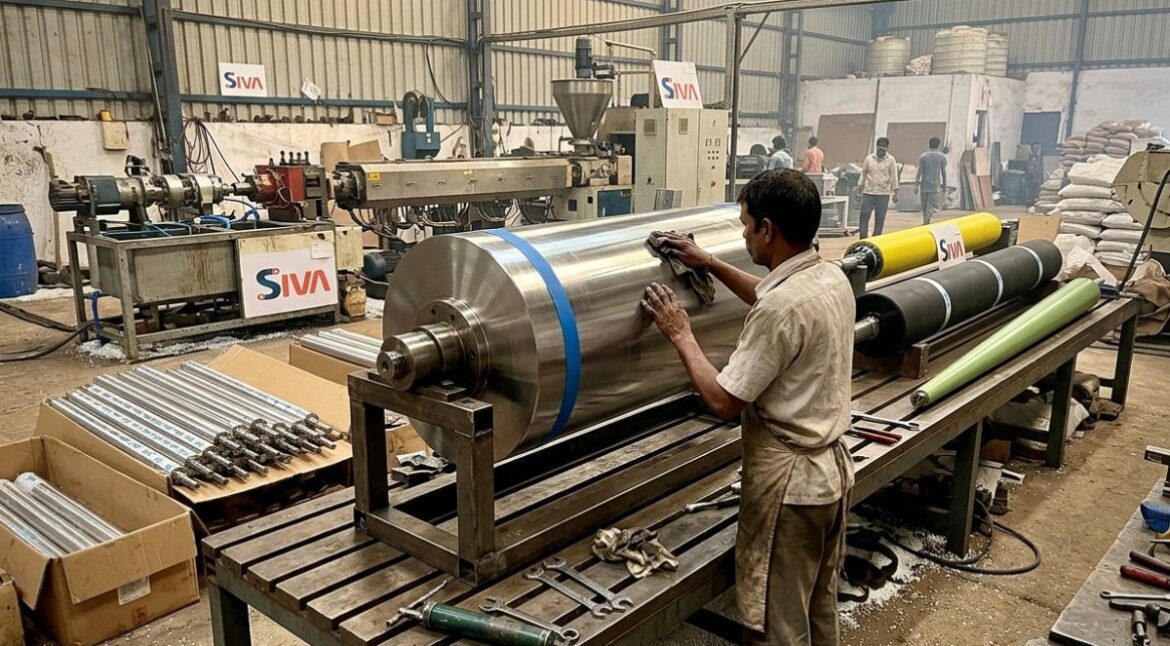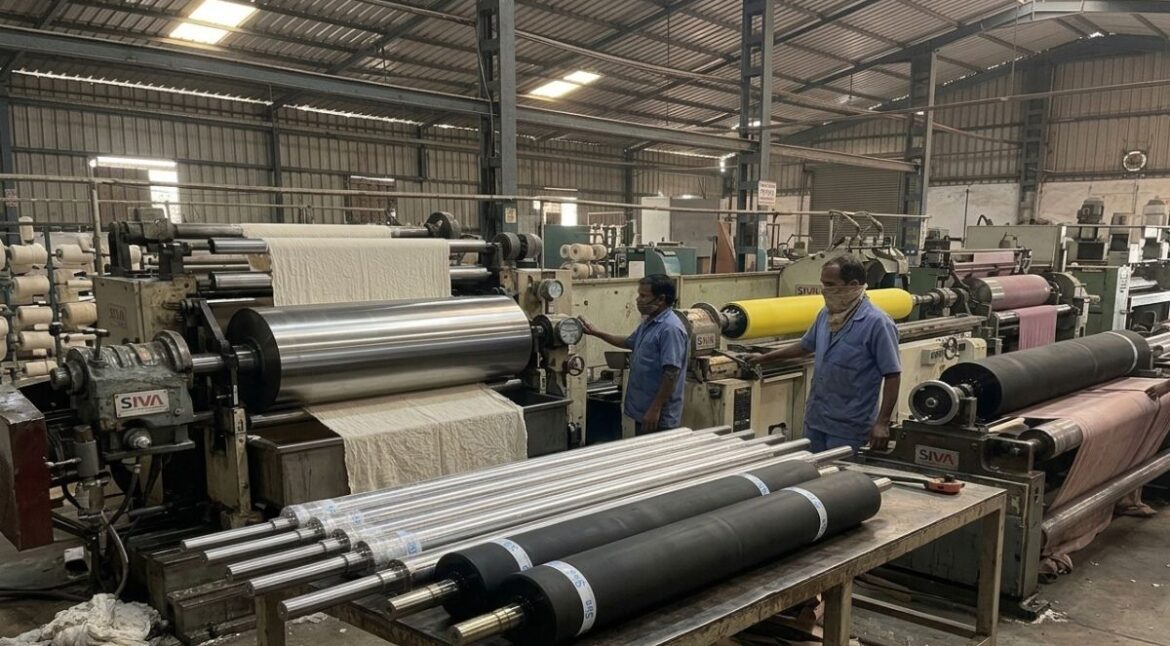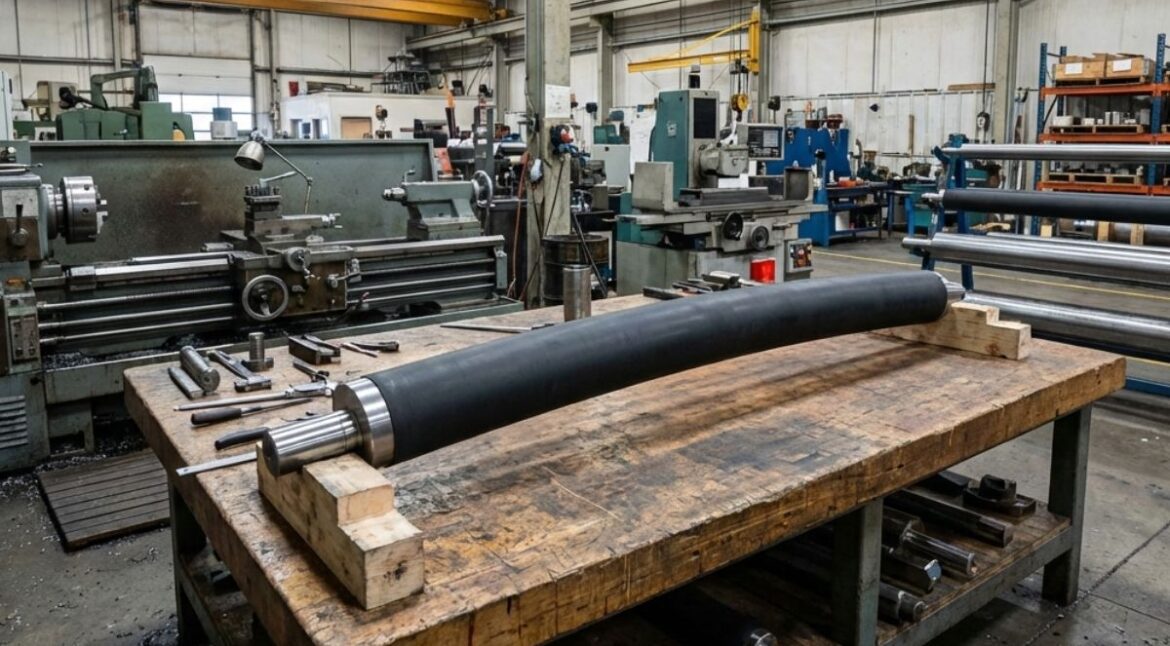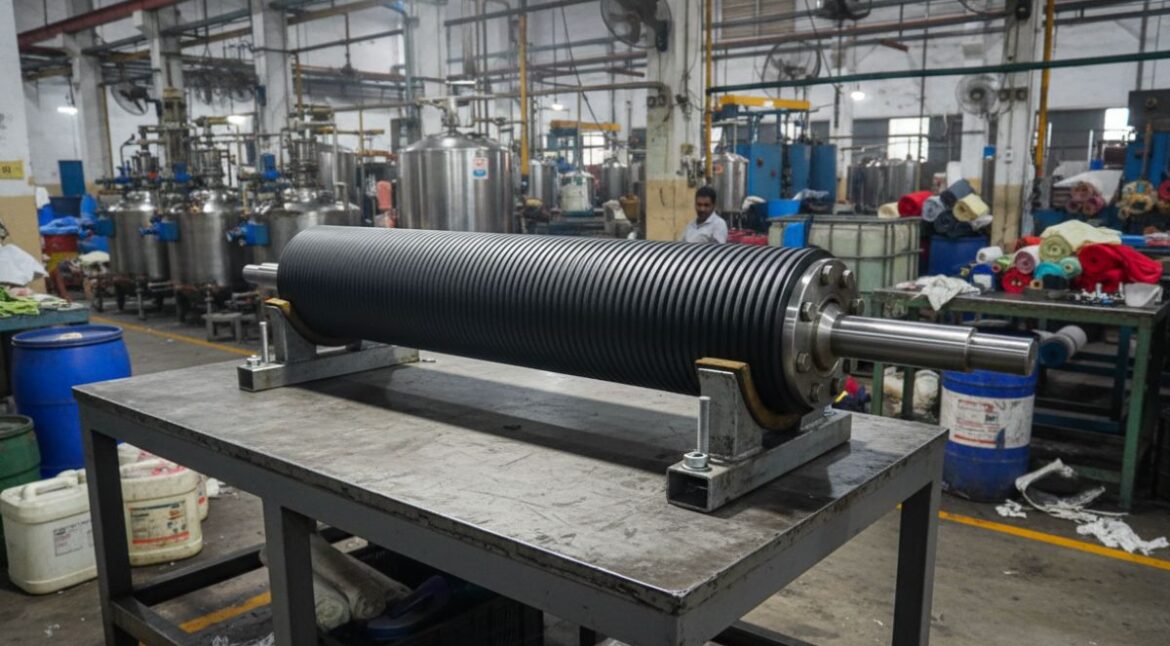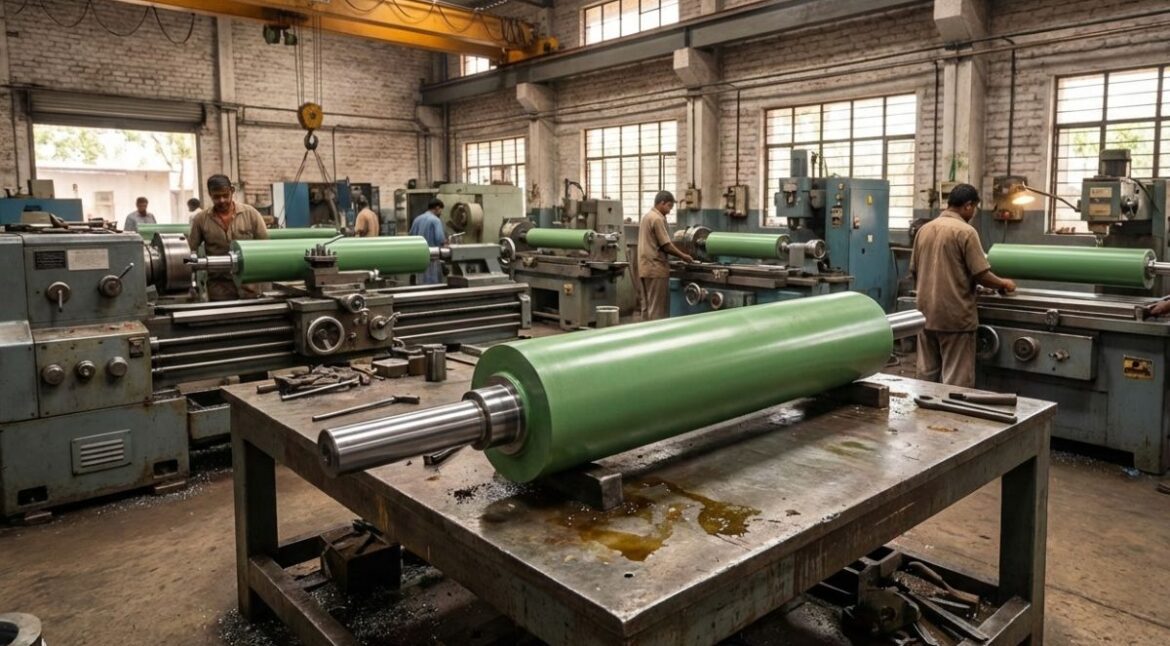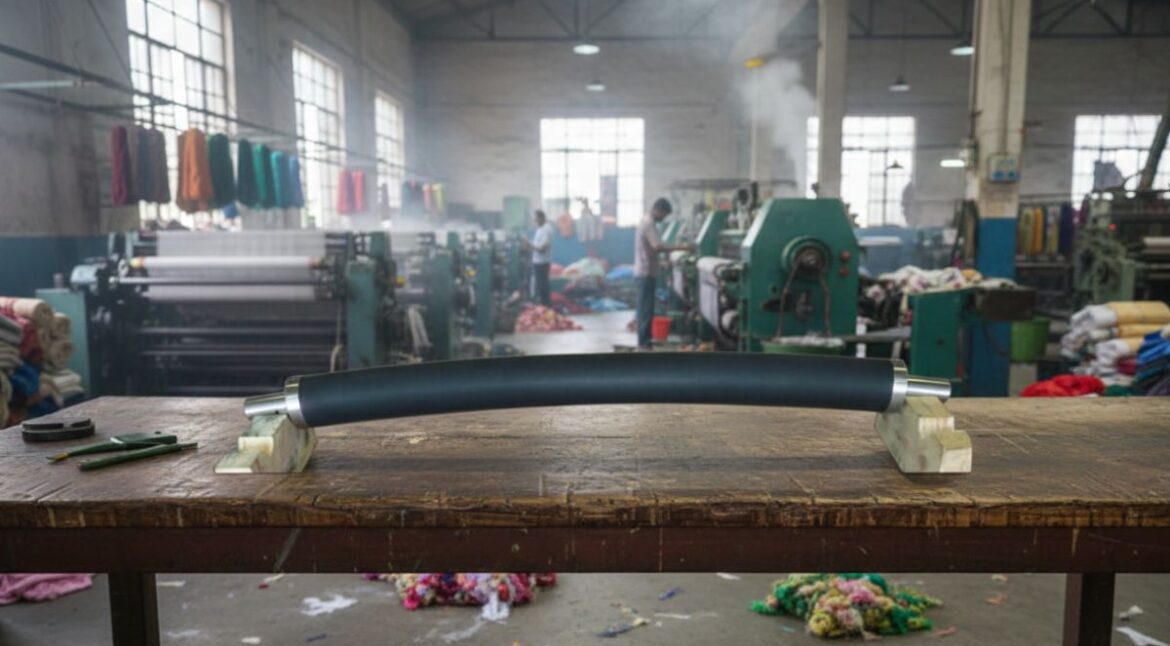
In the high-speed world of textile manufacturing, productivity is often measured by the seamless flow of fabric through processing machines. However, any plant manager knows that the biggest “productivity killers” are wrinkles, creases, and material overlaps. These minor defects lead to significant downtime, fabric wastage, and machine calibration issues.
When machines run continuously under heat, pressure, chemicals, and speed, the wrong Teflon roller leads to material sticking, uneven heat transfer, coating failure, frequent shutdowns, and rising maintenance costs.
In many industrial machines, rollers work silently but carry heavy responsibility. They guide material, control pressure, handle chemicals, and maintain surface contact every minute of operation. When standard rubber or metal rollers fail due to chemical attack, slippage, or fast wear, production losses follow quickly. This is where Ebonite Coated…
Whether you are dealing with paper, plastic film, textile, or non-woven materials—the “web” is the lifeline of your production. Any disruption in web tension, alignment, or surface smoothness can lead to catastrophic material waste, machine downtime, and loss of profit.
In the world of high-speed manufacturing, the smallest component often carries the heaviest responsibility. Whether you are running a massive paper mill, a high-precision offset printing press, or a sophisticated flexible packaging line, your productivity depends on one critical element: Industrial Rollers.
As mechanical engineers working deep inside the pulp and paper ecosystem, we’ve learned one simple truth the hard way: paper quality is rarely limited by chemistry alone. More often, it is limited by contact. The moment wet paper meets a roller—during coating, pressing, or calendering—physics takes control. Pressure distribution, surface…
In the Indian textile industry, yarn breakage is one of the most common yet costly problems faced by mills. Whether you run a spinning unit in Tamil Nadu, a weaving factory in Gujarat, or a processing plant in Maharashtra, frequent yarn breaks slow down production, increase waste, and reduce machine…
In the competitive landscape of the Indian printing and manufacturing industry, the difference between a high-profit facility and a struggling one often comes down to the quality of small components—specifically, your industrial rollers.
In India’s rapidly accelerating manufacturing sector, every minute of unexpected downtime translates directly into significant financial loss. As an industrial buyer, maintenance head, or production manager, you know the drill: the machinery is only as strong as its weakest component. And often, that weakest link is a standard, subpar roller…
In the fiercely competitive landscape of Indian manufacturing—from the high-speed packaging hubs in Pune to the heavy machinery units in Chennai and the processing plants across Gujarat—your machinery is your lifeline. Speed, precision, and relentless reliability are not optional; they are the bedrock of profitability. Yet, a silent enemy lurks…