Best Offset Printing Rubber Roller for Consistent Ink Transfer and Sharp Print Output
In the high-precision world of offset printing, the difference between a premium, crisp print and a rejected batch often comes down to a single, often overlooked component: the rubber roller. Whether you are running a high-speed newspaper press, a specialized label printing unit, or a commercial packaging facility, your rollers are the heart of the ink transfer process.
For printing press owners and machine operators in India, the challenge isn’t just finding a roller; it’s finding a high-quality printing roller that maintains dimensional stability under heat, resists chemical swelling, and ensures a microscopic level of precision in ink distribution. At Siva Rollers, a leading Rubber Roller Manufacturer in Ahmedabad, we understand that “good enough” rollers lead to expensive downtime.
This guide explores how selecting the right offset printing rubber roller can transform your production efficiency and why technical specifications like rubber hardness (Durometer) and compound integrity are non-negotiable for professional printers.
The Critical Role of Rubber Rollers in Offset Ink Transfer
Offset printing relies on the principle that oil and water do not mix. To achieve sharp print output, the ink transfer rollers must pick up a precise film of ink and deliver it to the plate with absolute uniformity. If the roller surface is too hard, the ink won’t lay down smoothly, leading to “mottling” or pale prints. If it is too soft, the dots gain too much size, resulting in blurry images and loss of fine detail.
Choosing a specialized offset ink transfer roller ensures that the ink remains at the correct viscosity. High-performance rollers from a trusted offset roller manufacturer are designed to handle the friction-induced heat of modern presses, preventing the rubber from “glazing”—a common issue where the roller becomes shiny and loses its ability to grip the ink.
How Quality Rollers Solve Common Printing Problems
- Eliminating Ghosting: Properly aligned and high-grade rollers provide even pressure, eliminating the faint “ghost” images that plague lower-quality setups.
- Preventing Scumming: By maintaining the perfect ink-water balance, professional-grade dampening rollers ensure non-image areas stay clean.
- Reducing Dot Gain: Correct rubber hardness (measured in Shore A) allows for the sharpest possible halftone dots, which is critical for high-end commercial and label printing.
Choosing the Best Offset Printing Roller
When evaluating rollers for the printing industry, several technical parameters determine the longevity and output quality of the product.
1. Understanding Rubber Hardness (Shore A)
Hardness is perhaps the most vital attribute. For most offset applications, the Shore A scale is used:
- Soft Rollers (20–40 Shore A): Typically used in dampening systems or for delicate substrates where high flexibility is required to absorb surface irregularities.
- Medium Rollers (45–65 Shore A): The standard for most ink distribution and form rollers, providing a balance between ink release and durability.
- Hard Rollers (70+ Shore A): Used in high-speed rotary presses or specific industrial coating applications where resistance to high pressure is required.
At Siva Rollers, we provide custom durometer settings to match the specific speed and ink type of your machine, ensuring that the “nip” (the contact point between rollers) is always optimized.
2.Resistance to Inks and Wash-up Solvents
Standard offset inks contain aliphatic hydrocarbons, and UV inks contain aggressive monomers. A cheap rubber roller will swell or shrink when exposed to these chemicals. Our rubber compounds are engineered to resist chemical absorption, ensuring that the roller diameter remains constant throughout its lifecycle. This dimensional stability means fewer manual adjustments for your operators and a significant reduction in wasted setup time.
3. Heat Management and Hysteresis
As press speeds increase, internal friction within the rubber generates heat. This phenomenon, known as hysteresis, can cause the rubber to soften mid-run, leading to inconsistent color density. High-quality printing rollers from a specialist manufacturer like Siva Rollers use synthetic compounds with low-heat build-up characteristics, allowing for 24/7 operation without quality degradation.
Why Indian Printers Trust Siva Rollers for Their Equipment
As a prominent Offset Printing Roller Manufacturer in Ahmedabad, Siva Rollers has spent over a decade perfecting the “elastomer-to-metal” bond. We don’t just supply rubber; we provide a precision-engineered industrial component.
Precision Grinding and Dynamic Balancing
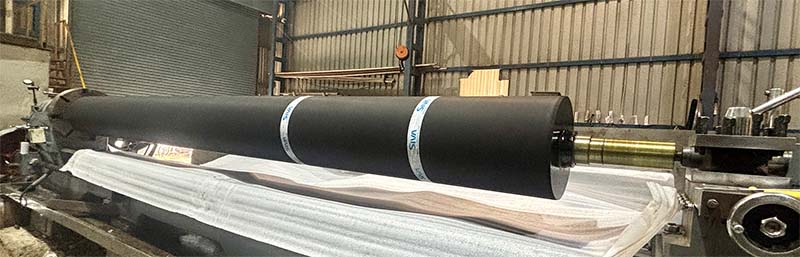
A roller that isn’t perfectly cylindrical or balanced will cause vibration. This vibration translates into “banding” on your printed sheets—unsightly horizontal lines that ruin commercial jobs. We utilize advanced CNC grinding technology to ensure that every offset press roller we produce has a surface finish with microscopic tolerances.
Customization for Every Press Type
Whether you operate a Heidelberg, Komori, Mitsubishi, or a locally manufactured web offset press, the requirements differ. We offer:
- Ink Form Rollers: For precise laydown on the plate.
- Distributor Rollers: For breaking down the ink into a fine, consistent film.
- Dampening Rollers: With specialized hydrophilic properties to manage fountain solutions.
- UV-Specific Rollers: Engineered specifically for the unique demands of UV-curing inks and coatings.
Applications of Offset Printing Rubber Rollers
High-quality Rollers for Printing Industry are widely used in:
- Commercial printing presses
- Newspaper printing units
- Packaging and carton printing
- Label printing machines
- Flexible packaging industry
- Industrial printing systems
Each application demands precision, consistency, and reliability—qualities that only a premium Offset Ink Transfer Roller can deliver.
Maximizing the Lifespan of Your Printing Rubber Rollers
Even the best rollers require proper care. To ensure consistent ink transfer and sharp print output for years, follow these industrial best practices:
- Daily Cleaning: Use only recommended wash-up solvents. Harsh chemicals can strip the plasticizers from the rubber, leading to premature cracking.
- De-glazing: Periodically use a de-glazing paste to remove calcium deposits and dried ink residues that accumulate in the “pores” of the rubber.
- Correct Setting: Never over-set the nip pressure. Excessive pressure creates heat, which ruins the roller and puts unnecessary strain on the press bearings.
- Storage: Store spare rollers in a cool, dark place, ideally wrapped in UV-protective paper to prevent ozone cracking and surface hardening.
Investing in Quality is Investing in Profit
For a printing business, the “cost” of a roller isn’t the purchase price—it’s the cost of the downtime, the wasted paper, and the lost clients due to poor quality. By choosing a high-quality printing roller from a specialized Rubber Roller Manufacturer in India, you are securing the most critical link in your production chain.
Siva Rollers provides the technical authority and manufacturing excellence required by today’s competitive B2B printing landscape. From consistent ink transfer to sharp, vibrant print output, our rollers are designed to keep your presses running at peak performance.
Ready to Upgrade Your Print Quality?
Stop struggling with ink inconsistency and frequent roller replacements. Partner with Siva Rollers, the trusted name for industrial rollers in Ahmedabad.
Contact Siva Rollers today for a technical consultation or a custom quote.
Contact Us
Emial : info@sivarollers.com
Phone Number :
FAQs
The best rubber roller for offset printing is a medium hardness (45–65 Shore A) ink transfer roller made from high-quality, solvent-resistant rubber compounds. It should provide uniform ink distribution, dimensional stability, and heat resistance to ensure consistent print quality.
Rubber roller hardness (measured in Shore A) directly affects print quality.
- Too hard: Causes poor ink transfer and mottling
- Too soft: Leads to dot gain and blurry prints
Choosing the correct hardness ensures sharp images, proper ink film thickness, and consistent output.
For most offset printing applications:
- 45–65 Shore A: Ideal for ink form and distribution rollers
- 20–40 Shore A: Suitable for dampening rollers
- 70+ Shore A: Used in high-speed or heavy-duty applications
The right hardness depends on press speed, substrate, and ink type.
Rubber rollers control how ink is picked up, distributed, and transferred to the printing plate. High-quality rollers ensure:
- Even ink film thickness
- Stable ink viscosity
- No streaking or uneven coverage
This results in sharp, consistent, and high-resolution prints.
Ghosting occurs due to uneven ink distribution or improper roller pressure. High-quality rubber rollers with precise alignment and uniform surface finish help eliminate ghosting by maintaining consistent ink flow across the press.
Rubber rollers swell or shrink due to exposure to inks and wash-up solvents containing hydrocarbons or UV chemicals. Poor-quality rollers absorb these chemicals, leading to dimensional changes. Premium rollers use chemical-resistant compounds to maintain size and performance.
Heat generated during high-speed printing (hysteresis) can soften the rubber, causing inconsistent ink transfer and color variation. High-performance rollers are designed with low heat build-up compounds, ensuring stable operation even in continuous production.
Common signs include:
- Glazing (shiny surface)
- Cracking or hardening
- Uneven ink transfer
- Increased dot gain or banding
Replacing worn rollers ensures consistent print quality and reduced downtime.
To extend roller life:
- Clean daily with recommended solvents
- Avoid excessive nip pressure
- Perform periodic de-glazing
- Store in a cool, dark environment
Proper maintenance ensures longer service life and consistent performance.
A trusted manufacturer like Siva Rollers provides:
- Custom Shore A hardness
- Precision grinding and dynamic balancing
- Chemical and heat-resistant compounds
- Application-specific roller design
This ensures higher productivity, reduced waste, and superior print quality.