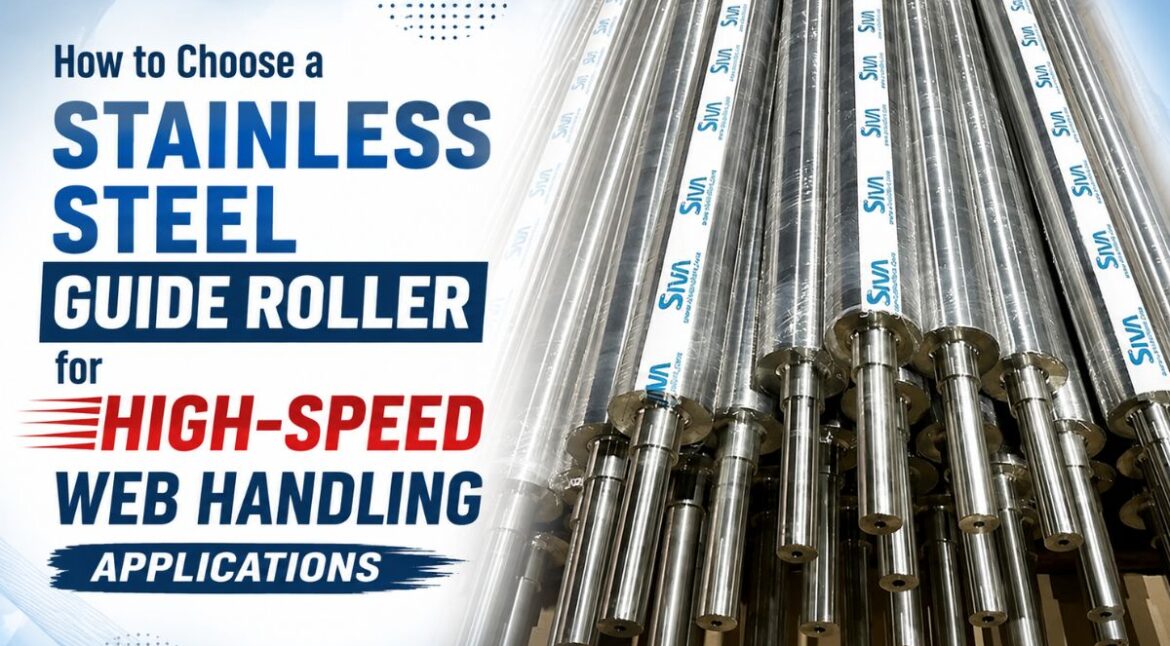
How to Choose a Stainless Steel Guide Roller for High-Speed Web Handling Applications
High-speed web handling is a delicate balance of tension, speed, and precision. Whether you are running flexible packaging films, high-grade paper, non-woven fabrics, or thin metal foils, every single component along the web path affects your final product quality. Among these components, the humble guide roller plays a far bigger role than many plant operators realize.
When machine speeds increase, standard rollers often reveal their hidden weaknesses. You start noticing minor web flutter, subtle surface scratches, edge misalignment, or unexpected tension spikes. Often, the root cause traces straight back to an improperly specified guide roller.
Choosing the right Stainless Steel Guide Roller requires looking beyond basic dimensions. It demands an understanding of how stainless steel behaves under continuous web friction, how roller rotation affects delicate films, and why off-the-shelf alternatives frequently fail on high-speed lines.
Here is a practical, step-by-step guide to help you choose the ideal stainless steel guide roller for your high-speed web handling setup, ensuring consistent output and minimal line stoppages.
Why High-Speed Web Lines Demand Stainless Steel
Guide rollers can be made from various materials, including aluminum, carbon steel, and specialized polymers. However, high-speed converting and printing processes place unique demands on machinery that make stainless steel the material of choice for demanding applications.
1. Superior Corrosion and Chemical Resistance
In web handling processes like coating, slitting, laminating, and wet-end paper converting, rollers are frequently exposed to solvents, adhesives, moisture, inks, and cleaning chemicals. Standard steel rollers require surface coatings that can chip, peel, or wear off over time. A quality stainless steel roller provides solid, homogenous protection throughout its body, preventing chemical pitting and rusting.
2. Structural Rigidity Without Flexing
At high operating speeds, web tension creates continuous bending forces on guide shafts and roller shells. If a roller flexes even slightly under tension, the web will naturally migrate toward the center or edges, leading to wrinkles and registration errors. Stainless steel delivers high structural strength, preventing subtle sagging across wider web widths.
3. Long-Term Surface Integrity
Soft metal rollers can easily develop tiny nicks, dents, or scratches from blade contact, airborne dust, or accidental operator contact. Any tiny imperfection on a roller surface gets repeated thousands of times on your web roll. Stainless steel offers hard, durable surface characteristics that withstand daily wear and tear.
Key Factors to Evaluate When Selecting a Stainless Steel Guide Roller
Selecting the right roller is not about picking a standard item from a catalog. It involves matching the roller’s physical traits to your specific line conditions.
1. Rotational Smoothness and Drag Reduction
On high-speed lines, light-gauge substrates (such as thin PE/PET films or light tissue papers) require extremely low rotational drag. If a guide roller takes too much effort to turn, the fast-moving web will slide across the roller surface instead of driving it smoothly. This web slippage causes scuffing, static buildup, and tension variation.
When evaluating a roller, consider:
- Bearing Integration: High-quality internal or external bearings with low-friction lubrication allow the roller to spin freely at startup and stay steady at top speeds.
- Shell Weight vs. Strength: A lighter shell turns more easily, but it must remain sturdy enough not to deflect under working tension. Experienced roller engineering achieves this ideal balance.
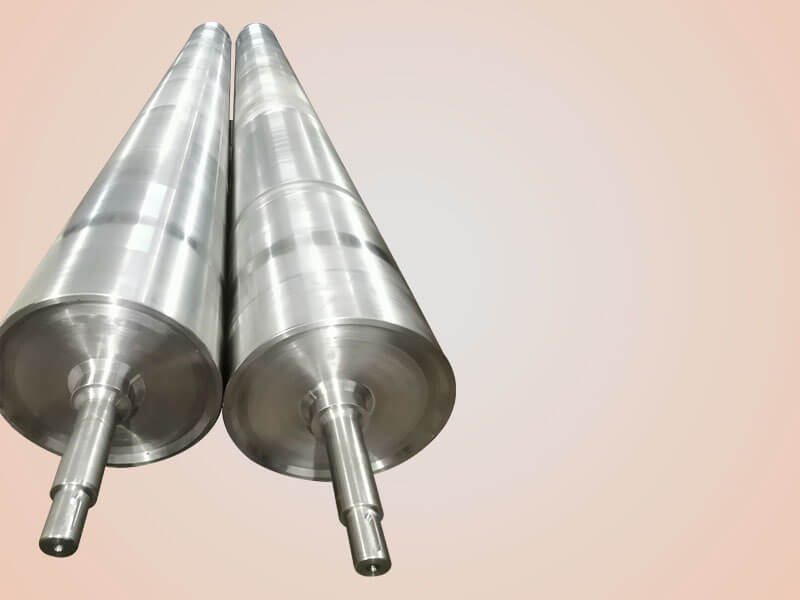
2. Dynamic Stability at Top Speeds
A roller that feels fine when spun by hand can start vibrating severely once mounted on a machine running at production speed. High-speed rotation amplifies any slight weight imbalance across the length of the roller.
Excessive vibration damages web alignment, accelerates bearing wear, and introduces chatter marks onto sensitive coatings. Always ensure your roller manufacturer performs dynamic balancing at speeds that match or exceed your actual working RPM.
3. Surface Finish and Web Friction
The surface texture of a Stainless Steel Guide Roller determines how it interacts with your material:
- Mirror or Polished Finishes: Ideal for preventing adhesive build-up or when handling non-scratch-sensitive materials. However, ultra-smooth polished surfaces can sometimes trap a layer of air beneath fast-moving smooth films, causing the film to float and lose traction.
- Matte or Satin Finishes: Help vent air trapped between the web and the roller face, maintaining continuous traction without sticking.
- Specialized Grooving: Spiral, helical, or Rulon-style grooves can be machined directly into the stainless steel shell to push trapped air outward and help spread wide webs gently without causing wrinkles.
4. Thermal and Environmental Resilience
If your web line runs through drying ovens, heated laminating stations, or cold damp rooms, thermal expansion becomes a major consideration. Temperature shifts cause metals to expand and contract. If the roller housing and shaft assembly do not accommodate this thermal movement, bearings can bind, causing complete roller failure.
The Hidden Risk of Generic and Off-the-Shelf Rollers
Many plant managers faced with a tight budget or quick turnarounds consider off-the-shelf standard rollers or low-cost imported alternatives. While generic options might look fine out of the box, they often introduce persistent operational headaches over time.
Where Generic Rollers Fall Short:
- Inconsistent Wall Thickness: Low-cost rollers are often machined from commercial-grade tubing with uneven internal walls. This hidden weight imbalance causes high-speed vibration that cannot be corrected easily.
- Inferior Material Quality: Generic stainless steel often contains microscopic impurities, making it more vulnerable to chemical pitting when exposed to industrial solvents.
- Standardized Bearing Housings: Mass-produced rollers use basic bearing mounts that are not sealed properly against dust, ink mist, or washdown fluids, leading to early bearing failure.
- Lack of Application Tuning: A generic supplier sells the same roller design to a paper mill as they do to a delicate film converter. In reality, these two applications need completely different surface treatments, shell weights, and rotation characteristics.
Custom-engineered rollers built specifically for your line parameters eliminate these subtle defects, protecting your overall machine efficiency and preventing costly material scrap.
Practical Questions to Ask Before Ordering Your Roller
To make sure you get the exact roller your process needs, gather these details before speaking with your manufacturer:
- What is your material type and thickness? Thin films need lightweight, low-drag rollers, while heavy paperboards or textiles require higher load capability.
- What is your maximum line speed? Knowing your operational speed helps the manufacturer determine the correct dynamic balancing standard.
- What is the working environment? Mention any exposure to liquids, washdown chemicals, high temperatures, or corrosive vapors.
- Is static electricity an issue on your line? Stainless steel is conductive, but proper grounding through the shaft and bearing assembly is needed to discharge static safely.
- How wide is your web path? Wider webs require careful shaft design to prevent sagging at the center of the roll span.
Partnering with a Trusted Stainless Steel Roller Manufacturer
Selecting the right roller is as much about choosing the right manufacturing partner as it is about picking the right design. A reliable manufacturer does not just take an order—they study your operational setup, understand your substrate requirements, and craft a solution tailored to your line’s demands.
As an established Stainless Steel Roller Manufacturer, Siva Rollers has earned a solid reputation across India’s converting, printing, and packaging industries. With years of practical shop-floor experience, Siva Rollers focuses on delivering engineered precision rather than mass-market compromises.
Why Siva Rollers is the Partner Your Factory Needs to Succeed
At Siva Rollers, we believe that manufacturing high-quality industrial rollers is not just a mechanical job—it is a commitment to keeping your business profitable.
Based in India, we have built a solid reputation as a premier stainless steel roller manufacturer and custom-engineering partner. We do not just ship products; we build long-term relationships with factory owners in India and globally, helping them minimize downtime and scale up their production.
Why Leading Manufacturers Rely on Siva Rollers in India:
- Proven Application Expertise: Understanding how web behavior changes across film, paper, foil, and non-woven substrates.
- Precision Shop-Floor Craftsmanship: Every Steel Roller India processors order from Siva Rollers undergoes detailed inspection for straightness, surface uniformity, and rotational accuracy.
- Custom Engineering Support: From low-inertia hollow shells to heavy-duty solid shaft designs, rollers are engineered around your specific machinery setups.
- Honest Material Integrity: Using high-grade, certified stainless steel stock to ensure long-term corrosion resistance and durability.
Instead of dealing with recurring web alignment issues, wrinkles, or high-speed line stoppages, working with an experienced manufacturer ensures your guide rollers perform smoothly day after day.
- Email Inquiry: info@sivarollers.com
- Phone / WhatsApp: +91-75070 10009
- Factory Location: India (Proudly Serving Clients Globally)
- Explore Our Solutions: Visit Siva Rollers Contact Page
FAQs
A stainless steel guide roller is used to guide, support, align, and smoothly transport continuous web materials through high-speed production lines. It is commonly used for flexible films, paper, foil, textiles, non-wovens, printing, coating, laminating, slitting, and converting applications where smooth web movement and corrosion resistance are important.
Stainless steel guide rollers are suitable for high-speed web handling because they offer structural rigidity, corrosion resistance, durable surface integrity, and reliable performance under continuous rotation. When properly engineered and dynamically balanced, they can help reduce vibration, web flutter, tension variation, and alignment problems at high operating speeds.
Choose a stainless steel guide roller according to your web material, web width, material thickness, maximum line speed, operating temperature, chemical exposure, required surface finish, bearing arrangement, and roller load. These factors determine the appropriate roller construction, surface treatment, rotational characteristics, and balancing requirements for your application.
The best surface finish depends on the web material and application. Polished or mirror finishes can be suitable where a smooth contact surface is required, while satin or matte finishes can improve traction in certain high-speed film applications. Specialized grooves may also be used to help release trapped air and improve web spreading. The finish should therefore be selected according to the substrate and web-handling conditions.
A properly designed stainless steel guide roller can help reduce conditions that contribute to wrinkles, web migration, and misalignment. Correct roller rigidity, straightness, dynamic balance, surface finish, shaft design, and rotational smoothness are important. However, roller selection should be considered together with the complete web-handling system.
Dynamic balancing is important because even a small imbalance becomes more significant as roller speed increases. An improperly balanced guide roller can generate vibration, bearing wear, web flutter, alignment problems, and surface defects. For high-speed applications, the roller should be balanced according to the actual operating RPM or an appropriate higher balancing speed.
Thin PE, PET, and other lightweight films generally require a guide roller with smooth rotation, low rotational drag, suitable surface finish, and controlled roller weight. The roller should also have sufficient rigidity to avoid deflection while maintaining stable contact with the moving film. The final design should be selected according to film thickness, web width, line speed, and process conditions.
Yes. Stainless steel guide rollers are well suited to applications exposed to moisture, cleaning fluids, chemicals, inks, adhesives, and other corrosive conditions. Stainless steel provides corrosion resistance throughout the roller material, making it a suitable choice for demanding converting, coating, printing, paper, and wet-process environments.
Before ordering, provide the manufacturer with the web material and thickness, web width, maximum line speed, roller dimensions, operating temperature, chemical exposure, machine arrangement, bearing requirements, and desired surface finish. Information about static electricity, washdown conditions, and the roller's position in the web path can also help the manufacturer develop the correct roller design.
Generic guide rollers may use standardized dimensions, bearing housings, wall thicknesses, or surface finishes that are not optimized for a specific production line. At high speeds, these limitations can contribute to vibration, excessive drag, bearing failure, web slippage, wrinkles, or alignment issues. Application-specific engineering is generally more suitable when web speed, substrate sensitivity, or operating conditions are demanding.
Yes. Stainless steel guide rollers can be custom manufactured according to the machine's roller dimensions, web width, operating speed, substrate, environmental conditions, shaft arrangement, bearing requirements, and surface finish. Custom engineering allows the roller to be matched more closely to the actual production requirements instead of relying on a standard roller design.
Siva Rollers (Siva Engineering Works) manufactures custom stainless steel guide rollers for web handling applications across India. The rollers can be engineered for industries including printing, packaging, paper, flexible films, textiles, non-wovens, coating, laminating, and converting. Buyers can share their roller dimensions, web material, width, line speed, and operating conditions with Siva Rollers to discuss the appropriate guide roller solution and request a quotation.