How Quality Textile Industry Rollers Prevent Fabric Wrinkles and Rejections
In the high-stakes world of global fabric manufacturing, the margin between a “Grade A” premium export and a “B-Grade” rejection is often thinner than the fabric itself. For textile mill owners and production managers, profitability is tied directly to the efficiency of the processing line. At the heart of this efficiency lies a critical, yet often overlooked component: Textile Industry Rollers.
Whether you are operating a high-speed dyeing range in Surat or a specialized finishing unit in Europe, the quality of your rollers dictates the quality of your output. Minor misalignments, inconsistent pressure, or surface irregularities can lead to permanent creases, “baggy centers,” or uneven dye absorption. These defects aren’t just aesthetic flaws; they are financial drains that lead to massive material waste.
As a premier textile roller manufacturer in India, Siva Rollers has spent decades perfecting the engineering behind high-performance industrial rollers for the textile industry. In this comprehensive guide, we explore how the right rollers serve as your primary defence against fabric rejections and how they can transform your production ROI.
The Hidden Cost of Subpar Rollers: Wrinkles and Rejections
Fabric wrinkles occur when there is an uneven distribution of web tension across the material width. If your textile processing rollers possess even a micron-level surface irregularity or improper dynamic balancing, the fabric will “walk,” bunch up, or skew.
Common Causes of Fabric Rejections:
- Crease Marks: Often formed during high-heat processes like stenters or drying ranges due to poor guiding or improper tension. Once heat-set, these wrinkles are permanent.
- Uneven Dyeing (Shade Variation): Caused by inconsistent “Nip” pressure from worn-out or poorly crowned textile machine rollers in padding mangles.
- Fabric Slippage: Resulting from a lack of surface friction, leading to misalignment during high-speed printing or coating.
- Surface Scratches and Fraying: Caused by rough or corroded guide rollers that catch delicate fibers.
By investing in high-quality textile rollers for fabric processing, manufacturers eliminate these variables, ensuring a smooth, flat, and perfectly aligned web from the initial scour to the final fold.
Essential Rollers Used in the Textile Industry
To maintain a defect-free line, each stage of textile processing requires specialized mechanical properties. Based on our extensive manufacturing experience at Siva Rollers, here are the essential rollers that define a modern, high-efficiency mill.
1. Expander Bow Rollers (The “Anti-Wrinkle” Specialists)
Commonly known as anti-wrinkle rollers, these are the most critical components for web spreading. They feature a distinct “banana” or bowed shape. As the fabric passes over the curve, the roller gently stretches the material from the center toward the edges.
- Best for: Removing lengthwise wrinkles before printing, dyeing, or calendering.
- Siva Advantage: Our bow rollers are available in both fixed and adjustable bow designs, ensuring they can handle varying fabric GSMs and widths without causing “edge-stretch.”
2. Rubber Coated Rollers
These are the workhorses of the industry. At Siva Rollers, we utilize custom-formulated compounds—including NBR, EPDM, Silicone, and Neoprene—tailored to specific chemical and thermal environments.
- Best for: Padding mangles, squeeze rollers, and washing units.
- Key Feature: High resilience and resistance to “swelling” when exposed to dyes and textile chemicals.
3. Ebonite Scroll Rollers
Specifically designed for delicate wrinkle removal, Ebonite rollers feature left-hand and right-hand grooving. These grooves “stretch” the web toward the edges, making them indispensable for lightweight or high-twist fabrics that are prone to curling.
- Best for: Cloth processing machines where a “hard touch” is required to eliminate edge-curling.
4. Stainless Steel Guide Rollers
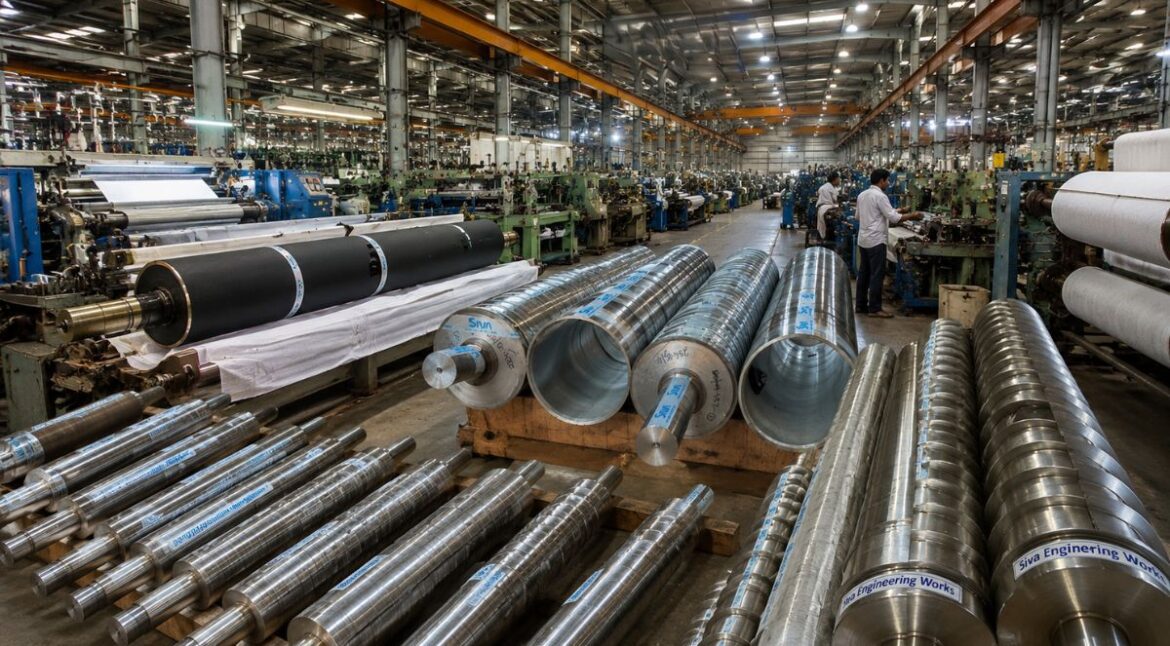
For wet processing, bleaching, and chemical-heavy environments, Stainless Steel Guide Rollers are mandatory. They offer superior corrosion resistance and a polished, mirror-smooth surface that prevents fabric snagging.
- Siva Advantage: We use high-grade SS 304 or SS 316 cladding to ensure longevity even in the most acidic environments.
5. Calender and Heat Transfer Rollers
Finishing is where the fabric gains its market value. Precision-engineered Calender Rollers apply uniform temperature and pressure. If the heat transfer is uneven, the fabric may suffer from thermal distortion or “shiny spots.”
- Best for: Adding sheen, softness, or specific textures to the finished fabric.
Why Choose Siva Rollers? A Trusted Textile Roller Manufacturer in India
Based in Ahmedabad, the textile hub of India, Siva Rollers combines traditional engineering expertise with modern CNC technology. We don’t just supply parts; we provide precision-engineered solutions that meet global standards.
1. Precision Engineering & 5-Micron Tolerance
A roller that isn’t perfectly balanced will vibrate at high speeds, creating “chatter marks” on the fabric. Our rollers undergo rigorous dynamic balancing and CNC grinding to ensure a tolerance of up to 5 microns. This level of precision provides the smoothest fabric flow possible, even at speeds exceeding 150 meters per minute.
2. Custom Material Compounding (The Science of Grip)
We understand that cotton, polyester, and technical textiles all react differently to friction. Our engineers develop custom rubber and elastomer compounds—ranging from 10 Shore A to 95 Shore D hardness—to ensure your rollers provide the perfect “grip” without damaging the fiber.
3. Global Export Capability
While we are a dominant textile roller supplier in the Indian market, our reach is global. We adhere to international packing and quality documentation standards, ensuring our rollers perform flawlessly in textile hubs across Asia, Europe, and Africa. We ship via major ports like Mundra, ensuring timely delivery to international clients.
Textile Roller Price India vs. Long-Term Value
When searching for the textile roller price in India, many procurement managers make the mistake of choosing the lowest upfront quote. However, in the textile world, the “cheap” roller is often the most expensive.
The True Cost of Cheap Rollers:
- High Rejection Rates: One rejected batch of fabric can cost more than the price of ten high-quality rollers.
- Frequent Downtime: Replacing a failed roller takes hours, during which your entire production line stands still.
- Energy Inefficiency: Poorly balanced rollers increase the load on your motors, leading to higher electricity bills.
Siva Rollers offers competitive pricing with an ROI-focused approach. Our rollers are designed to last 2x to 3x longer than standard alternatives, significantly lowering your “Cost Per Meter” of fabric produced.
How to Prevent Wrinkles: Best Practices for Mill Managers
- Synchronized Tension: Ensure all textile processing rollers in a range are synchronized in speed to prevent “jerking” which causes tension-based wrinkles.
- Regular Alignment Checks: Even the best industrial rollers for the textile industry will fail if the machine frame is misaligned. Perform monthly laser alignment checks.
- Surface Maintenance: Clean your rubber and ebonite rollers regularly to prevent chemical buildup, which can create uneven pressure points (Nip variation).
- Partner with the Right Manufacturer: Work with a textile roller manufacturer in India who understands the chemistry of your process, not just the mechanics of the roller.
Transform Your Production Quality Today
Preventing fabric wrinkles and rejections isn’t just about having the latest machinery; it’s about the quality of the contact points. High-precision textile industry rollers are the unsung heroes of a profitable mill. By ensuring perfect tension, grip, and alignment, you protect your brand reputation and your bottom line.
Whether you are looking to upgrade your existing line or are setting up a new facility, Siva Rollers provides the expertise and the hardware to ensure your fabric is always “Grade A.”
Ready to eliminate fabric rejections and optimize your mill? Siva Rollers provides customized solutions for all your fabric processing needs. From high-speed anti-wrinkle rollers to heavy-duty calender rollers, we are your one-stop-shop for industrial excellence.
Contact Siva Rollers Today for a Free Quote!
Contact US : +91 75070 10009 , info@sivarollers.com
FAQs
Fabric wrinkles are primarily caused by uneven web tension, misaligned rollers, and inconsistent pressure (nip variation). Poor-quality textile rollers with surface irregularities or imbalance can cause fabric bunching, skewing, and permanent creases—especially during heat-setting processes.
High-quality textile rollers ensure uniform tension, smooth surface contact, and precise alignment across the fabric width. Specialized rollers like expander bow rollers spread the fabric evenly, preventing wrinkles before dyeing, printing, or finishing.
The most effective rollers for wrinkle prevention include:
- Expander Bow Rollers (Anti-wrinkle rollers)
- Ebonite Scroll Rollers
- Rubber Coated Rollers (for uniform pressure)
These rollers help maintain proper fabric alignment and eliminate creases during processing.
Low-quality rollers often have poor balancing, uneven surfaces, and inconsistent grip, leading to defects like crease marks, uneven dyeing, and fabric slippage. These issues directly increase rejection rates and production losses.
Nip pressure refers to the force applied between two rollers during fabric processing. Consistent nip pressure ensures uniform dye absorption and finishing quality, while uneven pressure causes shade variation and fabric defects.
Expander bow rollers have a curved (banana-shaped) design that gently stretches the fabric from the center to the edges. This eliminates wrinkles, prevents edge curling, and ensures a flat fabric surface before critical processes like printing or dyeing.
The best materials depend on the application:
- Rubber (NBR, EPDM, Silicone, Neoprene) – for grip and chemical resistance
- Ebonite – for anti-wrinkle and edge control
- Stainless Steel (SS 304/316) – for corrosion resistance in wet processing
Choosing the right material improves durability and fabric quality.
Textile mills can reduce rejections by:
- Using high-precision rollers with proper balancing
- Maintaining correct web tension and alignment
- Regularly cleaning and inspecting roller surfaces
- Partnering with a reliable textile roller manufacturer
High-performance textile rollers should have a tolerance of up to 5 microns. This ensures minimal vibration, smooth fabric flow, and defect-free processing even at high speeds.
Although premium rollers have a higher upfront cost, they:
- Reduce fabric rejection rates
- Minimize machine downtime
- Improve energy efficiency
- Last 2–3 times longer
This significantly lowers the overall cost per meter of fabric produced and increases ROI.