The Role of Ebonite Rubber Rollers in High-Speed Printing Presses
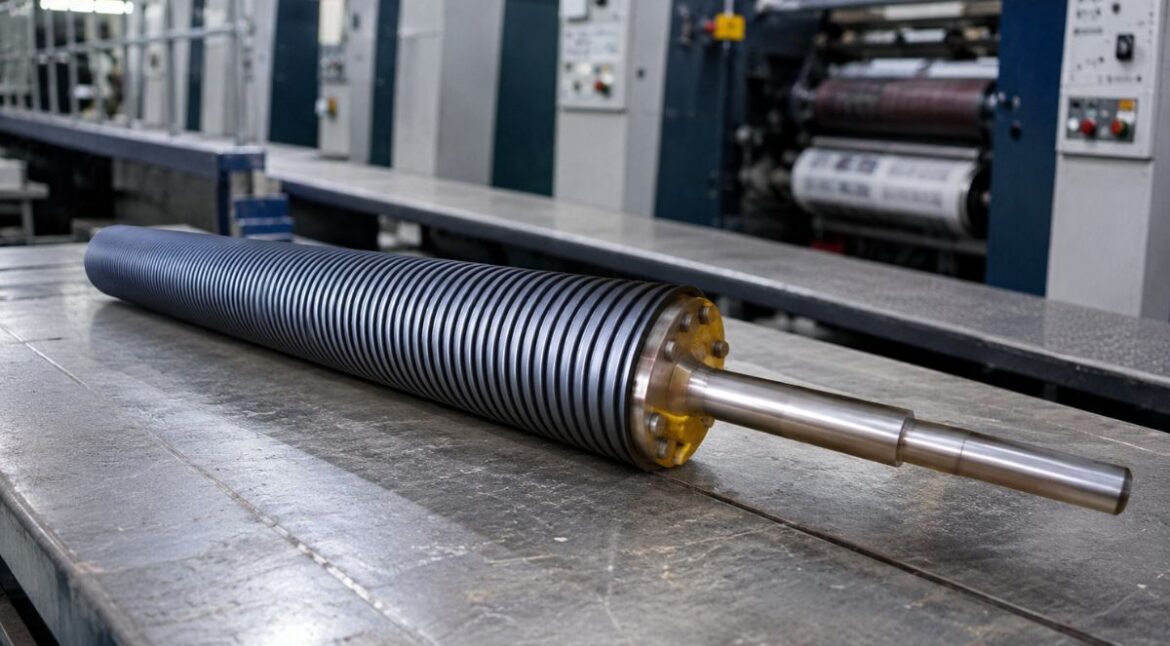
High-speed commercial printing operations constant face the threat of unexpected downtime, poor ink transfer, and rapid roller degradation. In modern offset, flexographic, and rotogravure presses running at speeds exceeding 800 meters per minute, standard elastomeric rollers often fail due to extreme friction, chemical attack from aggressive solvents, and thermal expansion. To overcome these critical bottlenecks, production managers globally are turning to the specialized properties of the Ebonite Rubber Roller as a foundational upgrade. When a press operates at peak capacity, maintaining absolute dimensional stability and a flawless ink-receptive surface is non-negotiable.
Using an Ebonite Rubber Roller resolves the common industry headache of roller swelling and structural distortion caused by continuous contact with oil-based inks, fountain solutions, and fast-drying wash solvents. Unlike traditional synthetic rubber compounds that absorb chemicals and lose their precise geometric profile over time, an Ebonite Coated Roller offers a highly vulcanized, near-impenetrable surface. This chemical inertness prevents the roller from growing in diameter during a long production run, thereby eliminating localized pressure spikes, protecting adjacent rollers, and maintaining a perfectly consistent ink film thickness.
For high-volume printing operations seeking both structural reliability and exceptional print clarity, sourcing from a dedicated Ebonite Roller Manufacturer like Siva Rollers ensures these components are engineered to withstand the demanding mechanical stresses of modern pressrooms. Based in India with a deeply established global export network, Siva Rollers manufactures precision-engineered rollers designed to optimise ink distribution, eliminate ghosting, and significantly lower the Total Cost of Ownership (TCO) for packaging converters and commercial printers worldwide.
Why High-Speed Printing Demands the Precision of an Ebonite Rubber Roller
The mechanics of a modern high-speed printing press leave zero room for error. When web speeds accelerate, the friction generated between the plate cylinder, the dampening system, and the ink distribution train rises exponentially. This friction generates internal heat, a phenomenon known in polymer engineering as hysteretic heat build-up.
Traditional elastomeric formulations suffer from thermal softening under these conditions. As the temperature rises, standard rubbers lose their durometer hardness, become sticky, and begin to transfer ink unevenly. This is where a high-quality Ebonite Rubber Roller changes the operational dynamic.
[Metal Core / Shaft]
│
├──► Hard Rubber Sub-Layer (For maximum core bonding)
│
└──► Engineered Ebonite Coating (Highly vulcanized, high-durability polymer)
│
└──► Micro-Precision Ground Surface (Optimal ink-receptivity)
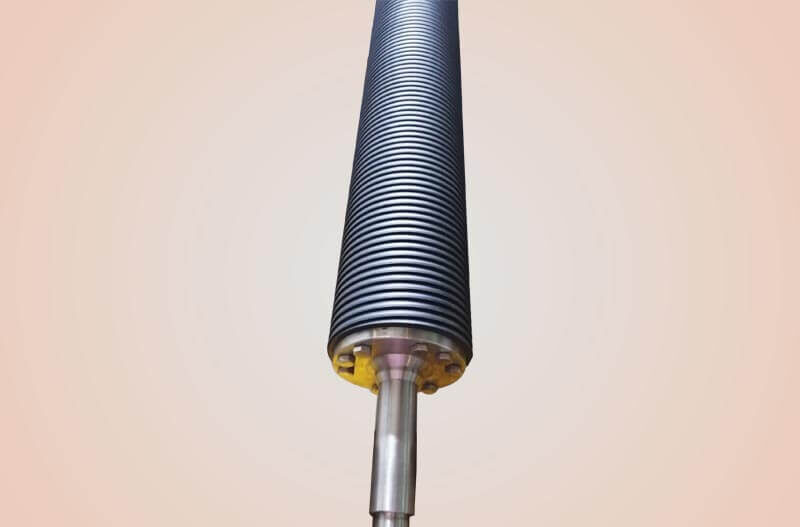
Ebonite is a specialized hard-rubber compound containing a high percentage of sulfur (typically 25% to 35%), which is thoroughly vulcanized at controlled temperatures. This intense cross-linking process transforms the elastomer into a thermosetting material with plastic-like hardness (often ranging from 75 to 90 Shore D) while retaining the structural resilience of rubber.
In a high-speed ink train, particularly in the distributor or oscillator positions, this hard, glassy finish acts as the perfect counterpart to softer, more compliant rubber rollers. The stark contrast in hardness between a soft distribution roller and a hard Ebonite Coated Roller creates a highly efficient shearing action. This shearing action breaks down the thixotropic structure of heavy printing inks, converting them into a fluid, highly uniform film that transfers seamlessly to the plate.
Combatting Chemical Attack and Roller Swelling in the Ink Train
One of the most persistent expenses in a packaging or publication printing facility is the premature replacement of a Printing Roller due to chemical swelling. Modern printing inks contain a complex cocktail of hydrocarbons, plasticizers, and esters. Furthermore, the aggressive solvents used during fast wash-up cycles can strip the plasticizers out of standard rubber rollers, leading to shrinkage, cracking, and eventual compounding failure.
An Ebonite Rubber Roller is fundamentally immune to this cycle of degradation:
- Saturated Polymer Network: Because the sulfur vulcanization process saturates the reactive double bonds within the rubber matrix, there are virtually no open chemical sites for solvents or ink oils to bind with or penetrate.
- Zero Volatile Loss: The material does not rely on added liquid plasticizers to maintain its hard, resilient state, meaning there are no additives to leach out during contact with aggressive UV-curable inks or cleaning agents.
- Excellent Acid and Alkali Resistance: In offset lithography, fountain solutions are carefully balanced chemically, often leaning slightly acidic. Ebonite resists both mild acidic and alkaline environments without showing signs of surface etching or oxidation.
By integrating an Ebonite Coated Roller into the ink distribution system, press operators can run continuously without worrying about daily adjustments to the roller nips. When a roller does not swell, the contact pressure remains constant, which directly translates to consistent color density from the first impression to the last.
Maximizing Ink-Receptivity and Eliminating Ghosting
In offset printing, “ghosting” is a critical print defect where a faint image from a preceding area of the plate appears in solid printed sections. This is almost always caused by inadequate ink replenishment on the form rollers or poor lateral distribution across the ink train.
An exceptionally engineered Ebonite Coated Roller excels at ink distribution due to its unique surface energy properties:
- Hydrophobic Surface Behavior: Ebonite is naturally hydrophobic (water-repellent) and highly oleophilic (oil-receptive). In an offset printing press where ink and water must remain carefully segregated, the ebonite surface completely rejects dampening water and attracts ink.
- Reduced Ink Stripping: When a hard roller has poor oil affinity, it can suffer from “ink stripping”—a phenomenon where fountain solution displaces the ink on the roller surface, leaving bare metal or bare rubber spots that cannot transfer ink. Ebonite’s inherent chemistry prevents this, ensuring a continuous, unbroken ink split.
- Optimized Micro-Texture: Premium manufacturers use advanced cylindrical grinding and polishing techniques to give the ebonite surface a controlled micro-roughness. This micro-texture holds a consistent reservoir of ink, allowing the oscillating roller to smooth out any localized ink depletion before it reaches the plate.
Why Partnering with a Specialized India-Based Ebonite Roller Manufacturer Matters
Choosing the right partner for your industrial roller supply chain is just as critical as choosing the correct technical compound. For global businesses, finding an Ebonite Roller Manufacturer that balances state-of-the-art polymer engineering with competitive manufacturing economics is the key to maintaining a profitable operation.
Siva Rollers, operating out of India, has spent decades refining the precise chemistry and mechanical machining required to produce world-class ebonite products. Here is how our production philosophy directly benefits your print room’s bottom line:
1. Advanced Dynamic Balancing and Core Preparation
At speeds exceeding several thousand rotations per minute, even a fraction of a millimeter of eccentricity or a slight weight imbalance can cause catastrophic press vibration. This vibration leads to “chatter marks” on the printed substrate, bearing damage, and accelerated wear across the entire press.
We utilize heavy-duty CNC cylindrical grinding machines and advanced dynamic balancing rigs to ensure that every roller we ship runs completely true. We inspect the underlying steel or aluminum cores for fatigue, sandblast them to achieve a perfect bonding profile, and apply proprietary adhesive primers to ensure the ebonite layer never delaminates from the metal shaft, even under intense centripetal force.
2. Tailored Compounding for Specific Press Environments
No two printing operations are identical. A press running packaging boards with water-based inks has vastly different mechanical demands than a commercial web offset press running heat-set solvent inks.
As a versatile Ebonite Roller Manufacturer, Siva Rollers customizes the sulfur-to-rubber ratio and curing cycle for every batch. This allows us to fine-tune the roller’s hardness, thermal conductivity, and impact resistance to match the exact make, model, and operating speed of your machinery.
3. Comprehensive Global Export and Logistical Capability
Based in India’s industrial manufacturing hub, Siva Rollers is strategically positioned to serve domestic print shops and international print conglomerates alike. We understand the complexities of global logistics, utilizing robust, export-grade wooden crating designed to protect the highly polished, mirror-like finish of our ebonite surfaces from moisture, salt air, and physical impacts during sea or air transit. Whether you are operating in Southeast Asia, Europe, the Americas, or the Middle East, our logistics team ensures seamless customs clearance and prompt door-to-door delivery.
Strategic Comparison: Ebonite vs. Alternative Hard Rollers
When outfitting a high-speed ink distribution system, engineers generally choose between three primary options for hard oscillating rollers: copper-plated rollers, chrome-plated rollers, and Ebonite Coated Rollers. While each has its historical place in the industry, ebonite consistently emerges as the most versatile and cost-effective solution for modern setups.
Feature / Property | Ebonite Coated Roller | Copper-Plated Roller | Chrome-Plated Roller |
Ink Affinity (Oleophilicity) | Excellent. Inherent polymer chemistry naturally attracts ink oils and completely rejects water. | Good. Receptive to ink but highly prone to oxidation and stripping if acid levels drift. | Poor. Hydrophilic in nature; primarily used for water dampening rather than ink distribution. |
Susceptibility to Stripping | Virtually Zero. The polymer surface does not oxidize or suffer from chemical desensitization. | High. Requires regular chemical treatment with copper sensitizers to prevent water from blinding the roller. | Extremely High. Easily strips ink when exposed to dampening chemistry. |
Impact & Damage Resistance | High. Retains structural rubber resilience; absorbs minor impacts without cracking or denting the core. | Low. Thin copper plating can easily scratch, pit, or dent from paper jams or dropped tools. | Moderate. Durable but expensive to re-plate and grind if the hard outer layer is compromised. |
Maintenance & Re-conditioning | Simple. Can be easily re-ground, polished, or re-coated at a fraction of the cost of electroplating. | Complex. Requires specialized electrochemical stripping, copper electroplating, and dangerous chemical handling. | Highly Specialized. Requires dedicated industrial plating facilities and prolonged downtime. |
Overall Cost-Effectiveness | Maximum. Low initial capital outlay combined with long service life and minimal maintenance. | Moderate. High maintenance costs and frequent chemical interventions offset initial benefits. | Low. High initial cost and difficult repair processes increase long-term operational expenses. |
Sustainable Manufacturing and Future-Proofing for 2026 and Beyond
As global environmental regulations tighten, the industrial print sector is undergoing a rapid transition toward sustainable, low-emission operations. Volatile Organic Compound (VOC) emissions from press cleaning solvents are under intense regulatory scrutiny.
By utilizing an Ebonite Rubber Roller, printing facilities can actively reduce their chemical footprint. Because the surface is naturally non-porous and highly polished, it does not trap pigment particles inside microscopic pores. This means wash-up cycles require significantly less solvent volume and shorter wash-up times to achieve a completely clean roller, helping your plant comply with international environmental standards while lowering consumable costs.
Furthermore, Siva Rollers is committed to green manufacturing practices. Our vulcanization and machining facilities utilize energy-efficient curing chambers and closed-loop water cooling systems. We also offer a comprehensive roller recovering service. Instead of discarding worn metal cores, global clients can ship their cores back to our facilities in India, where we strip off the old material, apply a fresh, high-performance ebonite layer, and balance the roller to original equipment manufacturer (OEM) specifications. This circular economy approach drastically reduces raw material waste and shipping costs.
Partner with Siva Rollers for Uncompromising Print Quality
Investing in high-performance machinery is only half the battle; the true success of your production line depends on the reliability of the components that interact directly with your substrate. A premium Ebonite Rubber Roller from Siva Rollers is not merely a replacement part—it is a strategic upgrade designed to maximize press uptime, reduce waste, and deliver the sharp, vibrant print quality that your clients demand.
With our deep engineering expertise, rigorous quality control, and highly efficient manufacturing base in India, we provide the global printing and packaging industry with high-end, reliable components that withstand the test of time and speed.
To discuss your specific dimensional requirements, obtain a custom engineering quote, or learn more about our global export capabilities, contact our technical sales team at Siva Rollers today. Let us help you eliminate production bottlenecks and drive your printing press to its true performance potential.
FAQs
An Ebonite Rubber Roller is used in high-speed printing presses to ensure uniform ink distribution, dimensional stability, and long-term durability. It plays a critical role in offset, flexographic, and rotogravure printing machines by maintaining consistent print quality even at very high operating speeds.
An Ebonite Coated Roller performs better because it offers higher hardness, superior chemical resistance, and excellent thermal stability. Unlike standard rubber rollers, ebonite rollers resist swelling caused by solvents, prevent deformation, and maintain accurate ink transfer during continuous production.
An Ebonite Rubber Roller has a highly vulcanized polymer structure that blocks solvents, oil-based inks, and cleaning chemicals from penetrating the surface. This prevents roller swelling, diameter changes, and pressure inconsistencies, ensuring stable long production runs.
High-speed printing machines generate extreme friction, heat buildup, and chemical exposure. Precision-engineered Ebonite Rollers help maintain stable hardness, reduce vibration, improve ink shearing, and ensure accurate print registration, which is critical for high-volume commercial printing operations.
Yes. A premium Ebonite Rubber Roller improves ink receptivity and lateral ink distribution, which helps eliminate printing defects like ghosting, uneven color density, streaking, and poor ink transfer. This leads to sharper and more consistent print output.
Ebonite Rubber Rollers are widely used in industries such as:
- Commercial Printing Industry
- Packaging Printing Industry
- Flexographic Printing Plants
- Offset Printing Machines
- Rotogravure Printing Systems
- Paper Converting Industry
- Label Printing Industry
These industries depend on rollers that can handle continuous speed, friction, and chemical exposure.
The major difference is performance and maintenance. Ebonite Rollers provide excellent ink affinity, chemical resistance, and easy reconditioning, while Chrome-Plated Rollers are more expensive, can suffer ink stripping problems, and usually require complex repair or re-plating processes.
An India-based manufacturer like Siva Rollers provides cost-effective manufacturing, custom engineering, fast production, global export support, and high-quality industrial roller solutions while maintaining international quality standards for printing and packaging industries.
Yes. Siva Rollers manufactures custom-designed Ebonite Rubber Rollers based on machine specifications, required hardness, shaft dimensions, operating speed, and printing environment. Custom solutions are available for domestic and international industrial applications.
Because Ebonite Rubber Rollers resist chemical corrosion, surface wear, thermal deformation, and ink contamination, they require less frequent replacement, lower maintenance, reduced solvent consumption, and minimal machine downtime, significantly lowering the overall Total Cost of Ownership (TCO).