The Role of Rubber Coated Rollers in Modern Manufacturing
In today’s fast-paced industrial landscape, manufacturing efficiency, product quality, and machine reliability are paramount. From continuous web processing in paper mills and high-speed offset printing presses to delicate fabric finishing and heavy-duty steel strip production, modern industrial machinery relies heavily on specialized mechanical components. Among these critical components, rubber coated rollers stand out as unsung heroes.
Though often overlooked, rubber coated rollers serve as the primary contact points between processing equipment and raw materials. A high-performing rubber roller ensures uniform pressure distribution, reliable web tension control, precise liquid application, and non-destructive material handling.
As automation and line speeds continue to advance, the demand for precision-engineered, application-specific rubber rollers has never been higher. Leading industrial solution providers like Siva Rollers have been at the forefront of this manufacturing revolution, engineering durable elastomer-coated rollers that drive productivity across global industries.
In this comprehensive guide, we will explore the pivotal role of rubber coated rollers in modern manufacturing, examine the elastomer technologies that make them work, highlight key industry applications, and explain why partnering with an expert manufacturer like Siva Rollers is crucial for operational success.
What is a Rubber Coated Roller?
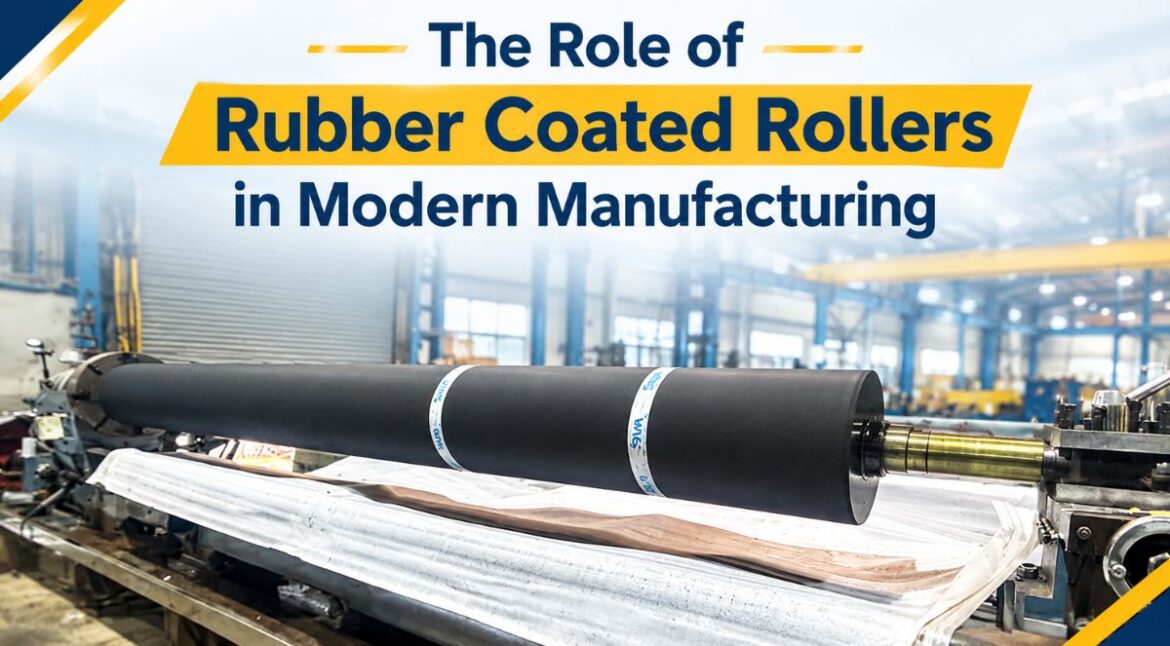
A rubber coated roller (also known as a rubber-lined or elastomer-covered roller) consists of a solid central core—typically constructed from steel, stainless steel, aluminum, or composite materials—covered by a specialized layer of natural or synthetic rubber compound.
The outer elastomeric layer is vulcanized and chemically bonded to the core, then ground to exact dimensional tolerances and surface finishes. The elasticity and mechanical properties of the rubber cladding allow the roller to conform slightly under load, providing a controlled contact area (known as the nip width) that rigid metal rollers cannot achieve.
Key Characteristics of High-Performance Rubber Rollers
- Friction and Grip: High coefficient of friction prevents web slipping without scratching delicate substrate surfaces.
- Resilience & Shock Absorption: Elastomers absorb mechanical vibrations and compensate for minor dimensional variations in substrates.
- Chemical & Thermal Resistance: Formulated compounds withstand aggressive inks, solvents, acids, alkalis, and elevated operating temperatures (>150°C)
- Customizable Durometer (Hardness): Roller hardness can range from soft elastomers (20 Shore A) for delicate offset printing to ultra-hard compounds ( 90 Shore A or Ebonite) for heavy industrial nip applications.
Need Custom Industrial Rollers?
✓ Custom Diameter & Length
✓ Temperature Control Design
✓ Fast Manufacturing
✓ Technical Support
Primary Functions of Rubber Coated Rollers in Industrial Production
Rubber coated rollers perform multiple vital tasks across automated production lines. Understanding these core functions illustrates why they are central to modern industrial throughput:
[ Unwind / Feed ] ---> [ Tension Control Rollers ] ---> [ Processing (Printing / Coating / Laminating) ] ---> [ Rewind / Output ]
                                |                                         |
                       (Rubber Coated)                           (Rubber Coated Nip)
1. Material Transport and Web Handling
In continuous web manufacturing—such as paper, film, foil, and textile production—materials move at high speeds. Rubber coated drive and idler rollers provide the grip necessary to pull webs smoothly, maintain precise line tension, and prevent tracking errors or wrinkling.
2. Precise Coating, Inking, and Fluid Application
In printing, laminating, and surface treatment lines, rubber rollers meter and transfer liquid coatings (inks, adhesives, lacquers, and varnishes) onto moving substrates. The flexible rubber surface ensures uniform film thickness across the entire width of the material.
3. Pressure Application and Laminating (Nip Action)
When bonding two materials together or extracting liquids from webs, two rollers operate in tandem under hydraulic or pneumatic load. Rubber coated nip rollers ensure that compressive stress is distributed evenly across the full face length, preventing localized pinch points and material defects.
4. Squeezing and Dewatering
In textile processing and wet chemical treatment lines, rubber rollers squeeze excess liquids, water, or processing solutions out of moving fabrics or sheets, reducing thermal drying requirements and energy consumption.
Polymer Engineering: Selecting the Right Rubber Compound
Not all rubber rollers are created equal. The performance of a rubber coated roller depends heavily on the chemical composition of its outer elastomer cover. Advanced manufacturers like Siva Rollers utilize custom rubber formulations designed to meet specific operational environment requirements.
Elastomer Type | Key Properties & Strengths | Ideal Applications |
Nitrile Rubber (NBR) | Excellent resistance to oils, fuels, and petroleum solvents; high tensile strength. | Printing inks, packaging, oil-resistant industrial processing. |
Neoprene (CR) | Balanced chemical resistance, good mechanical toughness, flame and ozone resistance. | General web handling, textiles, paper mills, converting lines. |
Silicone Rubber | Exceptional high-temperature resistance .> 200 °C non-stick release properties. | Extrusion coating, hot-melt lamination, plastic film processing. |
EPDM | Outstanding resistance to ozone, polar solvents, ketones, and weather aging. | Flexographic printing, water-based coating lines, acid treatment. |
Polyurethane (PU) | Superior abrasion resistance, tear strength, high load-bearing capacity. | Heavy-duty material handling, metal processing, slitting lines. |
Ebonite Rubber | Hard, rigid rubber compound (>75 Shore D) with high chemical stability. | Paper mill press rolls, acid pickling lines, textile calendering. |
By meticulously selecting the elastomer polymer, plasticizers, and curing agents, Siva Rollers customizes each roller cover for optimal hardness, abrasion resistance, and lifespan.
Critical Industries Empowered by Rubber Coated Rollers
Rubber coated rollers play a transformational role across a broad spectrum of manufacturing sectors:
1. Printing and Flexible Packaging Industry
In rotogravure, flexographic, and offset printing, rubber rollers transfer ink with micro-level precision. Flexo press rollers must maintain exact shore hardness to prevent dot gain and deliver crisp graphic reproduction. Siva Rollers supplies high-precision printing rollers that deliver consistent ink transfer and resist aggressive solvent inks.
2. Textile and Fabric Processing
Textile manufacturing involves bleaching, dyeing, washing, and finishing fabrics. Rubber coated squeeze rollers and expander bow rollers handle delicate textiles without snagging or tearing fibers, while withstanding harsh dyeing chemicals and steam.
3. Paper and Pulp Mills
Paper processing involves wet-end dewatering, pressing, calender smoothing, and high-speed rewinding. The heavy mechanical loads and moist environments demand rollers that resist chemical degradation and crown distortion under load.
4. Plastics and Extrusion Lines
In blown film and plastic sheet extrusion, chill rollers and nip rollers work continuously to flatten, cool, and wind plastic substrates. Silicone and polyurethane rollers prevent sticky polymers from adhering to the roller surface during heat sealing and lamination.
5. Steel, Aluminum, and Metal Processing
Metal coil coating and pickling lines subject rollers to heavy mechanical forces, sharp sheet edges, and corrosive acids. High-durometer rubber and polyurethane rollers protect metal surfaces from scratches during transport and continuous oiling operations.
The Value of Precision Engineering: Why Siva Rollers Leads the Market
Modern high-speed manufacturing leaves no room for error. A minor runout tolerance error or dynamic imbalance in a roller can lead to severe machine vibration, uneven coating thickness, premature bearing failure, and costly line downtime.
Based in Ahmedabad, Gujarat—one of India’s premier industrial engineering hubs—Siva Rollers (Siva Engineering Works) has earned an outstanding reputation as a premier manufacturer of industrial rollers and specialized rubber coated rollers.
The Siva Rollers Advantage:
- 10+ Years of Manufacturing Expertise: With over a decade of technical innovation, Siva Rollers understands the nuances of polymer compounding, metal core fabrication, and dynamic roll grinding.
- State-of-the-Art Production Capabilities: Utilizing precision CNC cylindrical grinding, dynamic balancing machines, and controlled vulcanization autoclaves, Siva Rollers produces rollers that meet stringent international tolerance standards.
- Customization and Application Engineering: Siva Rollers doesn’t offer off-the-shelf compromises. Every roller is custom-engineered based on parameters such as operating speed, temperature, line load, chemical exposure, and surface finish requirements.
- End-to-End Solutions: From manufacturing brand-new steel cores to stripping, recoating, and regrinding existing rolls, Siva Rollers provides complete life-cycle support to minimize client operating costs.
- Global & Pan-India Reach: Siva Rollers supplies high-performance rollers to clients across India and international markets in the Middle East and beyond.
Best Practices for Maintaining Rubber Coated Rollers
To maximize the service life and performance of your rubber coated rollers, implementing a proactive maintenance routine is essential:
- Regular Surface Cleaning: Clean rollers using recommended mild solvents that will not degrade or swell the specific rubber compound.
- Prevent Flat-Spotting: Never leave rubber rollers engaged under nip pressure when the production line is stationary. Store idle rollers on their journal ends, not resting on the rubber face.
- Inspect for Wear and Swelling: Periodically measure roller diameter and runout across the face to detect surface wear, grooving, or chemical swelling early.
- Timely Regrinding & Recoating: Before wear causes product defects, send rollers to Siva Rollers for precision regrinding or complete rubber recoating to restore original tolerances at a fraction of the cost of a new roller core.
Final Thoughts
Rubber coated rollers are indispensable components in modern manufacturing. Whether it is ensuring flawless print quality on flexible packaging, maintaining web tension on high-speed paper machinery, or protecting surface finishes on metal coils, the right rubber roller directly drives productivity, product aesthetics, and operational efficiency.
As industrial machinery operates at higher speeds and tighter tolerances, investing in high-quality, custom-engineered rubber rollers is one of the smartest decisions a facility manager can make.
With decades of industry experience, advanced manufacturing infrastructure, and a relentless commitment to quality, Siva Rollers remains the trusted partner for industrial manufacturing solutions. Upgrade your machinery performance today with precision-engineered rubber coated rollers built to last.
FAQs
A rubber coated roller is an industrial roller with a steel, stainless steel, aluminium, or composite core covered with a specialized natural or synthetic rubber layer. It is used for controlled material handling, web tension, pressure application, coating, and other manufacturing processes.
Rubber coated rollers are used for web handling, material transport, tension control, coating and ink transfer, laminating, nip pressure, squeezing, and dewatering. They are widely used in printing, textile, paper, plastics, and metal processing industries.
The main benefits include good grip, controlled contact pressure, shock absorption, reliable web handling, and resistance to selected chemicals and operating temperatures. The rubber surface can also be selected according to the application and required hardness.
Rubber coated rollers are used in printing and flexible packaging, textile processing, paper and pulp mills, plastic and extrusion lines, and steel, aluminium, and metal processing applications.
Rubber coated rollers provide the grip needed to move paper, film, foil, and textile webs smoothly while maintaining line tension. Proper roller selection can help reduce slipping, tracking problems, and web wrinkling during continuous processing.
The rubber compound should be selected according to the roller's operating conditions, including chemical exposure, temperature, load, abrasion requirements, and the application. Common elastomer options discussed in the content include NBR, Neoprene, Silicone, EPDM, Polyurethane, and Ebonite Rubber.
Yes. Rubber coated rollers can be customized according to application requirements such as operating speed, temperature, line load, chemical exposure, surface finish, and required hardness.
Rubber coated rollers should be cleaned with suitable cleaning agents, protected from prolonged nip pressure when the machine is stopped, and regularly inspected for wear, grooves, swelling, diameter changes, and runout. Timely regrinding or recoating can help restore roller performance.
Yes. Existing rollers can be stripped, recoated, and re-ground as part of roller refurbishment. This can restore the roller surface and dimensional condition without necessarily replacing the complete roller core.
Siva Rollers (Siva Engineering Works), based in Ahmedabad, Gujarat, manufactures and supplies specialized industrial rollers and rubber coated rollers for applications across multiple manufacturing industries.