How to Achieve Uniform Temperature Control with Modern Heat Transfer Rollers
In high-speed, precision-driven manufacturing, temperature is everything. Whether you are laminating packaging materials, processing non-woven fabrics for personal hygiene products, or embossing delicate films, a deviation of just a few degrees across your roller’s surface can ruin an entire production run.
For sectors that directly impact consumer lives—which we collectively call the “people industry” (including personal care, hygiene, food packaging, and consumer textiles)—product quality and safety are non-negotiable. To achieve flawless, high-speed production, finding the absolute best Heat Transfer Roller applications is the critical turning point between constant material waste and highly profitable, uninterrupted manufacturing.
Yet, many production managers, procurement officers, and plant engineers continue to battle with uneven heat distribution, slow thermal response times, and frequent operational downtime.
If your production line is struggling with product defects, adhesive failures, or material warping, the root cause is almost certainly poor thermal uniformity on your roll surface. This comprehensive guide will explain how modern engineering has solved this issue, what to look for when upgrading your machinery, and why partnering with a premier global Heat Transfer Roller Manufacturer is your fastest route to operational excellence.
The Hidden Cost of Uneven Temperature Control in Industrial Manufacturing
In any high-performance production line, a standard industrial roller is expected to do more than just guide web materials; it must act as a highly efficient heat exchanger. When a roller fails to maintain a uniform temperature across its entire face, the consequences are immediate, costly, and compounding.
1. High Scrap Rates and Wasted Material
When heat is unevenly distributed, adhesive laminations fail to bond correctly. This results in bubbling, delamination, and warping. In industries like flexible food packaging or hygiene products—where safety and barrier properties are vital—these defects cannot be reworked. They end up straight in the scrap bin, eating directly into your profit margins.
2. Slower Production Speeds
To compensate for poor thermal conductivity or slow heat recovery times, operators often have to slow down the entire manufacturing line. Running machines at 50% of their rated speed just to ensure proper heat transfer is a massive bottleneck that limits your factory’s overall capacity and ROI.
3. Accelerated Mechanical Wear and Tear
If a roll has thermal hot spots, it can experience uneven thermal expansion. This causes micro-deflections along the roll body, putting immense pressure on your bearings, seals, and rotary joints. Over time, this leads to premature mechanical failure and unexpected, highly expensive emergency shut-downs.
Why Uniform Temperature is Hard to Achieve (And How Modern Engineering Solves It)
Achieving a uniform temperature across a wide metal roller spinning at hundreds of revolutions per minute is an engineering challenge. In traditional, legacy rollers, hot oil or water is simply pumped into a hollow cavity. This often leads to a “hot-inlet, cold-outlet” effect, where one side of the roll is significantly hotter than the other.
Modern engineering has completely reimagined internal roll architecture to eliminate these thermal gradients. Here is how modern heat transfer rollers achieve perfect thermal uniformity:
Precision-Engineered Double-Shell Designs
Instead of a single hollow chamber, modern rollers utilize a double-shell construction. The heating or cooling medium (usually thermal oil, water, or steam) is forced through a narrow, highly controlled annular gap between an inner and outer shell. This restricts the fluid’s path, keeping its velocity high and ensuring rapid, uniform heat exchange with the outer roll face.
Custom-Designed Spiral Baffles
Inside the annular gap, precisely calculated spiral baffles are welded or machined onto the inner shell. These baffles force the thermal fluid to travel in a continuous, high-velocity helical path from one end of the roll to the other. By maintaining turbulent fluid flow, heat is transferred much more efficiently and evenly to the outer working surface, completely eliminating localized cold or hot spots.
Multi-Zone Thermal Balancing
For extra-wide machinery or applications involving highly sensitive substrates, advanced rubber rollers are engineered with multi-zone internal flow channels. This design enables precise temperature regulation across different sections of the roller surface, especially at the edges where heat loss naturally occurs faster due to surrounding air exposure. As a result, the entire roller face maintains exceptional thermal uniformity with accuracy levels of up to ±1°C, ensuring consistent performance and superior processing quality.
Choosing the Best Heat Transfer Roller for People Industry Applications
The “people industry” encompasses the manufacturing of goods that come into direct contact with everyday consumers. This includes medical disposables, baby diapers, feminine hygiene products, protective face masks, and flexible food-grade packaging. Because these products directly impact human health and comfort, the manufacturing standards are exceptionally high.
[Web Substrate Input] ---> [Perfect Surface Contact] ---> [Flawless Laminated Output]
                                 ^
                                 |  (Uniform Heat Flow ±1°C)
                       [Modern Spiral Baffle Roll]
When selecting a Heat Transfer Roller for People Industry applications, there are three critical factors you must evaluate to ensure your investment delivers maximum productivity:
1. Absolute Surface Integrity and Food-Grade Safety
Rollers used in consumer-facing industries must never contaminate the product. This requires high-grade stainless steel or specialised chrome-plated outer shells that resist corrosion, oxidation, and chemical cleaning agents. The surface finish must be flawless—often polished to a mirror-like finish with zero micro-pores—to prevent any bacterial build-up or material sticking.
2. Precise Thermal Response Times
Substrates used in personal care products (like ultra-thin non-woven webs or breathable films) are highly heat-sensitive. Even a slight thermal overshoot can melt the web, causing catastrophic wrap-ups on your machine. Your heat transfer roll must respond instantly to control system adjustments, maintaining stable operating temperatures despite variations in line speed.
3. Dynamic Balancing for High-Speed Vib-Free Operation
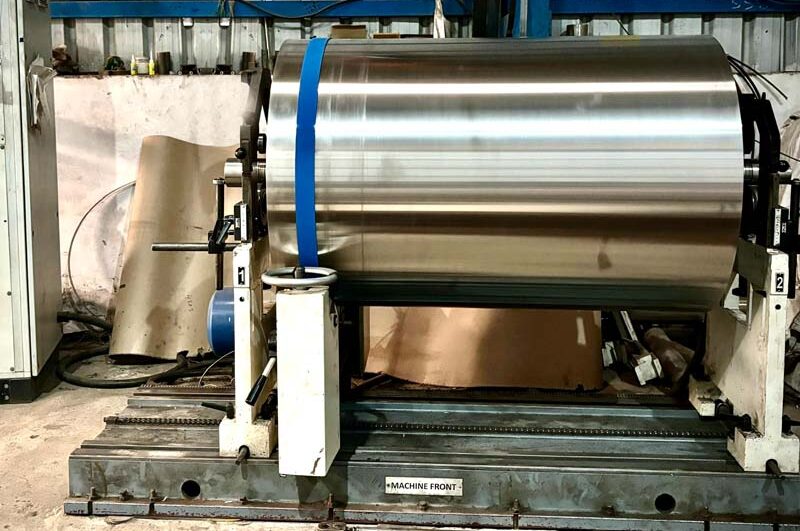
Vibrations at high speeds can create micro-chatter marks on the product, compromising its strength and aesthetic appeal. High-quality rollers undergo rigorous dynamic balancing at actual operational speeds. This ensures that even at speeds exceeding 500 meters per minute, the roll runs smoothly, protecting both product quality and machine longevity.
Siva Rollers: India’s Trusted Heat Transfer Roller Manufacturer with Global Footprint
When it comes to sourcing world-class industrial rollers, manufacturers worldwide are looking to India for engineering expertise, high-quality manufacturing, and competitive pricing.
As a premier Heat Transfer Roller Manufacturer in India, Siva Rollers has spent decades perfecting the art and science of thermal roll engineering. We don’t just supply off-the-shelf rollers; we engineer highly customised, application-specific thermal solutions that integrate seamlessly into your existing production lines.
Why Leading Global Brands Choose Siva Rollers
- Custom Thermal Engineering: We analyse your specific web material, operating speed, wrap angle, and desired delta-T (temperature difference) to design custom internal spiral baffles and shell thicknesses tailored precisely to your application.
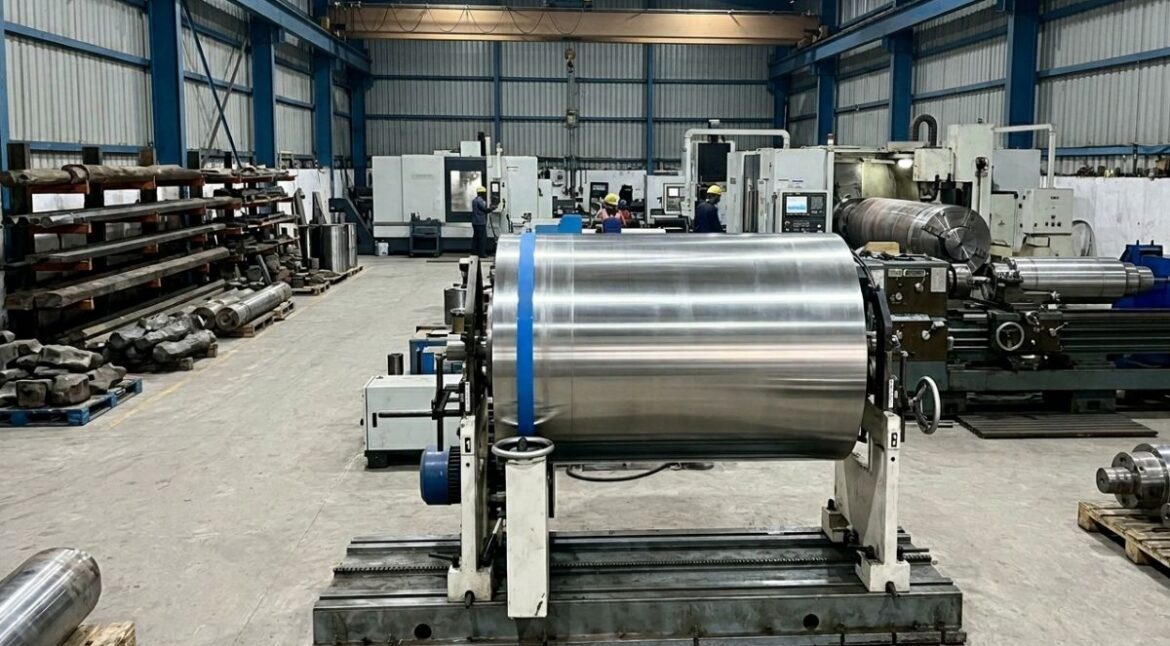
- State-of-the-Art Manufacturing in India: Operating from our advanced manufacturing facility, we leverage cutting-edge CNC machining, precise cylindrical grinding, and dynamic balancing technologies to craft every Industrial Roller to international quality standards.
- Global Export Capability: Based in India, Siva Rollers is strategically positioned to serve local industries while exporting high-performance rollers to clients across North America, Europe, the Middle East, and Southeast Asia. We handle all international shipping, customs, and logistics seamlessly.
- Unparalleled Durability: We select only certified, high-tensile carbon steels, alloy steels, and stainless steels. Combined with our proprietary heat treatment processes, our rollers offer exceptional wear resistance, minimal thermal deflection, and an incredibly long service life.
The Siva Rollers Advantage: How We Build Trust and Deliver Value
We understand that buying a heat transfer roller is a major capital investment. You aren’t just buying steel; you are buying the future reliability, speed, and profitability of your production line. That is why we have built our business model around transparency, engineering support, and rigorous quality control.
Comprehensive Design Consultation
Before a single piece of steel is cut, our engineering team works closely with yours. We use advanced thermal modelling to calculate the exact fluid flow rates and pressure drops required to achieve uniform temperature profiles for your specific web width and speed. This guarantees that the roller you receive will perform perfectly from day one.
Rigorous In-House Testing
Every single heat transfer roller manufactured by Siva Rollers undergoes strict testing protocols. We conduct hydrostatic pressure testing to ensure zero fluid leakage, dynamic balancing to eliminate high-speed vibrations, and surface roughness checks to verify the exact finish required for your material.
Seamless Integration and Retrofitting
Are you upgrading an older machine? Our engineers specialize in retrofitting modern, high-efficiency rollers into existing production lines. We design custom journals, shaft extensions, and mounting configurations to ensure your new roller fits perfectly into your existing bearing housings and connects easily to your current rotary joints.
Boost Your Production Yields with the Right Industrial Roller Partner
In the highly competitive B2B manufacturing landscape, staying ahead means continuously reducing waste, increasing line speeds, and maintaining flawless product quality. A poorly designed roller will cost you money every single day in the form of ruined material, high energy consumption, and constant maintenance.
Upgrading to a modern, custom-engineered Heat Transfer Roller India manufactured by Siva Rollers is one of the highest-yielding investments you can make for your plant. By ensuring consistent, uniform temperature across your entire web, you will instantly unlock:
- Higher production throughput and faster line speeds.
- Significantly reduced material waste and scrap costs.
- Better product consistency that keeps your customers coming back.
- Peace of mind knowing your machinery is built to last.
Whether you operate a high-speed laminating line in Mumbai, a packaging plant in Germany, or a non-woven processing facility in the United States, Siva Rollers has the engineering capability and export infrastructure to deliver the exact solution you need.
Let’s Optimise Your Thermal Production Process Together
Don’t let poor temperature control hold your production line back. Our team of expert roller engineers is ready to help you analyse your current setups, identify thermal bottlenecks, and design a high-performance heat transfer solution tailored to your exact needs.
Ready to scale your production efficiency and eliminate scrap?
Contact Siva Rollers—your global partner and premier Heat Transfer Roller Manufacturer—today.
Contact Siva Rollers Today to Request a Consultation and Quote
- Phone: +91 75070 10009
- Email: info@sivarollers.com
FAQs
A Heat Transfer Roller is an engineered industrial roller designed to transfer controlled heat uniformly across materials during manufacturing processes such as lamination, embossing, coating, drying, and thermal bonding. It works by circulating thermal oil, steam, or hot water through internal channels that maintain consistent surface temperature for precise processing.
Uniform temperature control is critical because uneven heating can cause material warping, adhesive failure, poor lamination quality, production defects, and increased scrap rates. Advanced heat transfer rollers maintain temperature accuracy up to ±1°C, ensuring high-quality production with minimal waste.
Heat Transfer Rollers are widely used in industries where temperature-sensitive materials require precision manufacturing, including:
- Hygiene product manufacturing
- Medical disposable production
- Food packaging industry
- Non-woven fabric processing
- Consumer textile production
- Flexible packaging manufacturing
These industries require high-performance rollers for consistent product quality.
Modern Heat Transfer Rollers use advanced engineering technologies such as:
- Double-shell internal construction
- Spiral baffle thermal flow design
- High-velocity internal fluid circulation
- Multi-zone thermal balancing systems
These technologies eliminate hot spots and ensure even temperature distribution across the roller surface.
Poor heat distribution can lead to several production problems, including:
- Delamination in packaging materials
- Adhesive bonding failure
- Product defects and rejection
- Slower machine speed
- Increased machine downtime
- Higher energy consumption
- Faster bearing and seal damage
Upgrading to precision heat transfer rollers reduces these operational issues.
Premium Heat Transfer Rollers are typically manufactured using:
- Stainless Steel
- Alloy Steel
- High Tensile Carbon Steel
- Chrome Plated Steel Surfaces
- Corrosion Resistant Metal Alloys
These materials provide durability, corrosion resistance, high thermal conductivity, and long service life.
A properly engineered Heat Transfer Roller improves manufacturing by:
- Increasing production speed
- Reducing scrap and material wastage
- Improving thermal consistency
- Lowering maintenance costs
- Enhancing product quality
- Reducing machine downtime
This directly improves overall factory productivity and ROI.
Spiral baffles guide thermal fluid through a controlled helical path inside the roller. This creates turbulent fluid flow, which improves heat transfer efficiency and prevents temperature variations across the roller surface.
This results in faster heating response and superior thermal uniformity.
Siva Rollers specializes in designing and manufacturing custom Heat Transfer Rollers engineered for high-speed industrial applications.
Advantages include:
- Custom thermal engineering solutions
- Precision CNC manufacturing
- Dynamic balancing technology
- Global export capability
- Long service life and durability
- Retrofit solutions for existing machines
The company serves clients across India and international markets.
When selecting a Heat Transfer Roller Manufacturer, evaluate these factors:
- Engineering expertise and customization capability
- Material quality standards
- Manufacturing technology used
- Dynamic balancing capability
- Thermal design efficiency
- Experience in industrial roller manufacturing
- After-sales technical support
- Global export experience
Choosing an experienced manufacturer ensures long-term production reliability.