How to Fix Web Wrinkling and Material Misalignment Using Aluminium Rollers
In many paper, film, textile, printing, coating, lamination, and packaging processes, smooth material movement is essential. When the material starts developing wrinkles, moving to one side, or losing its proper path, the problem can quickly affect the production process.
A wrinkle may look like a small issue at first. However, repeated wrinkling and material misalignment can lead to rejected material, uneven output, unnecessary stoppages, and more time spent correcting the production line. In some cases, the actual problem is not the material itself. It can be related to how the material is being supported and guided during movement.
This is where an Aluminium Roller can play an important role.
A properly selected and well-made roller can help support smoother material movement and reduce problems caused by poor guiding, uneven contact, or an unsuitable roller arrangement. However, simply replacing an existing roller with any new Aluminium Roller is not always the right solution. The roller should be considered according to the material, application, working conditions, and the actual problem occurring on the line.
This article explains how businesses can understand and address web wrinkling and material misalignment using Aluminium Rollers, what to check before selecting a roller, and when professional guidance may be useful.
First, Understand Why Wrinkling and Misalignment Happen
Before changing a roller, it is important to identify the actual reason behind the problem.
Web wrinkling and material misalignment can happen for different reasons. A production line may run normally for some time and then suddenly begin showing wrinkles. In another case, the material may continuously move towards one side.
These problems can be caused by factors such as:
- Uneven movement of the material
- Poor material guiding
- Incorrect roller condition
- An unsuitable roller surface for the application
- Uneven pulling of the material
- Poor alignment between parts of the production line
- Material handling changes
- Worn or damaged rollers
- Roller replacement without considering the actual application
The important point is that not every wrinkle has the same cause.
For example, if the material moves smoothly before reaching one particular roller and starts wrinkling after it passes through that area, the roller position or condition may need attention. If the material repeatedly shifts towards one side, the overall guiding arrangement should also be checked.
A practical approach is to observe where the problem begins, rather than only looking at where the wrinkle becomes visible.
How an Aluminium Roller Can Support Smoother Material Movement
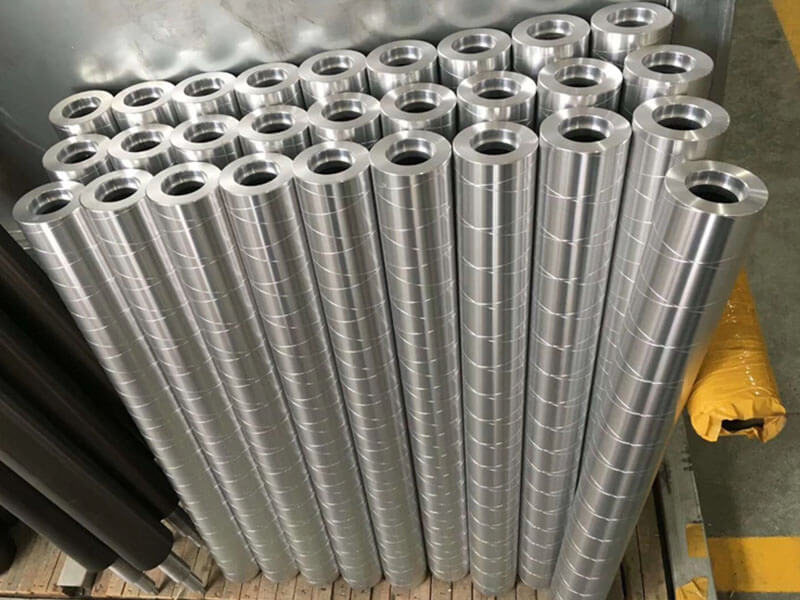
An Aluminium Roller is commonly considered for applications where smooth material handling is important. Its role is to support and guide material as it moves through different stages of production.
The correct roller can help create a more stable path for the moving material.
For example, imagine a wide sheet of film or paper moving continuously through a production line. If the material is not properly supported, even a small movement away from its intended path can gradually become a bigger issue further along the line.
A suitable Aluminium Roller can help provide consistent support as the material moves from one stage to another.
However, the word “suitable” is important.
The best Aluminium Roller for one application may not be the right choice for another. Material type, width, operating environment, roller location, and the purpose of the roller should all be understood before a replacement is selected.
This is why working with an experienced Aluminium Roller Manufacturer can be useful when a business is trying to solve a repeated material handling problem rather than simply replacing an old part.
Step 1: Find the Exact Point Where the Wrinkle Starts
One of the most useful ways to solve web wrinkling is to trace the problem back to its starting point.
Do not assume that the last roller before the visible wrinkle is always responsible.
Observe the material movement across the production process.
Ask simple questions:
- At which point does the material first begin moving unevenly?
- Does the problem happen all the time or only sometimes?
- Does it occur with every material or only a particular type?
- Does the material shift to one side before wrinkles appear?
- Did the issue start after changing a roller or making another production change?
These observations can help separate a roller-related issue from a material-related or line-related issue.
Real-world production problems are often solved faster when teams stop making repeated trial-and-error changes and instead follow the path of the material carefully.
If a particular Aluminium Roller is suspected, its condition and suitability should be reviewed before deciding whether it needs replacement or adjustment.
Step 2: Check Whether the Existing Roller Is Supporting the Material Properly
An old or unsuitable roller can sometimes create handling problems even when the rest of the line appears normal.
Over time, a roller may develop wear, surface damage, or other changes that affect how the material moves across it.
Look for visible signs such as:
- Uneven marks on the roller
- Damage on the working surface
- Build-up of material on the roller
- Uneven movement of the material across the roller
- Repeated shifting in the same area
- Wrinkles appearing after the material passes over the roller
The roller should also be checked as part of the complete material path.
Replacing one roller without understanding the surrounding arrangement may not solve the issue. If the material is already entering the roller in an unstable condition, the wrinkle may continue even after a new roller is installed.
The goal should be to understand whether the Aluminium Roller is the cause of the problem, part of the problem, or a possible solution within the complete material handling system.
Step 3: Use an Aluminium Roller Designed for the Actual Application
A common mistake is treating all industrial rollers as interchangeable.
An Aluminium Roller used for one material handling process may have a different role from a roller used elsewhere in the same factory. The material itself can also behave differently depending on its condition and how it moves through the line.
This is why the application should come first.
Before choosing or replacing an Aluminium Roller, consider:
- What type of material is being handled?
- Is the material light, flexible, or prone to wrinkles?
- Is the main requirement support, guiding, or smoother movement?
- Where is the roller used in the process?
- What problem needs to be solved?
These simple questions can prevent an unsuitable replacement.
A trusted Aluminium Roller Manufacturer should focus on understanding the application rather than giving a one-size-fits-all answer. When the actual production problem is understood first, the recommendation can be more relevant to the working situation.
At Siva Rollers, the approach should begin with the application and material handling requirement. This helps businesses discuss the real issue they are facing instead of choosing a roller based only on its name.
Step 4: Address Material Misalignment Before It Becomes a Wrinkling Problem
Material misalignment and wrinkling are often connected.
When a moving web starts travelling away from its intended path, the problem may initially look minor. If it continues without correction, the material can begin folding, gathering, or developing wrinkles.
This is why early observation is important.
Operators should watch for repeated side movement. If the material regularly moves towards the same side, there may be a guiding or alignment issue that needs attention.
Do not wait until the material becomes visibly damaged.
A smoother and more stable roller path can help support better material movement, but the complete process should still be checked. The material should move through each stage in a controlled and consistent manner.
An Aluminium Roller may be part of the solution when the existing roller is unsuitable, damaged, or not supporting the material as required.
The focus should always be on correcting the cause rather than repeatedly treating the visible result.
Step 5: Keep the Roller Surface Clean and in Good Condition
Sometimes the solution is simpler than expected.
Material residue, dust, adhesive traces, or other build-up can affect how smoothly a web moves over a roller. If one area of the roller behaves differently from another, the material may not move consistently.
Regular inspection and cleaning, according to the requirements of the production process, can help identify such issues early.
A maintenance routine does not need to be complicated. The important thing is consistency.
Teams can regularly check:
- Overall roller condition
- Surface cleanliness
- Visible damage
- Material movement after maintenance
- Repeated problem areas
If a problem returns after cleaning or continues despite routine maintenance, a deeper review may be required.
A good Aluminium Roller is only one part of reliable material handling. Regular attention to roller condition can also help prevent small problems from becoming larger production issues.
Step 6: Do Not Replace a Roller Based Only on Appearance
Two rollers can look similar but serve different purposes.
This is an important consideration when replacing an existing Aluminium Roller.
A business may remove a worn roller and install another roller that appears similar. If the new roller does not match the actual application, the original problem may continue.
Before replacement, collect basic information about:
- The material being handled
- The type of production process
- Where the roller is installed
- The problem currently occurring
- Whether the issue is wrinkling, side movement, or both
- How long the problem has been occurring
This information gives an Aluminium Roller Manufacturer a clearer picture of the application.
The discussion should focus on the problem, not only on ordering a product.
For example, saying “we need an Aluminium Roller” provides limited information. Explaining that “our material is moving to one side and wrinkles are appearing at a particular stage” gives a much better starting point for evaluating the requirement.
A Realistic Approach to Solving Repeated Wrinkling Problems
There is no honest single solution for every web wrinkling problem.
If someone promises that one Aluminium Roller will automatically remove every wrinkle from every production line, that would not be a reliable claim.
Different materials and production processes behave differently.
A better approach is:
Observe the problem → identify where it starts → inspect the existing material path → review the roller condition → understand the application → select a suitable solution → monitor the result.
This process may sound simple, but it encourages better decisions.
In industrial production, the fastest-looking solution is not always the most useful one. Replacing parts repeatedly without understanding the cause can waste time and resources.
A problem-solving approach based on observation and application knowledge is more likely to provide a practical direction.
Where Siva Rollers Can Support Your Aluminium Roller Requirement
Choosing an Aluminium Roller Manufacturer in India should involve more than comparing product names.
The manufacturer should understand what the roller needs to do in the actual production process.
Siva Rollers (Siva Engineering Works) works with industrial roller requirements for different material handling applications. For businesses facing web wrinkling, material misalignment, or repeated movement issues, discussing the actual production challenge can help create a clearer starting point.
Instead of making unsupported promises, the focus should be on understanding:
- The material being handled
- The location of the problem
- The existing roller application
- The type of movement issue
- The practical requirement for the replacement or new roller
This application-focused approach supports better communication between the production team and the roller manufacturer.
For buyers, sharing clear information about the problem can also make the enquiry process more useful.
Common Mistakes That Can Keep the Problem Coming Back
Some web handling problems continue because the same mistakes are repeated.
Changing the Roller Without Checking the Cause
A new roller may not solve a problem that started earlier in the material path.
Ignoring Small Side Movement
Minor material movement can become a bigger problem later. Early observation can help identify the issue before wrinkles become more serious.
Selecting Only by Product Name
An Aluminium Roller should be selected according to the actual application and production requirement.
Waiting Too Long to Inspect Roller Condition
Visible damage or build-up can affect material movement. Regular checks can help identify problems earlier.
Assuming Every Material Behaves the Same Way
Different materials can respond differently during production. The application should be understood before choosing a solution.
Looking for a Quick Universal Fix
Web wrinkling can have more than one cause. A practical solution starts with finding the real source of the problem.
Final Thoughts
Web wrinkling and material misalignment can affect production quality, material usage, and daily workflow. The most effective response is not to guess. It is to understand where the problem begins and review how the material is moving through the production process.
An Aluminium Roller can play an important role in supporting smoother and more controlled material movement when it is suitable for the application. But the roller should be considered as part of the complete process, not as a guaranteed fix for every problem.
For businesses experiencing repeated wrinkles or material shifting, start by observing the material path, checking the existing roller condition, and identifying the exact point where the issue begins.
If you are planning to replace an existing roller or need support in understanding an Aluminium Roller requirement, Siva Rollers (Siva Engineering Works) can be approached with the details of your application and the problem you are experiencing. A clear discussion about the actual requirement can help move the decision away from guesswork and towards a more suitable solution.
As an experienced Aluminium Roller Manufacturer, Siva Rollers focuses on understanding industrial roller requirements in a practical and application-oriented way—because reliable material handling begins with choosing a solution that fits the real working situation.
Contact US : +91 75070 10009 , info@sivarollers.com
FAQs
An Aluminium Roller is used to support and guide materials as they move through industrial production processes. It can be used in applications where smooth material movement is important, including paper, film, textile, printing, packaging, coating, and similar processes. The right roller should be selected according to the actual material and application.
An Aluminium Roller can help support smoother material movement when web wrinkling is related to poor roller condition, unsuitable material support, or an improper roller application. However, wrinkling can have different causes, so the complete material path should be checked before selecting a solution.
A properly selected Aluminium Roller can help support a more stable material path. If material repeatedly moves towards one side, the roller condition and overall guiding arrangement should be reviewed. The actual cause of misalignment should be identified instead of assuming that replacing one roller will solve every issue.
Web wrinkling can happen because of uneven material movement, poor guiding, roller damage, surface build-up, an unsuitable roller application, or problems elsewhere in the production line. Finding the point where the wrinkle first begins is an important step towards identifying the actual cause.
You should inspect whether the material starts shifting, moving unevenly, or developing wrinkles after passing through a particular roller. Visible wear, damage, or material build-up may also indicate that the roller needs attention. A complete review of the material path can help identify the actual source of the problem.
An Aluminium Roller should be evaluated for replacement when it shows visible damage, repeated material handling problems, or when its current application is no longer suitable for the production requirement. The replacement decision should be based on the actual working condition and application rather than appearance alone.
Start by considering the material being handled, the location of the roller in the production process, and the specific problem you want to address. It is also helpful to share whether you are facing web wrinkling, material misalignment, uneven movement, or another handling issue with the Aluminium Roller Manufacturer.
Not necessarily. Different materials and production processes can have different handling requirements. An Aluminium Roller that works well in one application may not automatically be suitable for another. The roller should be considered according to the actual application and material movement requirement.
Before placing an enquiry, clearly identify the material being handled, where the roller will be used, and the problem you are experiencing. If you are replacing an existing roller, sharing details about the current application can help the manufacturer better understand your requirement and suggest a suitable solution.
Regular inspection can help identify surface build-up, visible damage, or other changes that may affect material movement. Keeping the roller in good working condition can help detect problems early and support more consistent material handling.
An experienced Aluminium Roller Manufacturer can review the application details, material handling requirement, and the specific problem being faced. Providing clear information about where wrinkling or misalignment occurs can help the manufacturer understand the requirement and discuss a more suitable roller solution.
Siva Rollers (Siva Engineering Works) works with industrial roller requirements based on the actual application and material handling needs of the customer. For businesses looking for an Aluminium Roller Manufacturer in India, sharing the production requirement and the specific material movement problem helps Siva Rollers understand the application and provide relevant guidance without making unrealistic or unsupported claims.