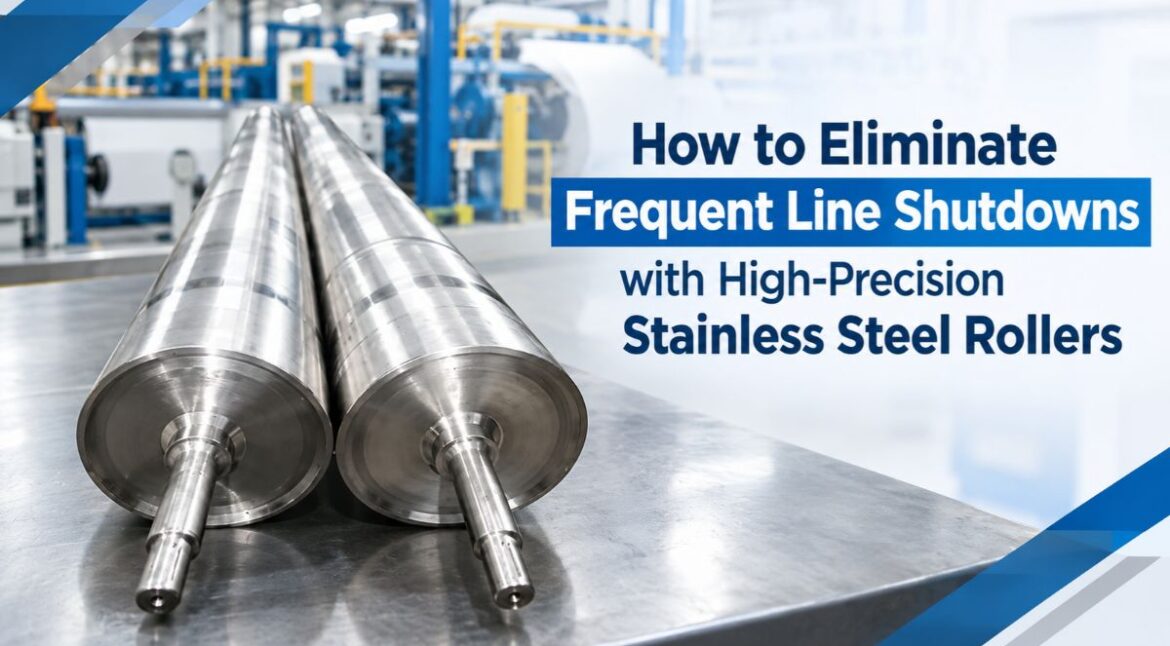
How to Eliminate Frequent Line Shutdowns with High-Precision Stainless Steel Rollers
If you run or manage a manufacturing line, you know the sound of an unexpected stoppage. The sudden silence on the factory floor is quickly followed by the warning lights, the urgent radio calls, and the sinking feeling that your daily production targets are slipping away.
Unplanned line shutdowns are one of the most expensive headaches in modern industry. Whether you process food, package consumer goods, convert paper, or handle pharmaceuticals, your entire throughput relies on continuous, seamless movement.
At the center of this movement is a component that often gets overlooked until it breaks down: the steel roller.
When rollers fail, wobble, rust, or scratch delicate materials, the whole production chain grinds to a halt. In this operational guide, we will explore why standard line components break down under everyday factory pressures and how upgrading to high-precision stainless steel rollers can eliminate frequent shutdowns, lower maintenance stress, and protect your bottom line.
The True Cost of Unplanned Factory Downtime
When a conveyor or web-handling line stops unexpectedly, the obvious cost is lost time. But experienced plant managers know that the visible downtime is only a fraction of the actual damage.
Total Shutdown Impact = Direct Repair Costs + Wasted Raw Materials + Delayed Customer Shipments + Team Overtime + Premature Equipment Wear
1. Wasted Materials and Quality Spoilage
A sudden halt rarely happens when a line is empty. Material currently in motion—whether it is plastic film, continuous paper webs, or packaged products—can easily get stretched, torn, burned, or contaminated during an emergency stop.
2. Accelerated Stress on Surrounding Equipment
When a single roller jams or vibrates out of alignment, it creates a domino effect. Motor drives work harder to pull material over a stubborn roller, drive belts stretch, and nearby bearings wear out long before their expected lifespan.
3. Strained Customer Relationships
Modern supply chains run on tight schedules. A recurring issue on your production line that causes a two-hour delay today can easily translate to late deliveries, penalties, and damaged customer trust tomorrow.
To stop putting out operational fires, you have to look closely at the root causes of recurring line failures.
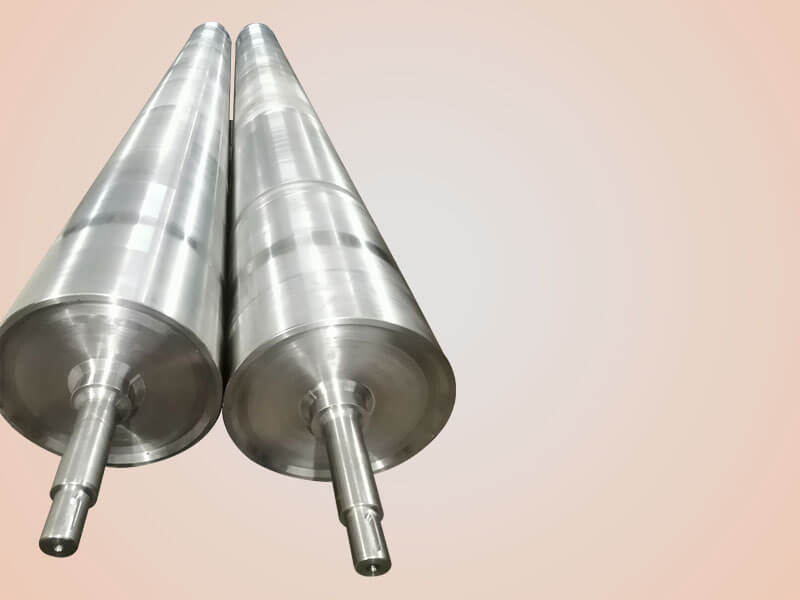
Why Standard Rollers Cause Unwanted Line Shutdowns
Why do conveyor lines and processing machinery break down so often? In many plants, the culprit is simply the quality and condition of the rollers being used.
Rollers might look like simple metal cylinders, but they operate under continuous physical stress. Here are the main reasons traditional or low-grade components fail:
Surface Wear and Drag
Over time, low-grade rollers develop micro-grooves, flat spots, or surface roughness from constant contact with materials and debris. This creates uneven friction. Instead of rolling smoothly, the roller begins to drag material, leading to web tracking errors, product jams, and uneven tension across the line.
Rust and Chemical Degradation
In environments that require washdowns, involve chemical cleaning agents, or operate under high humidity, ordinary metal surfaces degrade rapidly. Flaking paint, rust spots, and pitting corrosion not only weaken the roller structurally but also threaten product hygiene and cleanroom standards.
Misalignment and Internal Vibration
If a roller is manufactured with slight variations in wall thickness or balance, it introduces subtle vibrations as it spins at high speeds. Over weeks and months, these tiny vibrations loosen mounting hardware, damage bearing housings, and cause continuous tracking problems that force operators to slow down the line manually.
Frequent Bearing and Seal Failure
A roller is only as reliable as its internal setup. When moisture or fine dust penetrates poorly sealed ends, bearings seize up. A seized roller acts like a brake on your conveyor line, causing immediate material burn, tearing, or drive motor failure.
The High-Precision Advantage: Why Material and Quality Matter
Switching to a high-precision stainless steel roller turns a vulnerable wear point into a durable foundation for your entire line. But what actually separates a high-precision roller from a standard off-the-shelf alternative?
Superior Corrosion Resistance
Stainless steel naturally forms a protective surface layer that resists moisture, steam, and harsh cleaning solutions. Unlike coated or painted mild steel rollers, which can chip and expose raw metal to rust, a quality stainless steel surface remains smooth and non-reactive even after repeated washdown cycles.
For organizations looking to maintain global quality standards, adhering to recognized material guidelines—such as those published by ISO (International Organization for Standardization)—is essential to ensuring long-term operational hygiene and safety.
Exceptional Dimensional Stability
Precision engineering ensures that the roller remains uniform across its entire length. Uniform wall thickness and precise roundness mean the roller turns evenly without skipping or flexing under load. This consistent profile keeps web tension steady, preventing material sag, wrinkles, or uneven stretching.
Smooth Surface Finish for Delicate Handling
Whether your production process handles thin foils, fine papers, sensitive films, or delicate consumer packages, surface quality matters. Precision finishing techniques allow stainless steel surfaces to guide products gently, minimizing material friction without losing traction.
Reduced Mechanical Strain
Balanced, smoothly rotating components require less force to turn. This reduces energy consumption across your drive motors and places significantly less stress on side frames, drive chains, and support bearings.
Key Operating Environments That Depend on Stainless Steel Rollers
While almost any manufacturing facility benefits from smoother material handling, specific industries consider high-grade stainless steel components an absolute operational requirement:
- Food & Beverage Processing: Where frequent chemical washdowns are mandatory and flaking paint or rust is a direct hygiene hazard.
- Packaging & Converting Lines: Where high line speeds require smooth rotation to prevent web breakage and material jamming.
- Pharmaceutical & Cleanroom Manufacturing: Where strict environmental cleanliness standards prevent the use of flaking metals or shedding lubricants.
- Chemical & Textile Processing: Where exposure to corrosive liquids, dyes, or high-moisture environments ruins conventional steel components within months.
In every one of these sectors, equipment reliability directly dictates daily profitability.
Strategic Steps to Eliminate Line Shutdowns
Replacing worn components with precision engineered options is a crucial step, but achieving zero unscheduled downtime requires a systematic operational approach.
Here is a practical checklist your maintenance and engineering teams can use to protect your production lines:
Step 1: Conduct a Line-Wide Audit
Identify the “problem zones” on your production floor. Look for:
- Rollers that show visible surface staining, pitting, or grooves.
- Components that feel excessively hot to the touch during operation.
- Rollers that produce squeaking, grinding, or rhythmic humming sounds.
- Locations where product jams or web tracking adjustments occur most frequently.
Step 2: Standardize Component Sourcing
Mixing different grades and custom sizes of rollers across a single line makes maintenance unpredictable and inventory difficult to manage. Standardizing on high-grade stainless steel components across key wear zones simplifies spare parts management and ensures predictable performance.
Step 3: Implement Proper Cleaning Protocols
Even high-quality stainless steel performs best when kept clean. Avoid using overly harsh abrasive tools (like steel wool or wire brushes) that can scratch smooth precision surfaces. Use appropriate liquid cleaners or non-scratch pads to remove buildup without compromising the metal’s smooth finish.
Step 4: Verify Alignment and Mounting
Even the finest roller will experience premature wear if installed out of square. During scheduled maintenance windows, use laser alignment tools or accurate precision levels to confirm that shafts and mounting frames are completely parallel.
Step 5: Partner with an Experienced Manufacturer
To get components tailored to your exact load capacities, environmental conditions, and operating speeds, working directly with a dedicated manufacturer is essential.
Why Sourcing from Siva Rollers Builds Long-Term Reliability
When it comes to sourcing durable, high-performing components, local expertise and proven manufacturing experience make all the difference.
As a leading Stainless Steel Roller Manufacturer based in India, Siva Rollers focuses on delivering custom-crafted component solutions built for tough industrial environments. By prioritizing strict manufacturing quality, precise material selection, and reliable long-term durability, Siva Rollers helps industrial facilities across diverse sectors keep their production lines moving smoothly.
Instead of relying on mass-produced, one-size-fits-all components, partnering with a specialized producer ensures that your operational requirements—from surface smoothness to load support—are met with precision.
You can learn more about specialized manufacturing standards and continuous conveyor solutions by visiting Siva Rollers.
How Upgrading Your Rollers Pays for Itself
Investing in precision components is often viewed as a maintenance expense, but from an operational standpoint, it is a high-return upgrade.
Operational Area | Impact of Low-Grade Rollers | Impact of High-Precision Stainless Steel Rollers |
Maintenance Cycles | Frequent emergency stops and unscheduled replacements | Predictable, scheduled servicing during planned downtime |
Product Scrap Rate | High scrap due to surface scratches, tension tears, and alignment jams | Minimal waste with gentle, consistent material traction |
Component Lifespan | Rapid surface degradation and rust in washdown zones | Extended operational lifespan with strong corrosion resistance |
Energy & Motor Load | Higher drag places extra strain on drive systems | Smooth rotation reduces friction and motor workload |
When you calculate the total cost of just one lost shift—including idle labor, wasted raw materials, and missed delivery timelines—the investment in high-precision hardware clearly pays for itself very quickly.
Building a Zero-Shutdown Maintenance Culture
Technology and high-grade components are only part of the solution. Long-term reliability comes from combining quality hardware with proactive plant culture:
- Train Operators to Listen and Observe: Machine operators are your first line of defense. Train them to recognize early warning signs—such as minor tracking variations, strange vibrations, or subtle squeaks—before a small issue becomes an emergency shutdown.
- Keep Essential Spares On Hand: Never let a multi-hour outage turn into a multi-day shutdown because you are waiting on replacement parts. Maintain a small inventory of critical replacement rollers for key line sections.
- Review Failures Openly: When a line failure does occur, don’t just fix it and move on. Inspect the damaged component to understand why it failed. Was it improper lubrication? Corrosion? Overloading? Use every failure as an opportunity to upgrade your standards.
To explore deeper industrial engineering research on component fatigue and material longevity, you can consult technical resources provided by organizations like ASM International, which publish extensive research on metallurgical durability and wear resistance.
Protect Your Plant’s Output Today
In modern manufacturing, efficiency is determined by how well you eliminate friction on your production floor—both literally and operationally. Frequent line shutdowns do not have to be an accepted cost of doing business.
By replacing worn, standard components with precision-engineered stainless steel rollers, you protect your line against rust, surface drag, and mechanical imbalance. The result is a quieter, smoother, and far more profitable production floor.
If you are ready to eliminate chronic stoppages, reduce your maintenance burden, and extend the lifespan of your processing lines, start by inspecting the hardware guiding your product today. Upgrading to quality components from trusted industry experts like Siva Rollers is one of the simplest, most effective moves you can make toward achieving reliable, non-stop operational performance.
FAQs
High-precision stainless steel rollers help maintain smooth and consistent material movement while reducing problems caused by corrosion, surface wear, uneven rotation, and excessive friction. When properly selected, aligned, and maintained, they can reduce roller-related interruptions and support more reliable production.
Common warning signs include surface pitting, grooves, unusual vibration, excessive heat, squeaking or grinding noises, recurring web-tracking problems, and frequent material jams. Identifying these symptoms early can help maintenance teams prevent unexpected line shutdowns.
Stainless steel rollers provide good corrosion resistance and dimensional stability, making them suitable for environments involving moisture, repeated cleaning, chemical exposure, or continuous operation. Their smooth surface can also help with consistent handling of films, paper, foils, and other materials.
Yes. Worn, rough, misaligned, or unbalanced rollers can create uneven friction and tension across the material. This may contribute to web-tracking errors, wrinkles, stretching, tearing, product jams, and inconsistent material movement.
Stainless steel rollers can be used in food and beverage processing, packaging and converting, pharmaceutical and cleanroom manufacturing, chemical processing, textile processing, and other industrial material-handling applications where corrosion resistance and smooth operation are important.
Roller misalignment can create uneven material tension, tracking problems, vibration, and premature wear on bearings and other machine components. Regularly checking roller shafts and mounting frames for correct alignment can help maintain smoother line operation.
Stainless steel rollers should be inspected regularly for surface damage, buildup, abnormal noise, vibration, and alignment issues. Appropriate cleaning methods and non-abrasive cleaning materials should be used to avoid scratching precision roller surfaces.
They can help reduce maintenance associated with corrosion, surface deterioration, uneven rotation, and recurring roller-related problems. However, actual maintenance requirements depend on the application, operating conditions, installation, load, cleaning practices, and overall machine setup.
Buyers should discuss their application, operating environment, load requirements, line speed, roller dimensions, surface requirements, and material-handling needs with the manufacturer. A manufacturer that can understand application-specific requirements can provide a more suitable roller solution.
SIVA ROLLERS (SIVA ENGINEERING WORKS) manufactures industrial roller solutions in Ahmedabad, Gujarat, India. Buyers looking for stainless steel rollers can discuss their application and operational requirements with the Siva Rollers team to identify a suitable roller solution for their production line.